
Introduction
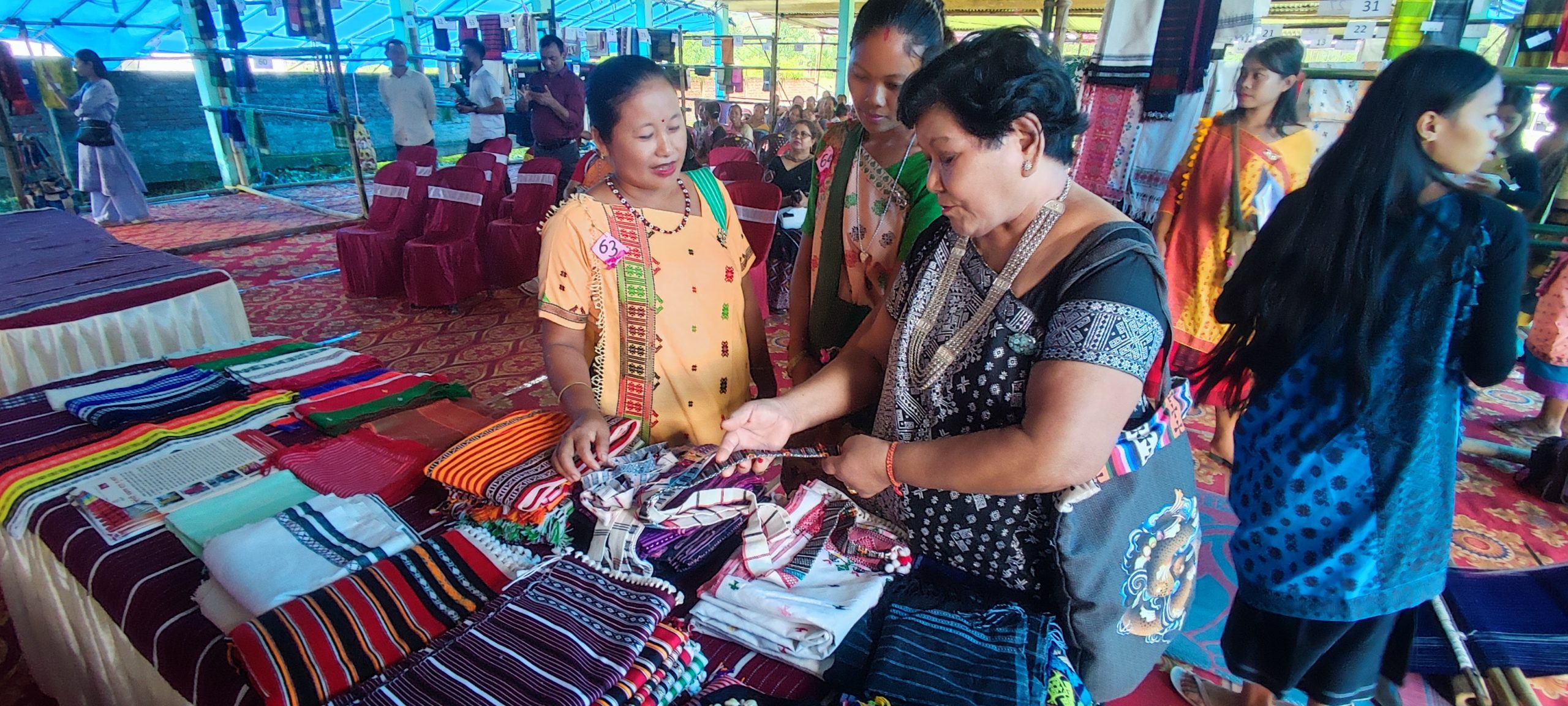
- Karbi Anglong Handloom Products are traditional handwoven textiles associated with the Karbi community of Assam, particularly the Karbi Anglong region.
- They represent the community’s traditional weaving knowledge, cultural identity and artistic heritage.
- The textiles are distinguished by vibrant colours, geometric patterns, traditional motifs and indigenous weaving techniques passed down through generations.
General Characteristics of Karbi Anglong Handloom Products
| Parameter | Details |
|---|---|
| Region | Karbi Anglong, Assam |
| Community | Primarily associated with the Karbi community |
| Craft | Traditional handloom weaving |
| Major Raw Materials | Cotton, wool and silk |
| Colouring | Traditionally includes natural dyes |
| Major Features | Vibrant colours, distinctive textures, geometric designs and traditional motifs |
| GI Classification | Class 24 – Textiles |
The GI Registry officially classifies Karbi Anglong Handloom Products under Class 24 and the category of textiles.
Traditional Weaving Heritage
- Weaving is an important part of Karbi cultural life, with traditional knowledge transmitted across generations.
- Skilled artisans use handlooms to produce textiles with characteristic patterns and colour combinations.
- The craft reflects both the artistic skills of the weaver and the cultural traditions of the Karbi people.
- Traditional handloom products are not merely clothing; they also function as markers of community identity and cultural continuity.
Raw Materials
The principal materials traditionally associated with Karbi Anglong handloom production include:
- Cotton – widely used for everyday traditional textiles.
- Silk – used in selected garments and finer products.
- Wool – also used in certain woven products.
- Natural dyes – traditionally used to create characteristic colours and designs.
Method of Production
The traditional production process broadly involves:
Selection of yarn → Preparation of yarn → Dyeing → Setting up the loom → Hand weaving → Creation of motifs and patterns → Finishing
- The required cotton, silk or wool yarn is first prepared.
- Yarn may be coloured using traditional/natural dyes.
- The prepared yarn is arranged on a handloom.
- The artisan manually weaves the fabric while incorporating the required patterns and motifs.
- Considerable skill is required to maintain the symmetry, colour combinations and traditional designs of the textile.
- The largely manual process makes individual pieces expressions of traditional craftsmanship rather than mass-produced textiles.
Distinctive Designs and Motifs
- Karbi textiles are particularly known for their bold and vibrant visual appearance.
- Traditional designs often use geometrical patterns and culturally significant motifs.
- Motifs and patterns are influenced by the social life, cultural traditions and natural surroundings of the Karbi community.
- The distinctive combination of colour, texture and design gives Karbi textiles their recognizable identity.
Major Handloom Products
Karbi weaving traditions encompass different forms of traditional clothing and textiles, including:
| Product/Category | General Use |
|---|---|
| Traditional garments | Used as part of Karbi traditional attire |
| Shawls | Worn as traditional and decorative clothing |
| Stoles/cloth pieces | Used for clothing and cultural purposes |
| Traditional woven fabrics | Used for producing different community garments |
Traditional textiles are particularly important during festivals, ceremonies and other cultural occasions.
Cultural Significance
- Handloom weaving forms an important part of the cultural identity of the Karbi people.
- Traditional garments help express community identity and indigenous heritage.
- Different woven products are used during festivals, ceremonies and social occasions.
- Traditional motifs preserve elements of the community’s collective memory, artistic expression and indigenous knowledge.
- The continuation of weaving therefore contributes to the preservation of both the tangible and intangible heritage of the Karbi community.
Role of Women in Karbi Weaving
- Traditional weaving is closely connected with the household and community economy.
- Karbi women have played an important role in preserving and transmitting weaving skills from one generation to another.
- Handloom production can provide an additional source of income and livelihood for artisan households.
- Commercialisation of authentic handloom products can therefore contribute to women’s economic empowerment and rural livelihoods.
Economic Importance
- Karbi handloom products have potential in the growing market for handmade, ethnic and sustainable textiles.
- Their distinctive designs provide opportunities for value addition and premium pricing.
- Better branding and market access can improve the incomes of traditional weavers and artisan families.
- GI recognition can also support rural entrepreneurship, cultural tourism and the handloom economy.
- Preservation of the craft can encourage younger generations to continue traditional weaving skills.
Geographical Indication (GI) Tag
| Parameter | Details |
|---|---|
| Registered GI Name | Karbi Anglong Handloom Products |
| GI Application No. | 1312 |
| Applicant | Amri Helping Hand Society |
| Date of Filing | 10 July 2024 |
| Class | 24 |
| Goods | Textiles |
| GI Journal No. | 210 |
| Journal Availability Date | 26 November 2025 |
| Registration Certificate Date | 27 March 2026 |
| Current Status | Registered |
These details are recorded by the official Geographical Indications Registry, Government of India.
NABARD’s Role
- The GI registration process for Karbi Anglong Handloom Products was supported and facilitated by NABARD.
- It was one of four Assam products receiving the latest GI recognition alongside Assamese Bihu Pepa, Assam Bamboo Crafts and Assam Deori Handloom Products.
- With these additions, the number of NABARD-supported GI-certified products from Assam reached 12.
Importance of GI Recognition
- Protection of Authenticity: Helps distinguish genuine Karbi Anglong textiles from imitations.
- Preservation of Heritage: Encourages continuation of traditional weaving knowledge and techniques.
- Market Recognition: Creates a distinct identity for the products in domestic and international markets.
- Artisan Livelihoods: Greater recognition can improve market access and price realization for traditional producers.
- Women Empowerment: Can strengthen livelihood opportunities for women weavers and artisan households.
- Cultural Identity: Formally recognizes the connection between the textiles and the Karbi community and Karbi Anglong region. NABARD has specifically highlighted stronger authenticity, market opportunities and improved livelihoods as expected benefits of the recognition.
Conclusion
- Karbi Anglong Handloom Products represent a distinctive combination of traditional craftsmanship, indigenous knowledge and Karbi cultural identity.
- Their characteristic colours, motifs, hand-weaving techniques and cultural uses distinguish them from mass-produced textiles.
- The GI registration in 2026 provides an important opportunity to preserve this traditional knowledge while promoting artisan livelihoods, authentic Karbi products and Assam’s indigenous textile heritage.