
Introduction
- Assam Deori Handloom Products are traditional handwoven textiles associated with the Deori community of Assam, one of the state’s indigenous communities.
- Deori textiles are distinguished by their traditional colour combinations, geometric and nature-inspired motifs, indigenous weaving techniques and cultural significance.
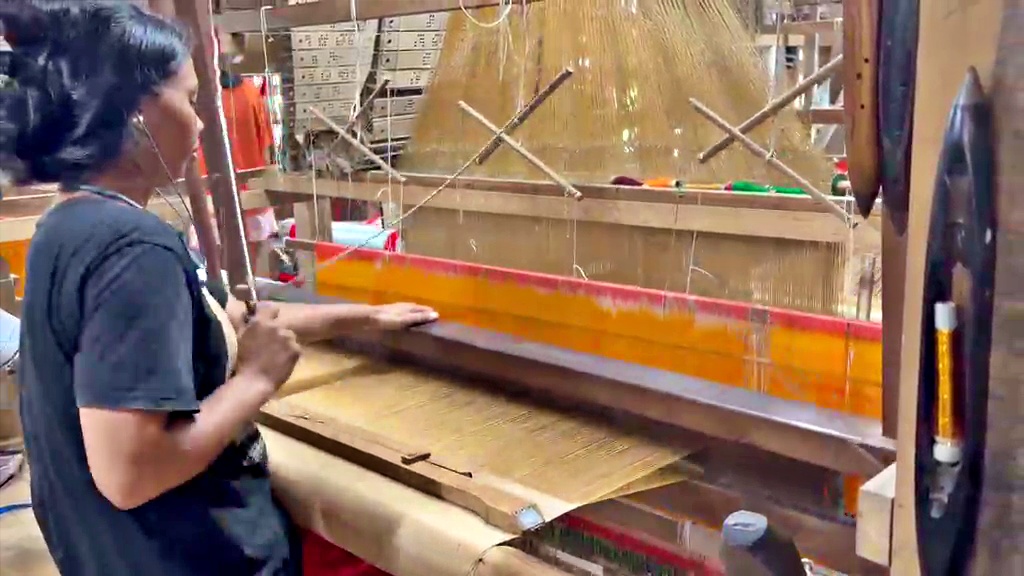
- Weaving continues largely as a household-based traditional craft, with women playing a central role in preserving and transmitting the skill across generations.
- In 2026, Assam Deori Handloom Products received Geographical Indication (GI) registration, formally recognising their distinct geographical and cultural identity.
About the Deori Community
- The Deoris are an indigenous community primarily inhabiting parts of Upper Assam.
- Traditional Deori society possesses a rich heritage of weaving, agriculture, festivals, folk traditions and indigenous customs.
- Handloom weaving has traditionally been closely associated with Deori household life, especially among women.
- Traditional clothing is an important expression of Deori cultural identity and is particularly visible during festivals, religious ceremonies and social occasions.
Geographical Distribution
Deori weaving traditions are particularly associated with Deori-inhabited areas across Upper Assam, including districts such as:
- Dhemaji
- Lakhimpur
- Dibrugarh
- Jorhat
- Sivasagar
- Tinsukia
- Sonitpur/Biswanath region
Contemporary accounts of the craft particularly note its concentration across the districts of Upper Assam.
General Characteristics of Deori Handloom Products
| Parameter | Details |
|---|---|
| Community | Deori community |
| Region | Primarily Upper Assam |
| Craft | Traditional handloom weaving |
| Major Material | Predominantly cotton yarn, along with other locally used fibres |
| Production | Traditionally household-based and handcrafted |
| Major Colours | Red, yellow, black, white and green |
| Common Designs | Stripes, diamonds, zigzags, floral and geometric motifs |
| GI Classification | Class 24 – Textiles |
The official GI Registry categorises Assam Deori Handloom Products under Class 24 – Textiles.
Distinctive Colours and Designs
- One of the most recognizable characteristics of Deori textiles is their use of strong and contrasting colours.
- Red, yellow, black, white and green are prominently associated with traditional Deori handloom products.
- Traditional designs include geometric patterns, particularly:
- Diamonds
- Zigzags
- Stripes
- Floral motifs
- These combinations help distinguish Deori textiles from several other handloom traditions of Assam.
Major Deori Handloom Products
Traditional Deori weavers produce a variety of textiles for everyday as well as ceremonial use.
| Product | General Use |
|---|---|
| Mekhela | Traditional lower garment worn by women |
| Shawls | Used for warmth as well as traditional attire |
| Wraps | Traditional clothing and ceremonial use |
| Gamusa/Gamosa-type textiles | Used for cultural and everyday purposes |
| Traditional fabrics | Used to prepare different forms of Deori attire |
These textiles become particularly prominent during community festivals and cultural celebrations.
Traditional Weaving Process
The production broadly involves:
Selection of Yarn → Yarn Preparation → Dyeing → Loom Preparation → Designing → Hand Weaving → Finishing
- Yarn Preparation: Suitable yarn is cleaned and prepared before weaving.
- Dyeing: Yarn is coloured according to the traditional colour combinations required for a particular garment.
- Loom Setting: Warp threads are carefully arranged on the loom.
- Pattern Planning: The weaver determines the traditional motifs and colour sequences.
- Hand Weaving: Threads are manually interlaced while simultaneously creating the required designs.
- Finishing: The finished textile is removed, trimmed and prepared for use.
The combination of loom setup, yarn preparation, dyeing and traditional weaving techniques contributes to the distinctiveness of Deori textiles.
Role of Deori Women
- Women are the principal custodians of the traditional Deori weaving tradition.
- Girls traditionally acquire weaving skills from older women within the family and community.
- The knowledge is therefore transmitted largely through intergenerational learning rather than formal institutions.
- Weaving allows women to produce clothing for their families while also contributing to household income when surplus products are marketed.
- Preservation of Deori handloom consequently contributes to both women’s empowerment and cultural continuity.
Cultural Significance
- Deori handloom products are an important marker of Deori ethnic and cultural identity.
- Traditional clothing connects community members with their ancestral heritage.
- Handwoven garments are extensively used during festivals, ceremonies and important social occasions.
- Colours, motifs and weaving styles represent forms of traditional artistic expression.
- The craft therefore preserves both tangible heritage in the form of textiles and intangible heritage in the form of weaving knowledge.
Economic Importance
- Handloom weaving provides a potential source of supplementary income for rural households.
- Greater demand for authentic Deori products can generate employment for women weavers and traditional artisans.
- GI recognition can facilitate branding and product differentiation in India’s large handloom market.
- The textiles also have potential within the growing markets for ethnic fashion, sustainable textiles and handmade products.
- Better marketing, producer organisations and e-commerce can connect rural artisans with national and international consumers.
Geographical Indication (GI) Tag
| Parameter | Details |
|---|---|
| Registered GI Name | Assam Deori Handloom Products |
| Application Number | 1314 |
| Applicant | Centre for Development Action & Appropriate Technology |
| Applicant Location | Biswanath Chariali, Biswanath District, Assam |
| Date of Filing | 10 July 2024 |
| Class | 24 |
| Goods | Textiles |
| GI Journal No. | 210 |
| Journal Availability Date | 26 November 2025 |
| Registration Certificate Date | 27 March 2026 |
| Current Status | Registered |
These details are recorded in the official Geographical Indications Registry, Intellectual Property India.
Importance of GI Recognition
- Protection of Authenticity: Helps consumers distinguish genuine Deori handloom products from imitations.
- Cultural Preservation: Encourages the continuation of traditional weaving techniques, motifs and designs.
- Market Recognition: Creates a distinct commercial identity for Deori textiles.
- Better Price Realisation: Authenticity and branding can help artisans obtain better value for their products.
- Women Empowerment: Since women are central to the weaving tradition, commercial development can create greater livelihood opportunities for Deori women.
- Preservation of Indigenous Knowledge: Helps safeguard weaving skills transmitted through generations.
- Promotion of Assam’s Heritage: Adds another distinctive indigenous textile tradition to Assam’s growing portfolio of GI-protected products. Assam’s Chief Minister specifically highlighted authenticity and better value for producers as expected benefits of the certification.
Conclusion
- Assam Deori Handloom Products represent the combination of indigenous knowledge, women’s craftsmanship, traditional designs and Deori cultural identity.
- Their characteristic red, yellow, black, white and green colours, together with geometric, floral, striped and zigzag patterns, give the textiles a distinctive visual character.
- The GI registration in 2026 provides formal recognition and protection to this heritage and can contribute to cultural preservation, artisan livelihoods, women’s economic empowerment and wider market recognition.