
World Oceans
The World Ocean is a single, interconnected body of salt water covering nearly 71% of the Earth’s surface. It contains about 97% of the Earth’s total water and plays a crucial role in regulating the global climate, weather systems, marine biodiversity, and international trade.
The World Ocean is traditionally divided into five major oceans:
- Pacific Ocean
- Atlantic Ocean
- Indian Ocean
- Southern (Antarctic) Ocean
- Arctic Ocean
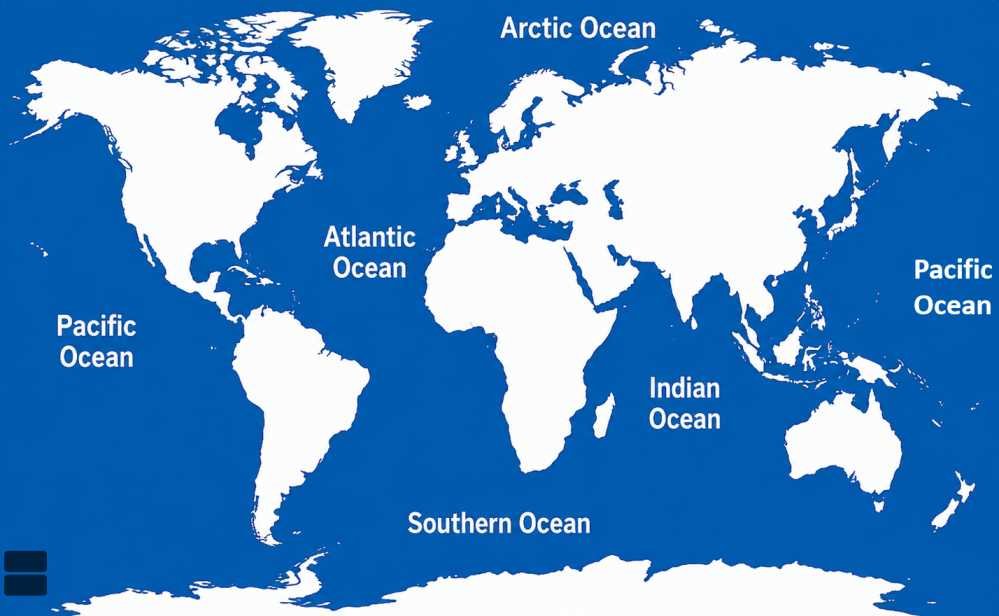
Pacific Ocean
- The Pacific Ocean is the largest and deepest ocean on Earth.
- Its name was given by Ferdinand Magellan, who called it “Mar Pacifico” (Peaceful Sea) because of its calm waters during his voyage.
- It covers approximately 165.25 million sq. km, accounting for nearly 46% of the Earth’s total ocean area.
Geographical Boundaries
- North: Arctic Ocean (through the Bering Strait)
- South: Southern Ocean
- East: North & South America
- West: Asia and Australia
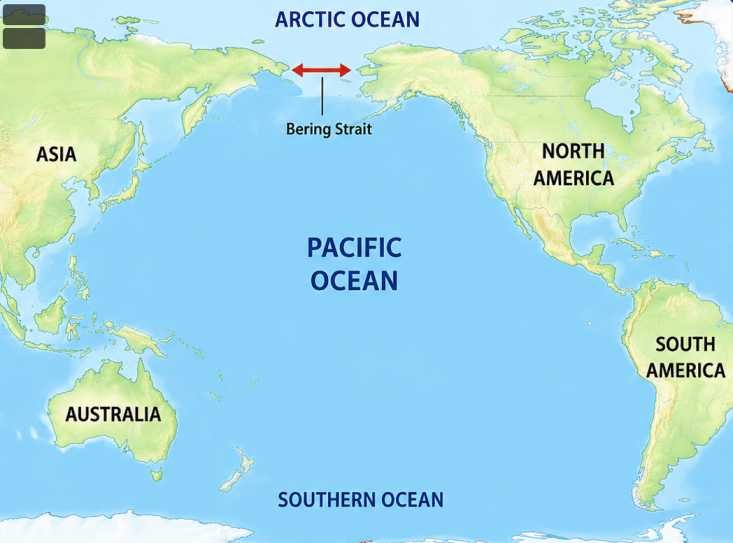
Average and Maximum Depth
- Average Depth: Approximately 4,280 m
- Deepest Point: Challenger Deep, Mariana Trench
- Maximum Depth: Approximately 10,935 m
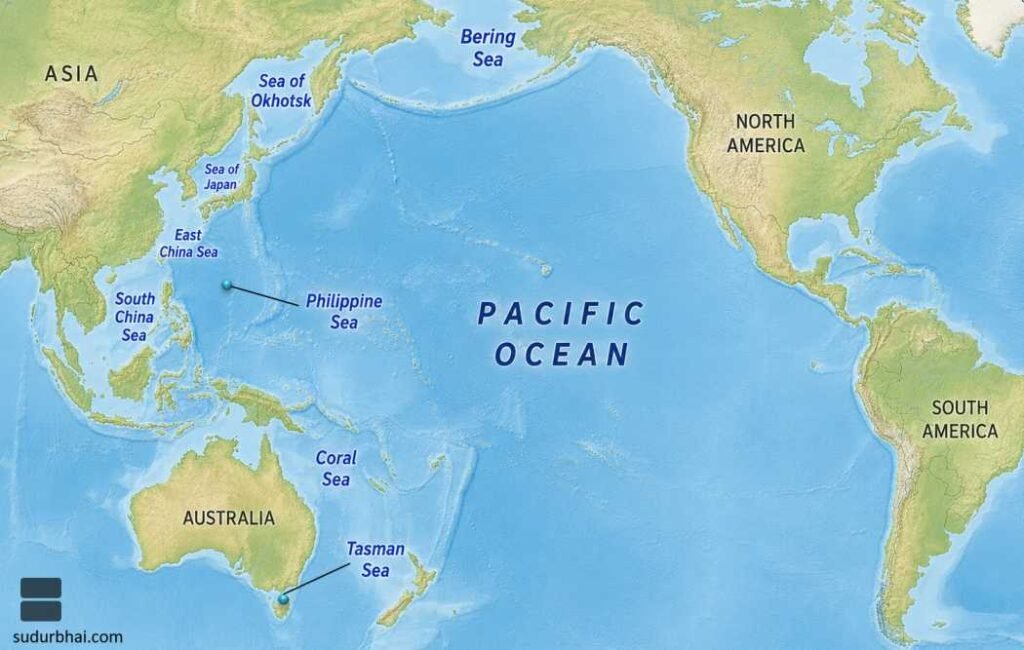
Important Marginal Seas
- Bering Sea
- Sea of Japan
- East China Sea
- South China Sea
- Philippine Sea
- Coral Sea
- Tasman Sea
- Sea of Okhotsk
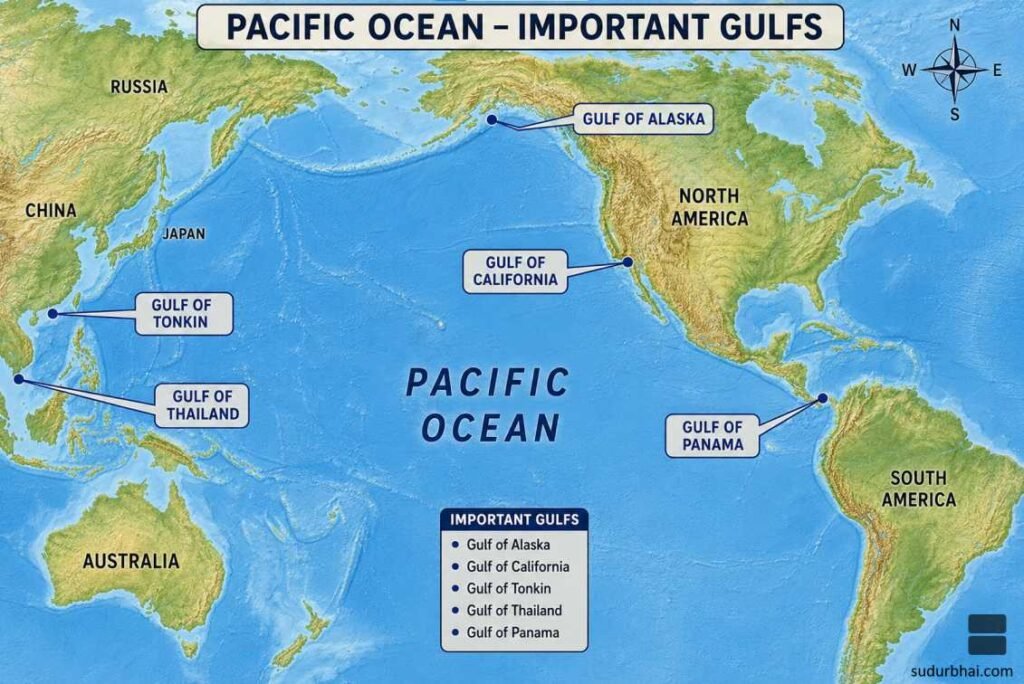
Important Gulfs
- Gulf of Alaska
- Gulf of California
- Gulf of Tonkin
- Gulf of Thailand
- Gulf of Panama
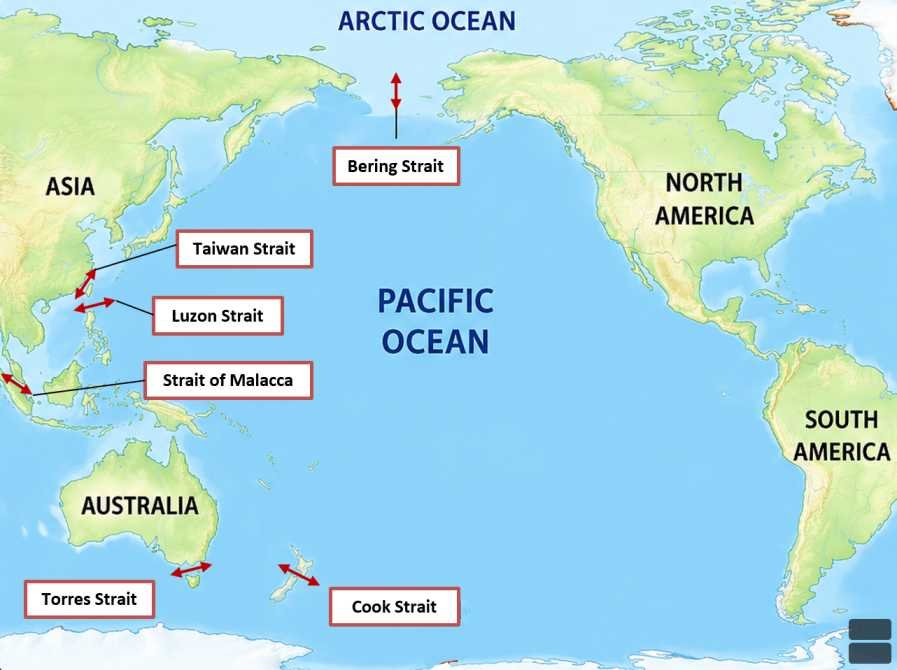
Important Straits
- Bering Strait
- Strait of Malacca
- Taiwan Strait
- Luzon Strait
- Torres Strait
- Cook Strait
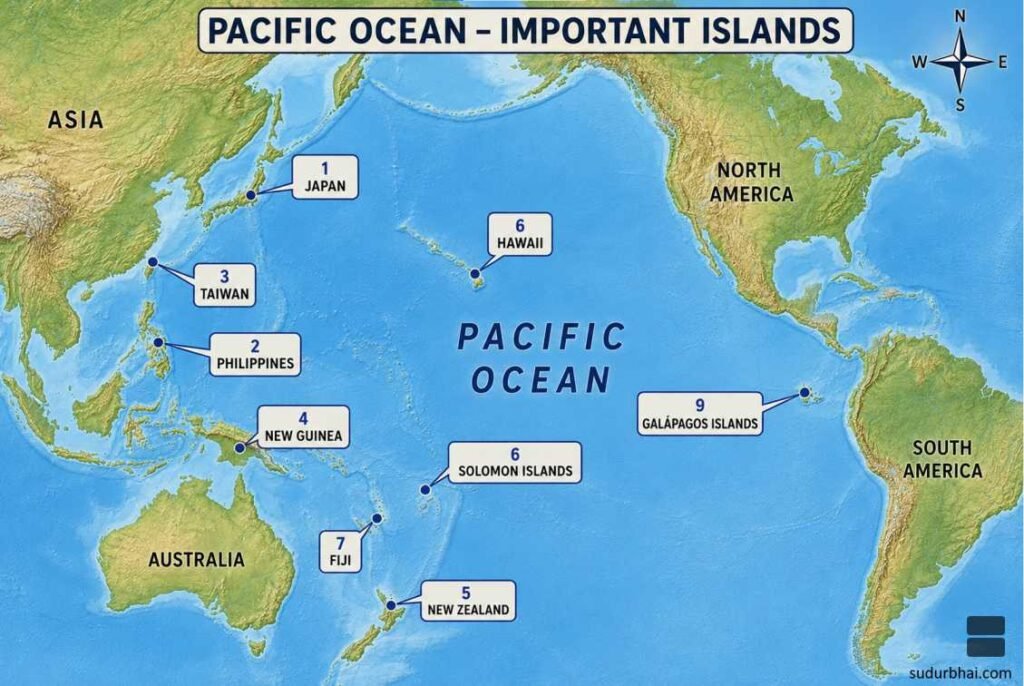
Important Islands
- Japan
- Philippines
- Taiwan
- New Guinea
- New Zealand
- Hawaii
- Fiji
- Solomon Islands
- Galápagos Islands
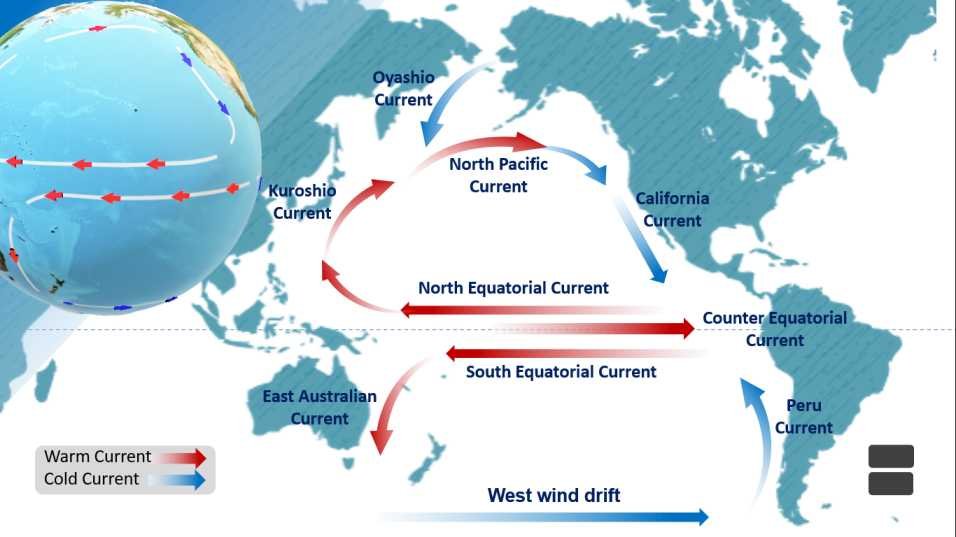
Major Ocean Currents
Warm Currents
- Kuroshio Current
- North Equatorial Current
- South Equatorial Current
- East Australian Current
- Alaska Current
Cold Currents
- California Current
- Oyashio Current
- Peru (Humboldt) Current
- West Wind Drift
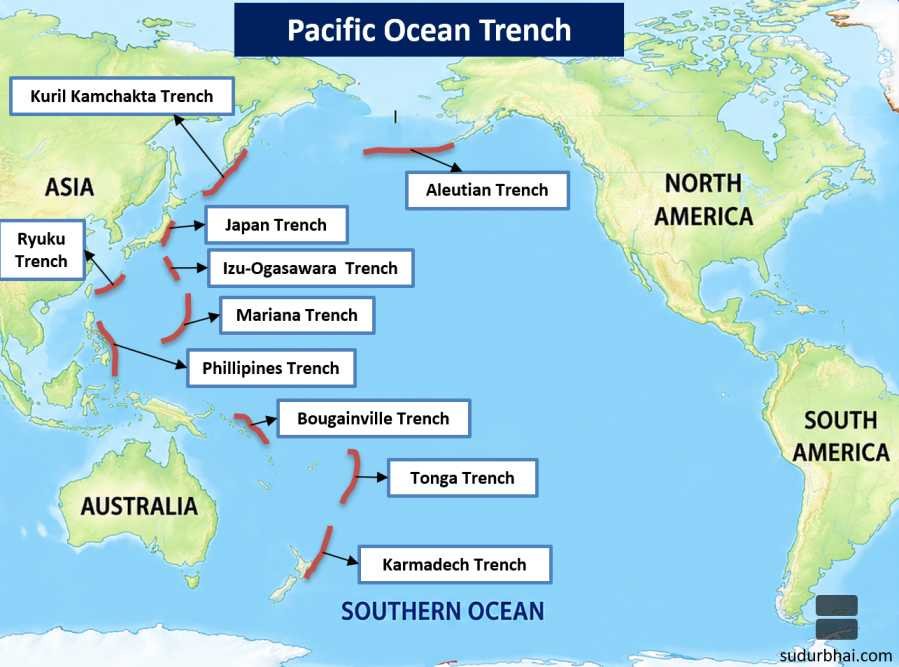
Major Trenches
- Mariana Trench (Deepest Trench of Pacific Ocean)
- Tonga Trench
- Philippine Trench
- Ryuku Trench
- Kuril Kamchakta Trench
- Japan Trench
- Izu-Ogasawara Trench
- Aleutian Trench
- Bougainville Trench
- Karmadech Trench
Economic Importance
- World’s richest fishing grounds
- Major trans-Pacific shipping routes
- Rich in petroleum, natural gas, manganese nodules, and marine biodiversity
- Centre of the Ring of Fire, containing numerous earthquakes and volcanoes
Atlantic Ocean
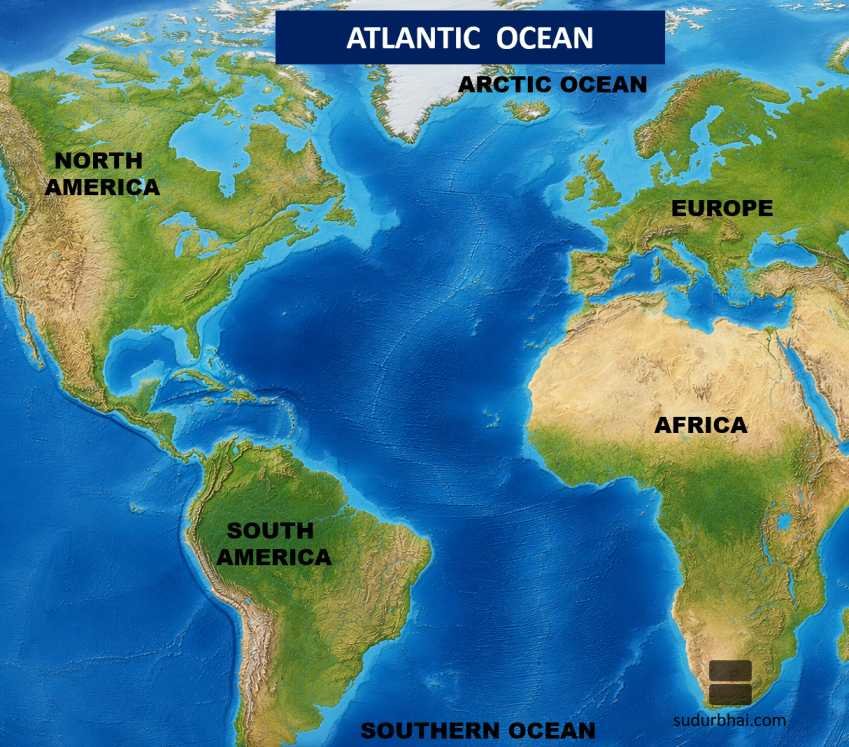
- The Atlantic Ocean is the second-largest ocean.
- It has a characteristic S-shaped outline.
- Total area is approximately 106.46 million sq. km.
Geographical Boundaries
- North: Arctic Ocean
- South: Southern Ocean
- East: Europe and Africa
- West: North & South America
Average and Maximum Depth
- Average Depth: Approximately 3,646 m
- Deepest Point: Milwaukee Deep (Puerto Rico Trench)
- Maximum Depth: Approximately 8,376 m
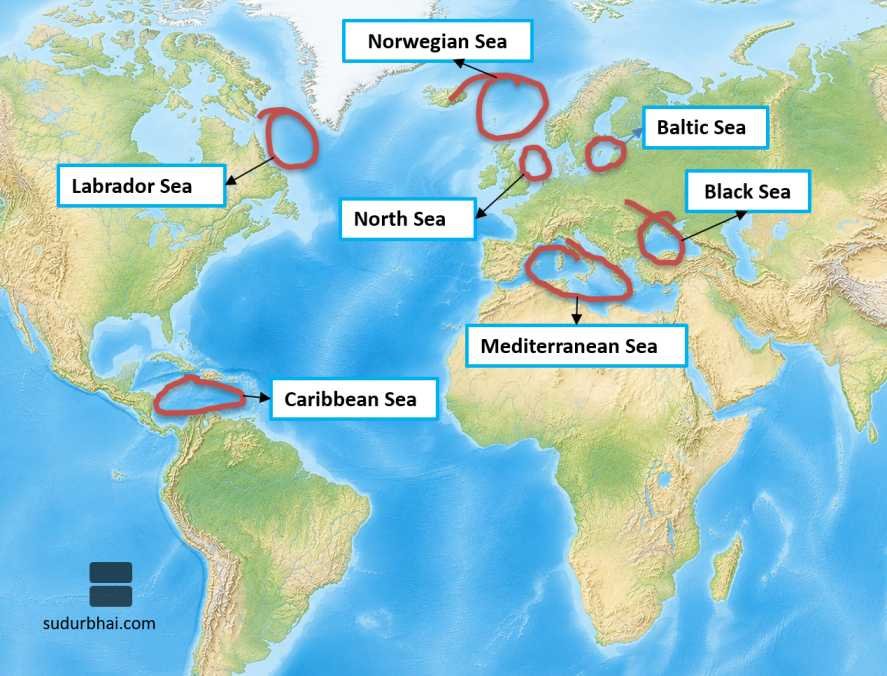
Major Seas
- Caribbean Sea
- Mediterranean Sea
- North Sea
- Baltic Sea
- Black Sea
- Norwegian Sea
- Labrador Sea
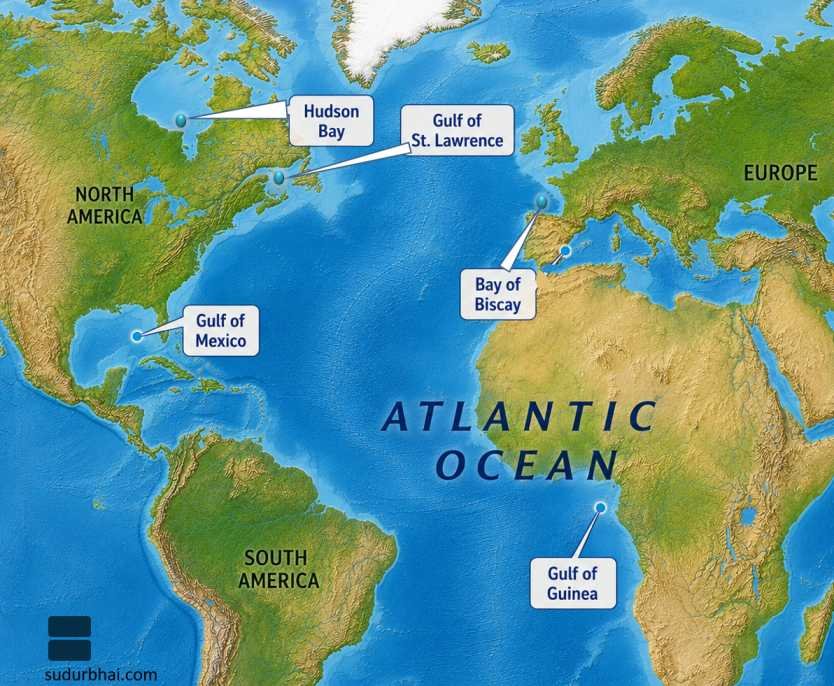
Major Gulfs
- Gulf of Mexico
- Gulf of Guinea
- Bay of Biscay
- Hudson Bay
- Gulf of St. Lawrence
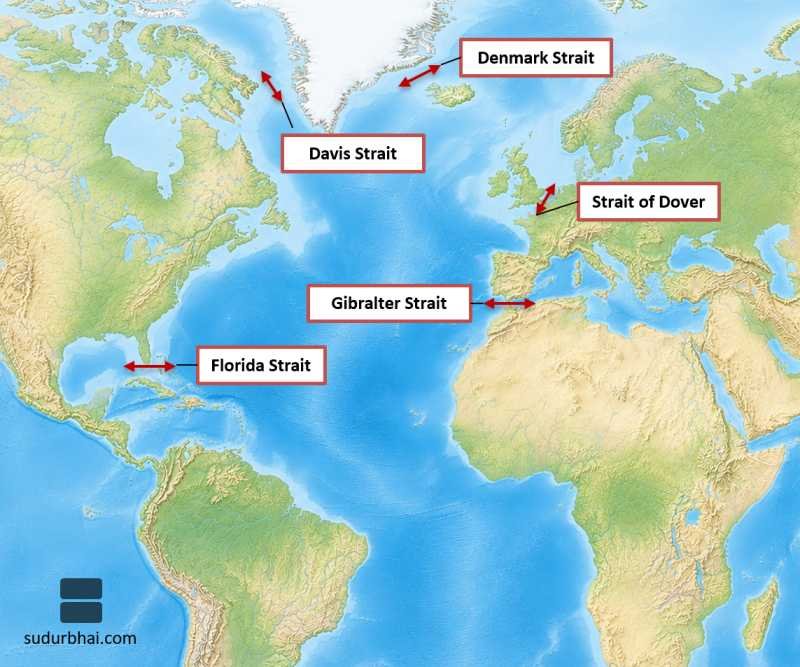
Major Straits
- Strait of Gibraltar
- Davis Strait
- Denmark Strait
- Florida Strait
- Strait of Dover
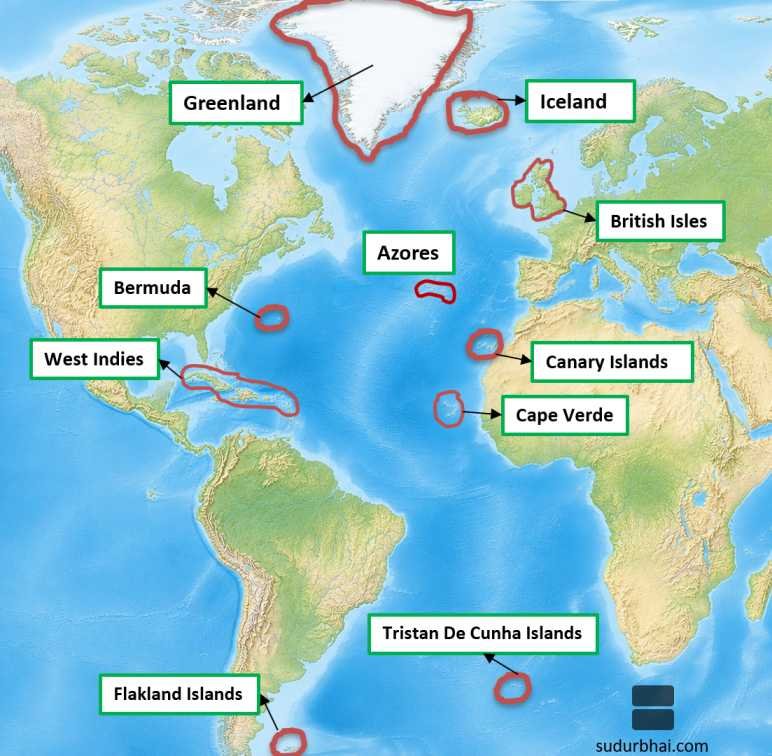
Important Islands
- Greenland
- Iceland
- British Isles
- Azores
- Canary Islands
- Bermuda
- West Indies
Major Ocean Currents
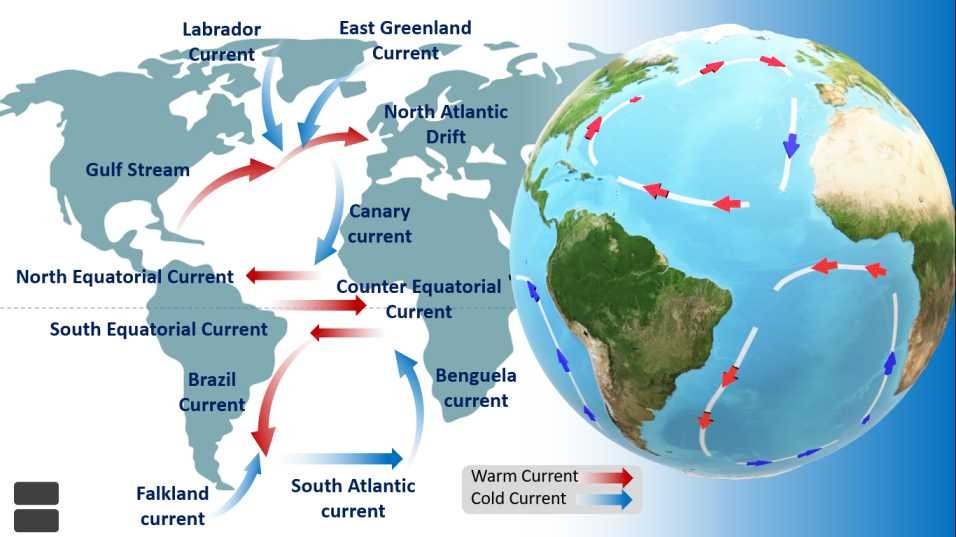
Warm Currents
- Gulf Stream
- North Atlantic Drift
- Brazil Current
- North Equatorial Current
Cold Currents
- Labrador Current
- Canary Current
- Benguela Current
- Falkland (Malvinas) Current
Ocean Floor Features
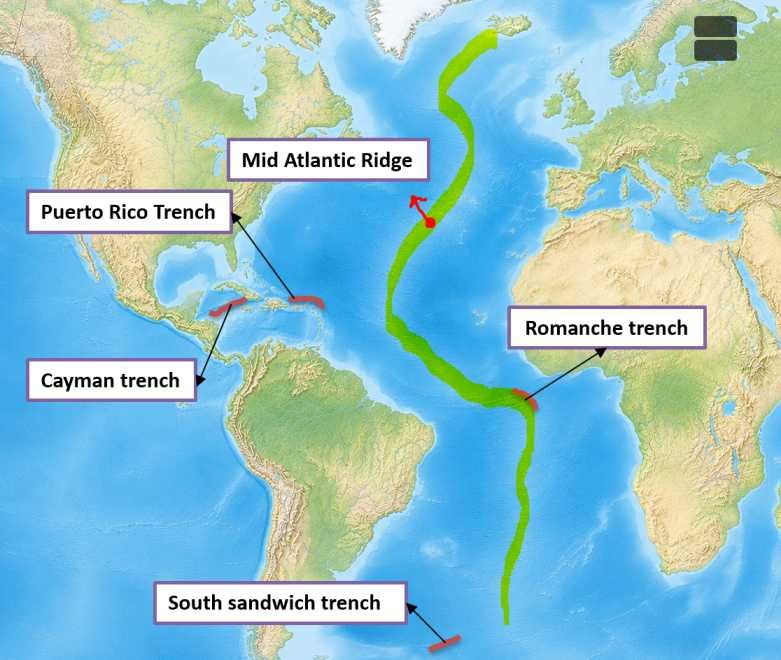
- Mid-Atlantic Ridge (Longest underwater mountain range on Earth)
- Puerto Rico Trench (Deepest Trench of Atlantic Ocean)
Romanche trench
South sandwich trench
Cayman trench
Economic Importance
- Busiest shipping routes in the world
- Rich fishing grounds
- Extensive offshore petroleum reserves
- Major route connecting Europe, Africa, and the Americas
Indian Ocean
- The Indian Ocean is the third-largest ocean.
- It is the only ocean named after a country (India).
- Area is approximately 70.56 million sq. km.
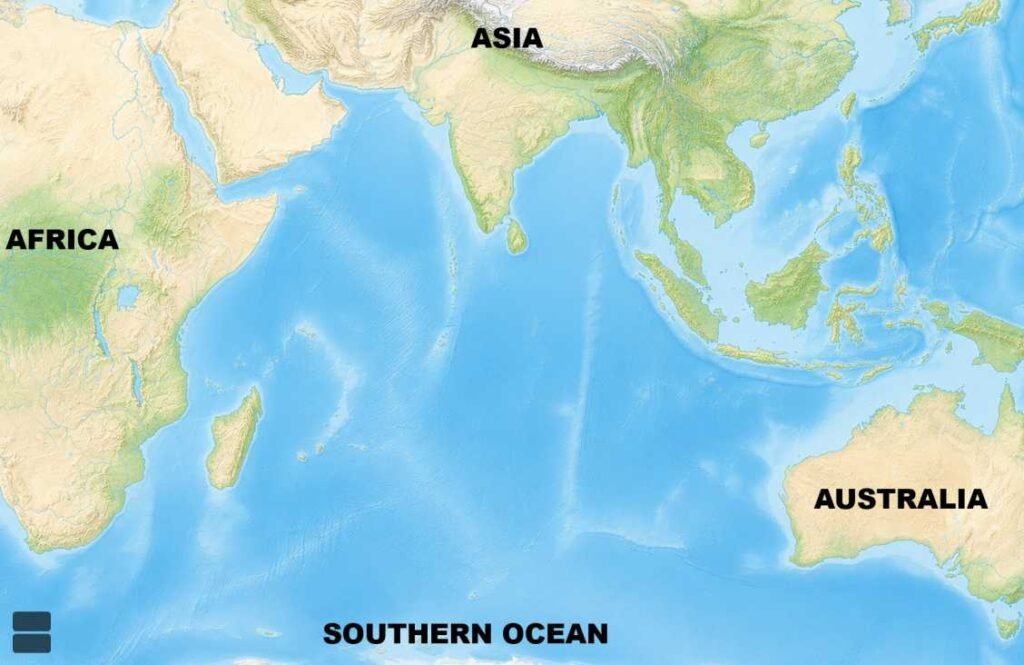
Geographical Boundaries
- North: Asia
- South: Southern Ocean
- West: Africa
- East: Australia
Average and Maximum Depth
- Average Depth: Approximately 3,741 m
- Deepest Point: Java (Sunda) Trench
- Maximum Depth: Approximately 7,258 m
Major Seas
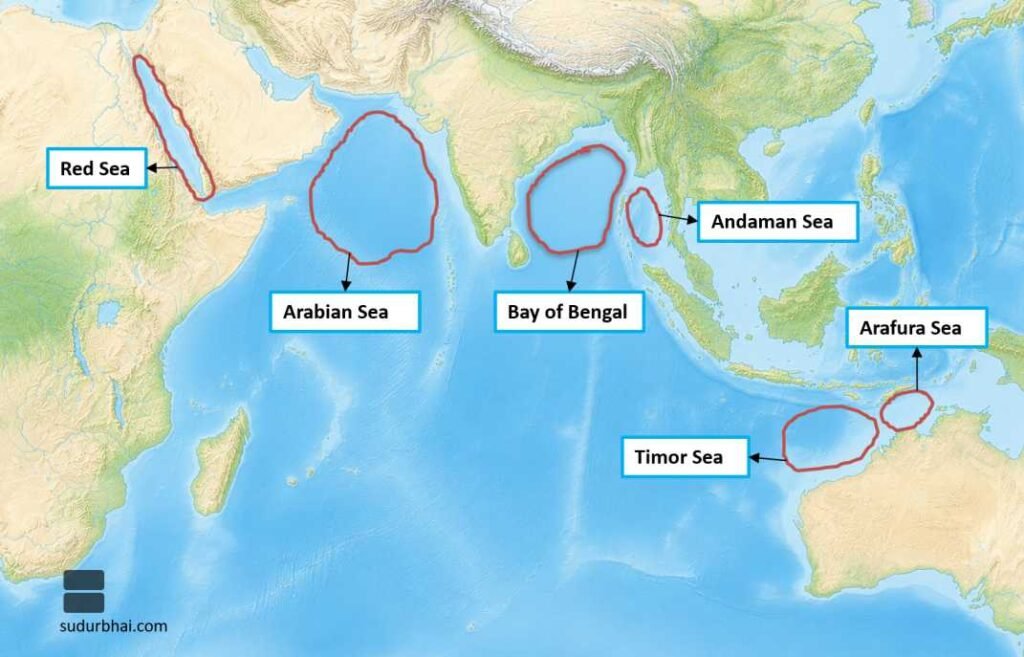
- Arabian Sea
- Bay of Bengal
- Andaman Sea
- Red Sea
- Timor Sea
- Arafura sea
Major Gulfs
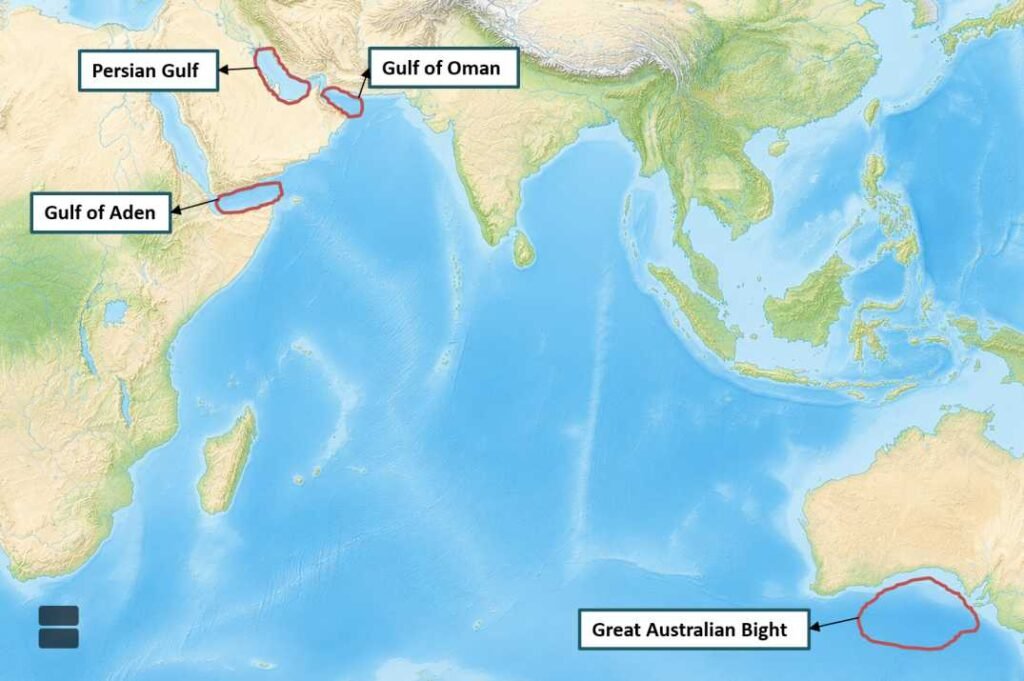
- Persian Gulf
- Gulf of Aden
- Gulf of Oman
- Great Australian Bight
Major Straits
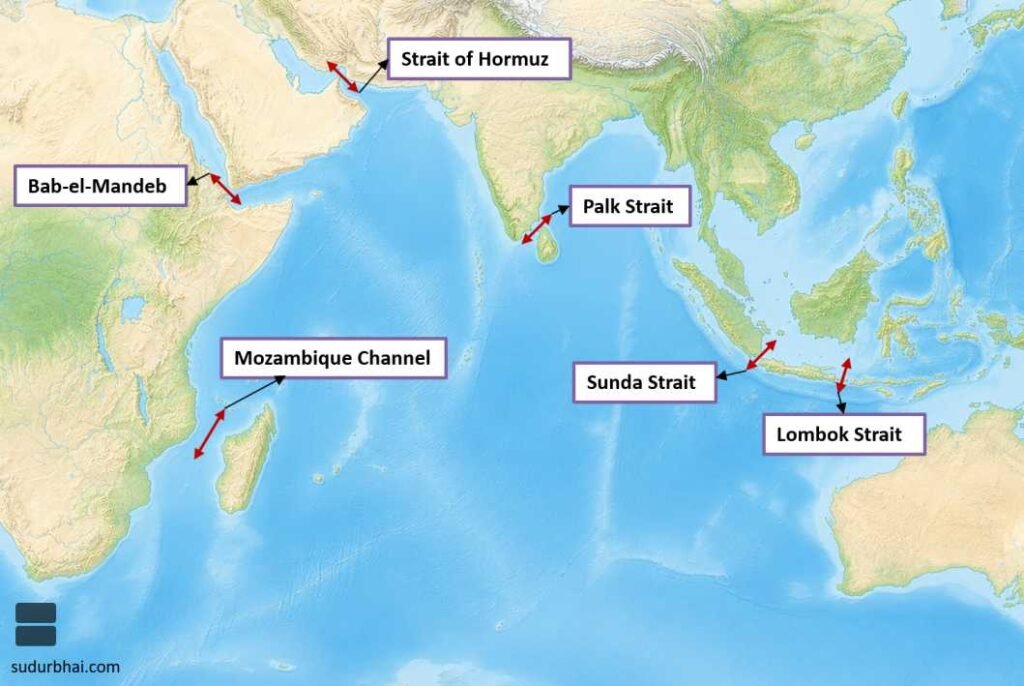
- Strait of Hormuz
- Bab-el-Mandeb
- Palk Strait
- Sunda Strait
- Lombok Strait
- Mozambique Channel
Important Islands
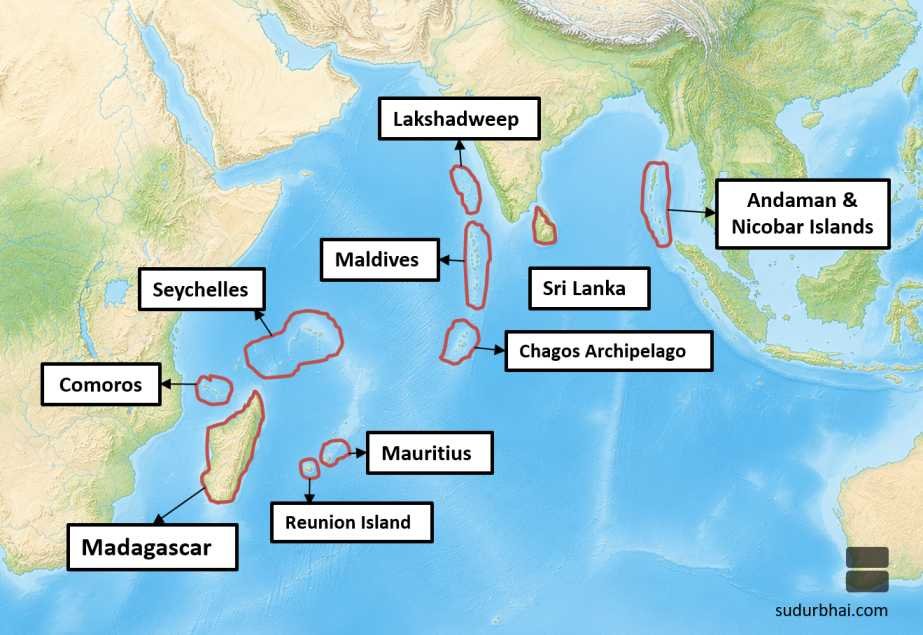
- Sri Lanka
- Madagascar
- Maldives
- Mauritius
- Seychelles
- Andaman & Nicobar Islands
- Lakshadweep
- Reunion Island
- Chagos Archipelago
- Comoros
Major Ocean Currents
Warm Currents
- Agulhas Current
- Mozambique Current
- South Equatorial Current
Cold Currents
- West Australian Current
- West Wind Drift
Special Feature: The Monsoon Currents of the northern Indian Ocean reverse direction seasonally, making them unique among the world’s oceans.
Economic Importance
- Carries nearly one-third of global maritime trade
- Major oil transport route
- Rich in petroleum, natural gas, and marine fisheries
- Important chokepoints:
- Hormuz
- Bab-el-Mandeb
- Malacca
Southern Ocean (Antarctic Ocean)
- The Southern Ocean surrounds Antarctica.
- It was officially recognised by the International Hydrographic Organization (IHO) in 2021.
- Area is approximately 20.3 million sq. km.
Boundaries
- Extends from the Antarctic coast to approximately 60° South Latitude.
Average and Maximum Depth
- Average Depth: Approximately 3,270 m
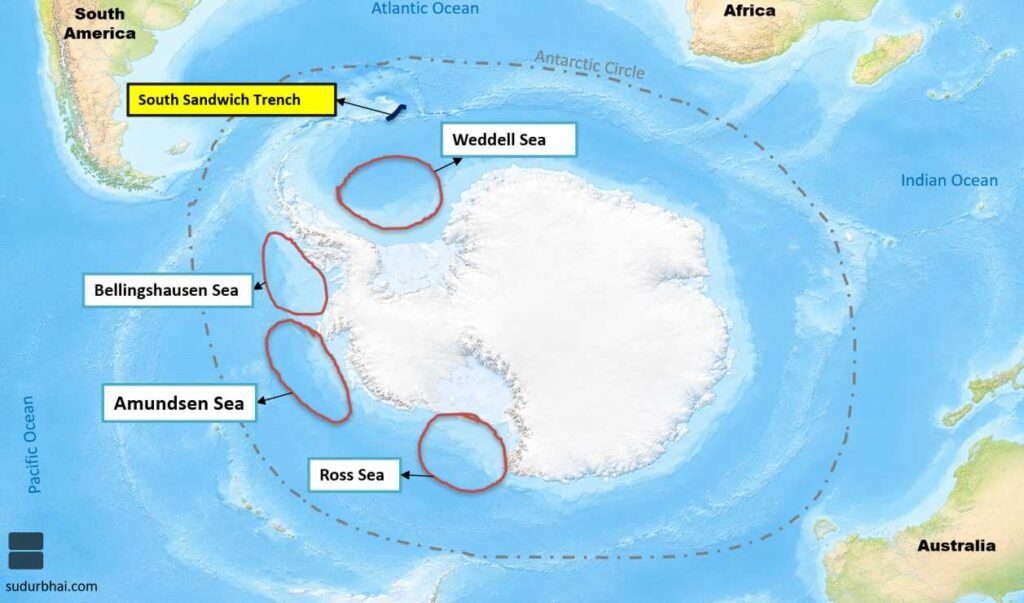
- Deepest Point: South Sandwich Trench
- Maximum Depth: Approximately 7,434 m
Major Seas
- Ross Sea
- Weddell Sea
- Amundsen Sea
- Bellingshausen Sea
Major Current
- Antarctic Circumpolar Current (West Wind Drift) (Largest ocean current on Earth)
Importance
- Regulates global climate
- Drives global thermohaline circulation
- Supports Antarctic krill, penguins, whales, and seals
- Major carbon sink helping to moderate atmospheric CO₂
Arctic Ocean
- The Arctic Ocean is the smallest and shallowest ocean.
- It remains largely covered with sea ice throughout the year.
- Area is approximately 14.06 million sq. km.
Geographical Boundaries
- Surrounds the North Pole.
- Bordered by North America, Europe, and Asia.
Average and Maximum Depth
- Average Depth: Approximately 1,205 m
- Deepest Point: Molloy Deep
- Maximum Depth: Approximately 5,550 m
Major Seas
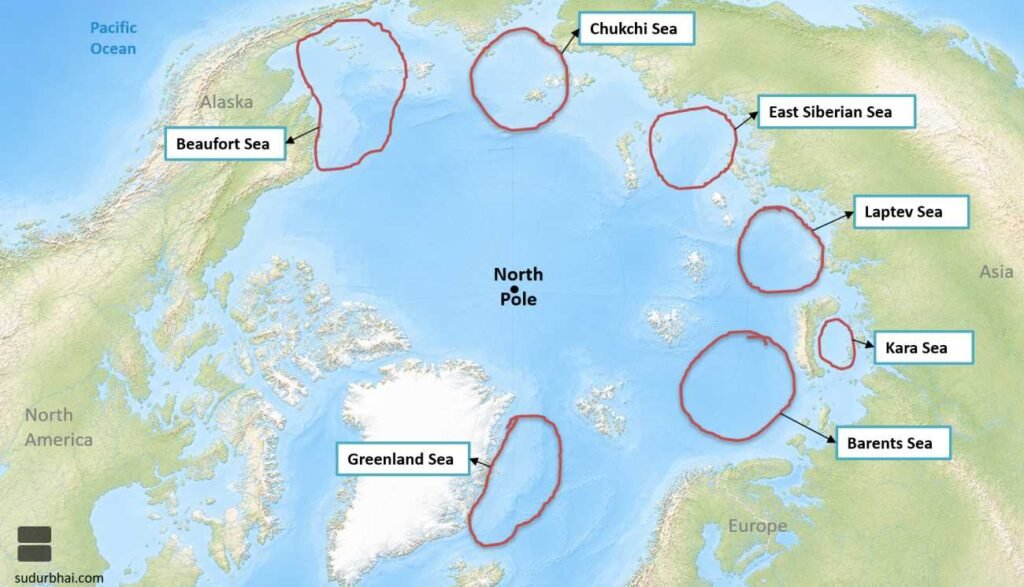
- Barents Sea
- Kara Sea
- Laptev Sea
- East Siberian Sea
- Chukchi Sea
- Beaufort Sea
- Greenland Sea
Important Straits
- Bering Strait
- Fram Strait
- Davis Strait
Important Islands
- Greenland
- Svalbard
- Novaya Zemlya
- Franz Josef Land
- Canadian Arctic Archipelago
Major Ocean Currents
Warm Current
- Norwegian Current
Cold Currents
- East Greenland Current
- Transpolar Drift
- Beaufort Gyre
Economic Importance
- Rich reserves of petroleum, natural gas, and rare minerals
- Increasingly important Northern Sea Route due to shrinking sea ice
- Strategic region for global geopolitics, shipping, and climate research
Comparative Overview of the Five Oceans
| Ocean | Rank (Area) | Area (Million km²) | Deepest Point | Maximum Depth | Distinctive Feature |
|---|---|---|---|---|---|
| Pacific | 1 | 165.25 | Challenger Deep (Mariana Trench) | 10,935 m | Largest & deepest ocean; Ring of Fire |
| Atlantic | 2 | 106.46 | Milwaukee Deep (Puerto Rico Trench) | 8,376 m | S-shaped; busiest shipping routes |
| Indian | 3 | 70.56 | Java (Sunda) Trench | 7,258 m | Only ocean named after a country; monsoon currents |
| Southern | 4 | 20.33 | South Sandwich Trench | 7,434 m | Antarctic Circumpolar Current |
| Arctic | 5 | 14.06 | Molloy Deep | 5,550 m | Smallest, shallowest, and ice-covered ocean |