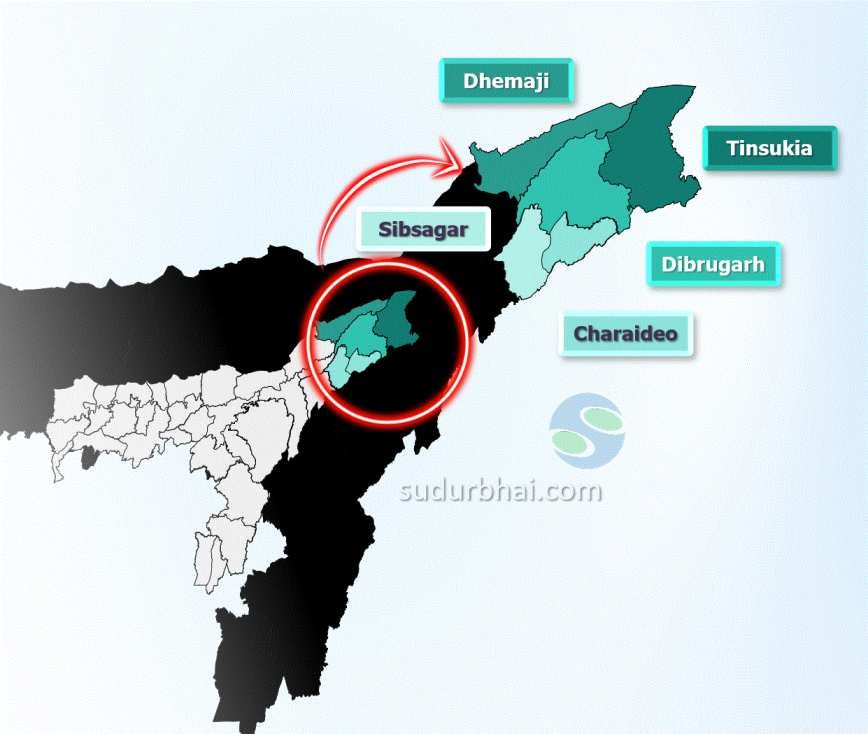
Tinsukia District

Tinsukia District

  • Location: Northeastern part of Assam, India.
  • Established: October 1, 1989.
  • Headquarters: Tinsukia town.
  • Significance: Known for its cultural heritage, agriculture, and industry.

  History of Tinsukia District

Early History

    • Part of the Chutiya Kingdom during the medieval period.

    • After the Ahoms defeated the Chutiyas, they appointed the Sadiya-Khowa Gohain as the governor.

    • The Matak Kingdom emerged after the Moamoria Rebellion.

    • King Sarbananda Singha, of Chutiya descent, established his capital at Rangagarh on the Guijan River.

    • In 1791 AD, the capital moved to Bengmara (modern-day Tinsukia), built with the help of Minister Gopinath Barbaruah (Godha).

    • Captain Hamilton Vetch’s 1841 map referred to much of present-day Dibrugarh and Tinsukia as the “Bengmara Country of the Moamareeya Tribe”.

Development

    • King Sarbananda Singha commissioned the Tinikunia Pukhuri (triangular pond), from which Tinsukia derives its name.

    • Several tanks were dug during his reign, including Chauldhuwa Pukhuri, Kadamoni Pukhuri, Na-Pukhuri, Devi Pukhuri, and Rupahi Pukhuri.

    • Roads like Godha-Borbaruah Road, Rangagarah Road, Rajgor Road, and Hatiali Road were developed in the Matak Kingdom.

    • The British discovered tea plants in Sadiya (1823), leading to the first tea plantation in Chabua near Tinsukia.

    • The Dibru–Sadiya Railway (1882), established by the Assam Railway & Trading Company, accelerated economic growth.

    • Tinsukia became Assam’s 23rd district on October 1, 1989, after being split from Dibrugarh.

  Geography of Tinsukia District

    • Area: About 3,790 square kilometers.
    • Boundaries:
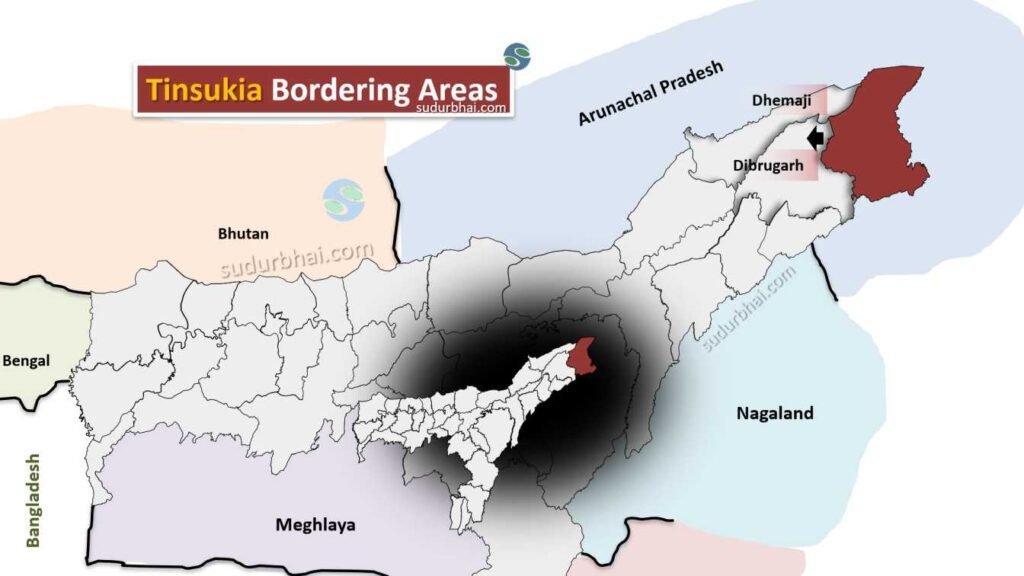
      • North: Arunachal Pradesh
      • SouthArunachal Pradesh
      • East: Arunachal Pradesh.
      • West: Dhemaji and Dibrugarh districts.
        Tinsukia Nearby Districts
        Tinsukia Neighbouring Districts
    • Topography: Mix of flat plains and hilly terrain, with fertile land for agriculture.
    • Climate: Humid subtropical climate with hot summers and mild winters. Annual rainfall averages 2,323 mm (mostly during the monsoon from June to September).
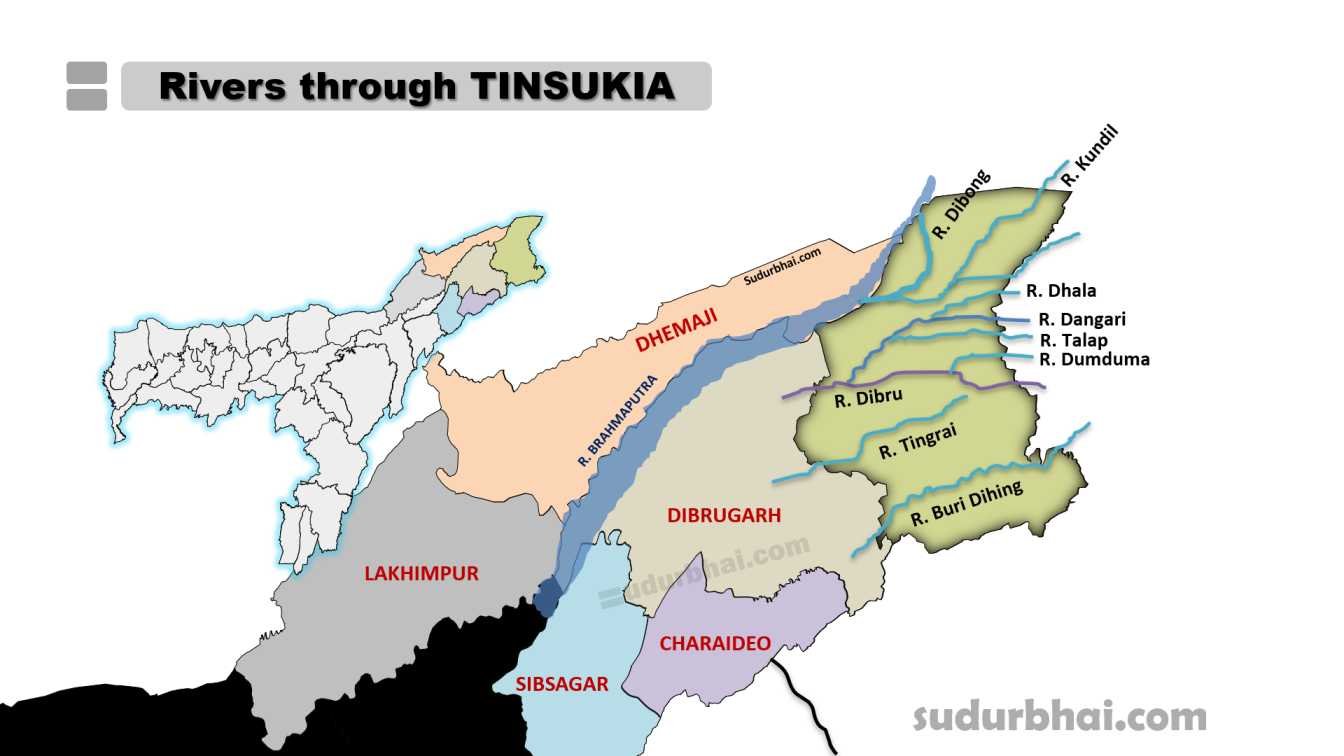
    • Rivers: Major rivers include the Brahmaputra, Dibru, Tingrai and Burhi Dihing.
Rivers through Tinsukia
Rivers through Tinsukia District

  Socio Economy of Tinsukia District

  • Agriculture: Main economic activity. Key crops include rice, tea, oranges, ginger, and citrus fruits. Famous for its tea plantations.
  • Livestock: Common activities include cattle, goat, and poultry farming.
  • Industry: Tinsukia is home to Digboi, the oldest oil refinery in India. It also has significant coal mining in Margherita and Ledo and a Hindustan Unilever (HUL) cosmetic plant.
  • Trade and Commerce: A commercial hub due to its strategic location and industrial activities.

  Transport of Tinsukia District

  • Roadways: Well-connected by National Highway 15 and other roads.
  • Railways: The Tinsukia Railway Station is an important junction on the Northeast Frontier Railway network.
  • Airways: The nearest airport is in Dibrugarh, around 40 km away, linking Tinsukia to major cities in India.

  Demographics of Tinsukia District

Population

    • Total Population: 1,327,929
    • Male: 680,231
    • Female: 647,698
    • Tinsukia District population constituted 4.26 percent of total Maharashtra population

Population Growth

    • Population Growth: 15.47% (2001-2011)

Literacy

    • Average Literacy Rate: 69.66%
    • Male Literacy Rate: 77.19%
    • Female Literacy Rate: 61.73%

Sex Ratio

    • Sex Ratio: 952 females per 1000 males
    • Child Sex Ratio (0-6 years): 960 girls per 1000 boys

Child Population (0-6 Age)

    • Total Child Population: 181,826
    • Percentage of District Population: 13.69%

Rural vs. Urban

    • Rural Population: 1,063,186
      • Percentage of Total Population: 80.06%
    • Urban Population: 264,743
      • Percentage of Total Population: 19.94%
    • Rural Literacy: 65.05%
    • Urban Literacy: 87.22%

Tinsukia Urban Agglomeration

    • Population: 126,389
    • Literacy Rate: 89.03%
    • Sex Ratio: 875 females per 1000 males
    • Child Population (0-6 age): 12,576

 Administrative Setup of Tinsukia District

  • District Headquarters: Tinsukia town.
  • Sub-Divisions: Tinsukia Sadar, Sadiya, Margherita, and Doomdooma.
  • Revenue Circles: Includes Tinsukia Circle and Sadiya Circle.
  • Development Blocks: Several development blocks focused on local governance and development.

 Attractive Tourist places of Tinsukia District

Historical Sites

    • Na-Pukhuri: A group of nine ponds from the Muttock Kingdom, built during King Sarbananda Singha’s reign (1788–1805).

      • The central pond (11.75 acres) has potential for development into a lake and amusement area.

      • The surrounding park has been renovated and renamed “Marut Nandan Kanan”.

    • Ruins of the Ancient Ahom Kingdom: Remnants of structures reflecting the region’s historical significance.

Other Attractions

    • Dibru-Saikhowa National Park: A biodiversity hotspot with a unique mix of flora and fauna, with potential to become a tiger reserve.

    • Stilwell Road (Ledo Road): Built during World War II, this historic road starts in Ledo, Tinsukia, and extends to Kunming, China.

    • Digboi (27 km from Tinsukia):

      • Home to India’s first oil refinery and oil field.

      • Features the National Oil Park and Museum.

      • Ridge Hill viewpoint offers a panoramic view of the oil fields.

    • Margherita (45 km from Tinsukia): Known for lush tea gardens and scenic beauty.

    • Tilinga Mandir: A revered temple where devotees tie bells as a symbol of fulfilled wishes.

 Languages spoken in Tinsukia District

    • Assamese: 47.8%
    • Sadan/Sadri: 14.1%
    • Bengali: 10.05%
    • Hindi: 8.54%
    • Nepali: 7.52%
    • Bhojpuri: 2.30%
    • Odia: 2.11%
    • Miri/Mishing: 1.46%

Let us know any further suggestions ,we at sudurbhai.com will be happy to hear from you in our comment section below ! 

Leave a Comment

Your email address will not be published. Required fields are marked *

Scroll to Top