Baksa District

Baksa District

1. Formation

      • Established on June 1, 2004, as part of the Bodoland Territorial Region (BTR).
      • Created from parts of Nalbari, Barpeta, Kamrup, and a small portion of Darrang districts.


        2.Headquarters
                Located in Mushalpur.


        3.Geographical Area

                 Approximately 2,346 sq. km.


        4.Population
                 Approx. 950,075 (2011 census).

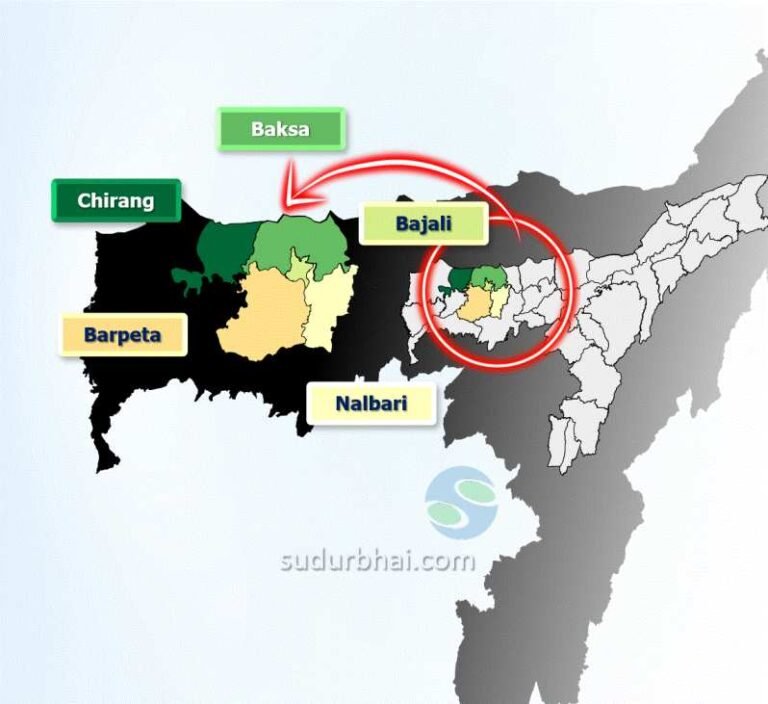
Chirang, Baksa, nalbari, Bajali , Barpeta

History of Baksa District

Formation of Baksa

    • Established on: February 10, 2003, under the Bodoland Territorial Autonomous Districts (BTAD).
    • Carved out from: Nalbari, Barpeta, Kamrup, and part of Darrang districts.
    • Headquarters: Mushalpur, 105 km from Guwahati.

Name Origin

    • Derived from “Bangsa”, meaning farmhouse/corridor in Dzonkha.
    • Historically a Bhutanese trade route, part of the Dooars (foothills) facilitating trade.

Historical Significance & Development

    • Bodoland Movement:
      • Aimed at political rights, identity, land rights, and cultural preservation of the Bodo people.

Geography of Baksa District

    • Area: 2,038.57 sq km.
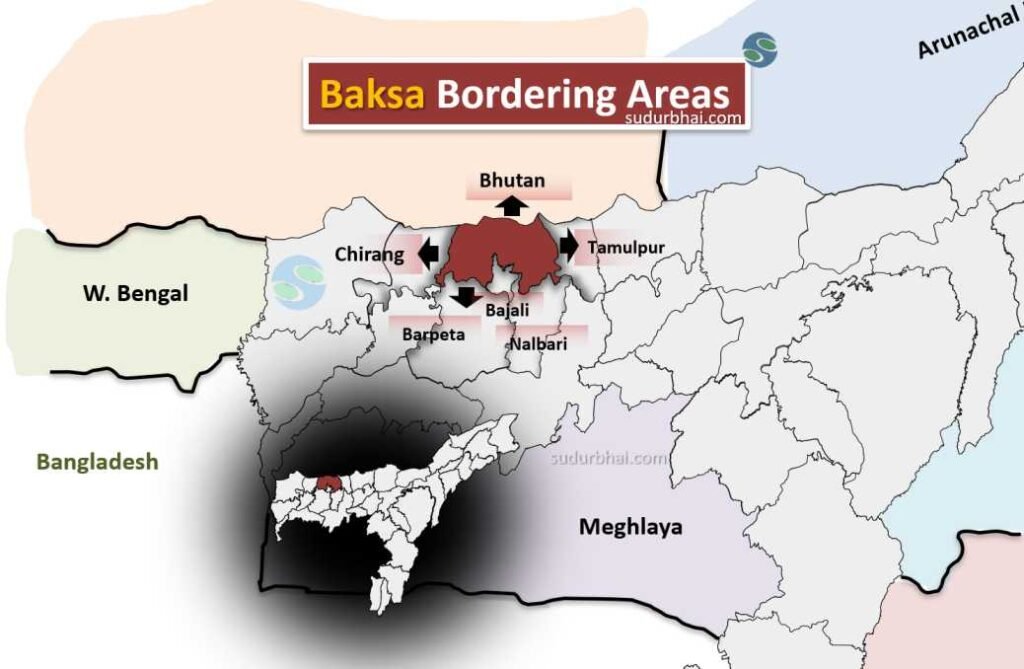
    • Boundaries:
      • North: Bhutan
      • East: Tamulpur
      • South: Nalbari , Bajali and Barpeta
      • West: Chirang
        Baksa Bordering districts
    • Topography: Predominantly hilly, with a mix of plains and hills.
    • A portion of Manas National Park falls here.
    • Climate:
      • Summer: Hot and humid with average temperatures ranging from 25°C to 35°C.
      • Monsoon: Heavy rainfall from June to September.
      • Winter: Cool and foggy, temperatures range from 5°C to 20°C.
      • Rainfall : Approximately 2500 mm (average).
    • Rivers:
      • Manas River (along the western boundary).
      • Pagladia (along the eastern boundary)
      • Other smaller rivers like the Beki, kaladia, Puthimari, Tihu, pohumara and Buradia etc.
Rivers in Baksa
Rivers in Baksa district

Socio-Economy of Baksa District

    • Main Economy: Agriculture is the mainstay, with over 70% of the population dependent on farming.
    • Crops: Rice, Jute, Mustard, Maize, and Tea are some key crops.
    • Forestry: The district also has significant forest resources, including timber, bamboo, and medicinal plants.
    • Other Industries: Handloom, handicrafts, and fishery also contribute to the local economy.
    • Livelihood: Many people depend on the cultivation of crops, while others engage in daily wage labor and small-scale trading.

Transport in Baksa District

    • Road Connectivity:
      • National Highway 31 passes through the district.
      • Several state highways connect major towns and villages within the district and to neighboring districts.
      • Important roads connect Baksa with Assam’s major towns and Bhutan.
    • Rail Connectivity:
      • Railway stations include Mushalpur and other small stations.
    • Air Connectivity: The nearest airport is in Guwahati, which is about 90 km from the district.

Demographics of Baksa District (2011 Census)

    • Population

      • Total Population: 950,075

        • Males: 481,330

        • Females: 468,745

      Sex Ratio

      • Overall Sex Ratio: 974 females per 1000 males

      • Child Sex Ratio (0-6 years): 966 girls per 1000 boys

      Population Growth

      • Growth Rate (2001-2011): 10.74%

      Literacy Rate

      • Overall Literacy Rate: 69.25%

        • Male Literacy: 77.03%

        • Female Literacy: 61.27%

      Child Population

      • Total Children (0-6 years): 122,872

        • Males: 62,498

        • Females: 60,374

      • Child Proportion (0-6 years): 12.93% of total population

      Religious Composition

      The religious demographics are as follows:

      • Hinduism: 81.74%

      • Islam: 15.20%

      • Christianity: 2.59%

      • Other or Not Stated: 0.47%

Administrative Setup of Baksa District

    • Revenue Circles: 4 (Baksa, Tamulpur, Barama, and Gossaigaon).
    • Development Blocks: 5 (Baksa, Tamulpur, Barama, Gossaigaon, and Chenga).
    • Gram Panchayats: 70+.
    • Villages: 600+.
    • Police Stations: 6.
    • Municipal Boards: 2 (Tamulpur, Mushalpur).
    • Headquarters: Mushalpur.

Attractive Tourist Places

1. Manas National Park
        • UNESCO World Heritage Site known for biodiversity and natural beauty.

2. Bodo Cultural Sites
        • Showcase Bodo culture and traditions, highlighting indigenous heritage.

Languages Spoken in Baksa District

      • Assamese: 38.34%
      • Bodo: 36.33%
      • Bengali: 17.69%
      • Nepali: 2.42%
      • Sadri: 1.61%
      • Kurukh: 1.47%

Q. Baksa district of Assam was created from the parts of which of the following districts? (2016)

(a) Barpeta. Nalbari and Kamrup

(b) Goalpara and Kokrajhar

(c) Bongaigaon and Kokrajhar

(d) Darrang, Barpeta and Nalbari

Let us know any further suggestions ,we at sudurbhai.com will be happy to hear from you in our comment section below ! 

1 thought on “Baksa District”

Leave a Comment

Your email address will not be published. Required fields are marked *

Index
Scroll to Top