
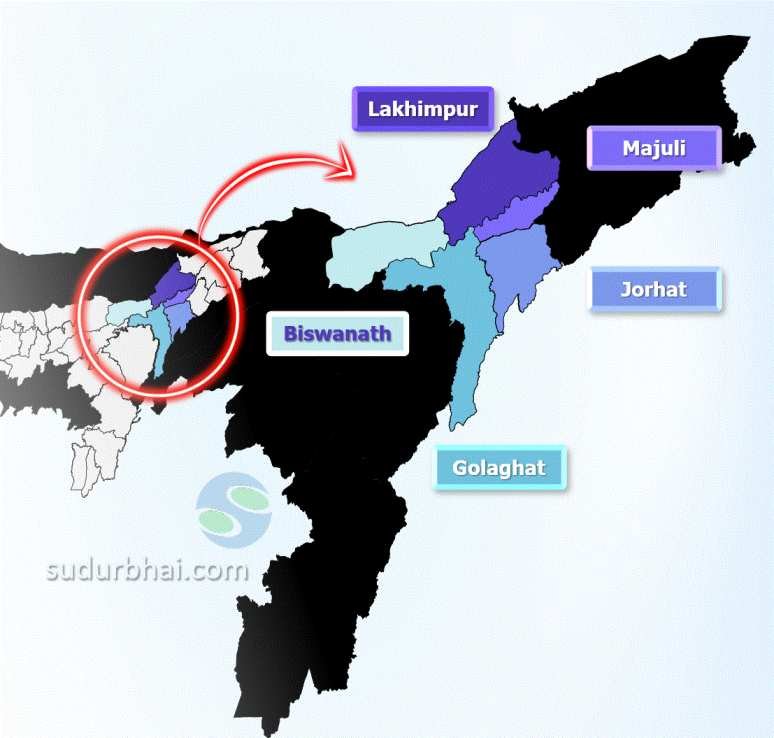
Biswanath District
Table of Contents
ToggleDistrict Overview of Biswanath District
1. Creation
- Formed on August 15, 2015, by bifurcating parts of Sonitpur district.
- Includes Gohpur and other areas.
2. Headquarters
- Located in Biswanath Chariali.
3. Historical Significance
- Part of historical kingdoms: Chutiya and Ahom.
- Home to Biswanath Temple, known as “Gupta Kashi” for its spiritual value.
History of Biswanath District
Ancient & Medieval History of Biswanath
1. Chutiya & Ahom Kingdoms
- Chutiya Kingdom ruled most of Biswanath until the 16th century.
- Ahoms annexed the region, while Bhuyan chieftains controlled the western parts.
- Major rivers like Dikarai & Ghiladhari marked kingdom boundaries.
2. Fortifications
- Chutiya kings built Buroi Fort & Pratapgarh Fort for defense.
- These forts indicate Biswanath’s strategic importance in medieval Assam.
Geography of Biswanath District
1. Location
- North bank of the Brahmaputra River.
- Borders:
- North: Arunachal Pradesh
- East: Lakhimpur district
- South : River Brahmaputra
- West : Sonitpur district
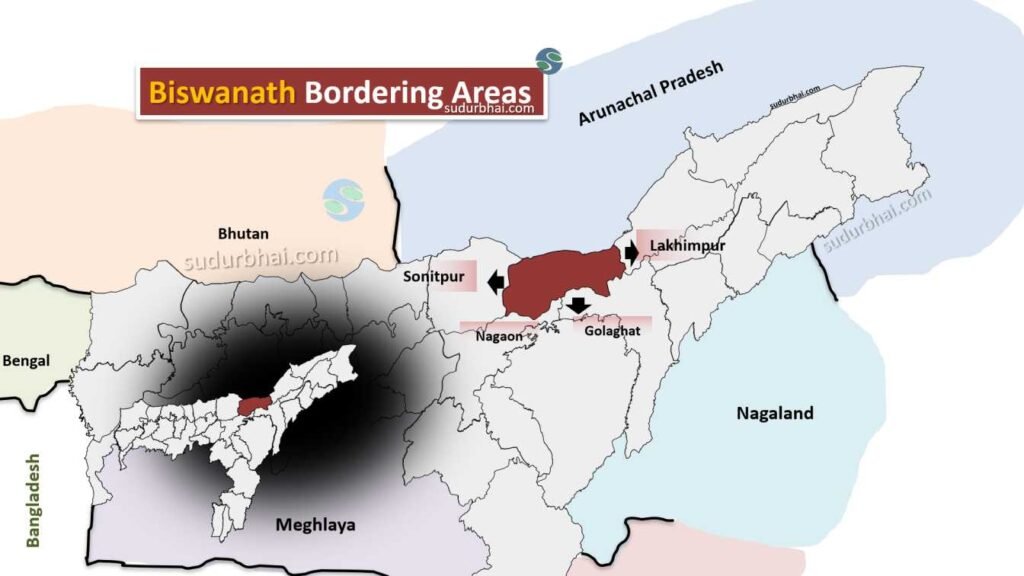
Biswanath neighbouring districts
2. Topography
- Predominantly flat and fertile plains, ideal for agriculture.
3. Rainfall in Biswanath District
- Climate: Subtropical monsoon climate.
- Average Annual Rainfall: Approximately 1,800 mm.
- Monsoon Season: Most precipitation occurs from June to September, which supports agricultural activities.
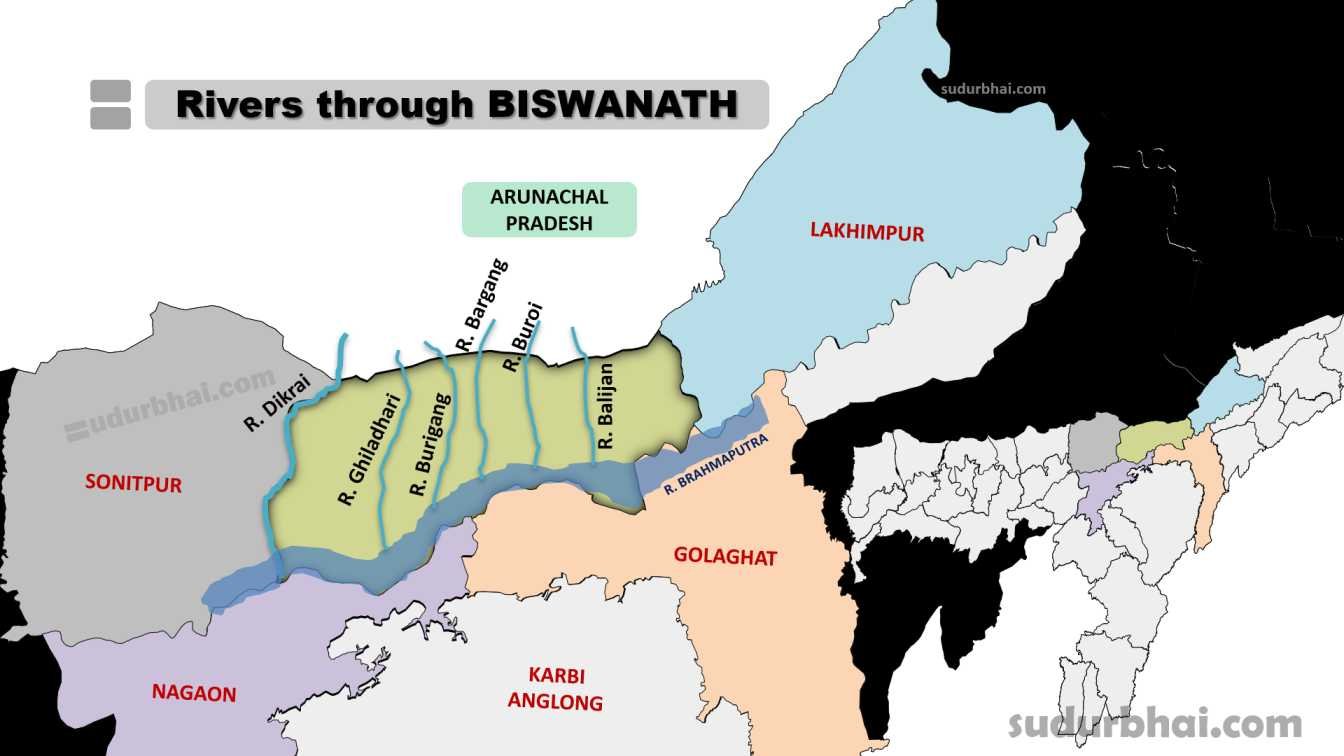
4. Rivers :
- River Brahmaputra (southern Border) , Ghiladhari , Bargang , Buroi , Burhiganga , Dikrai and Balijan.
Socio Economy of Biswanath District
1. Agriculture
- Primarily agrarian economy with significant tea cultivation.
2. Credit Potential
- Focus on MSMEs, including agriculture and renewable energy sectors.
3. Employment
- Majority dependent on agriculture and related activities.
- Industries: Small-scale industries and handicrafts contribute to the local economy.
Transport of Biswanath District
- Transportation Hub: Biswanath Chariali serves as the main town and transport hub.
- Road Connectivity: National Highway 15 runs through the district, linking it to major cities in Assam.
- Waterways: The Biswanath multimodal waterways terminal on the Brahmaputra River enhances trade and transportation.
- Major stations:
- Dubia
- Gohpur
- Brahmajan
- Helem
- Niz Borgang
- Monabari
- Biswanath Chariali
- Niz Sotea
Demographics of Biswanath District
Population Overview
Total Population: 612,491
Male Population: 311,234
Female Population: 301,257
Sex Ratio: 968 females per 1000 males
Urban and Rural Distribution
Urban Population: 31,368 (5.12%)
Rural Population: 581,123 (94.88%)
Age Distribution
Children (0-6 years): 88,453
Literacy Rates
Overall Literacy Rate: Approximately 75.41%
Male Literacy Rate: 81.36%
Female Literacy Rate: 69.06%
Scheduled Castes and Scheduled Tribes
Scheduled Castes (SC): 43,763 (7.15%)
Scheduled Tribes (ST): 93,174 (15.21%)
Religious Composition
Hinduism: 514,259 (83.96%)
Islam: 52,155 (8.52%)
Christianity: 42,408 (6.92%)
Others/Not Stated: Approximately 0.60%
Administrative Setup of Biswanath District
- Administrative HQ: Biswanath Chariali.
- Sub-Divisions:
Includes Biswanath Chariali and Gohpur - Revenue Circles/Tehsils:
Biswanath Chariali, Gohpur, and Helem. Development Blocks:
- Includes Pub-Chaiduar and Behali blocks.
- Gohpur holds historical significance in India’s freedom struggle.
- On September 1942, freedom fighters Kanaklata Barua and Mukunda Kakati were martyred.
- They were killed in police firing while attempting to hoist the national flag at Gohpur Police Station.
Attractive Tourist places of Biswanath District
- Biswanath Temple: A significant pilgrimage site, also called “Gupta Kashi.” (Located at confluence of Burhiganga River and Brahmaputra River)
- Eco-Tourist Resort at Uma Tumoni Island: Scenic beauty and recreational activities.
- Historical Sites: Various archaeological sites and historical landmarks reflecting the region’s heritage.
- Biswanath Ghat has been selected as the Best Tourism Village of India 2023 by Ministry of Tourism
Languages spoken in Biswanath District
- Assamese (34.06%)
- Sadri (13.56%)
- Bengali (8.58%).
- Nepali: 7.93%
- Boro: 7.23%
- Mising: 7.09%
- Other Languages: Includes Hindi and various tribal dialects.
Let us know any further suggestions ,we at sudurbhai.com will be happy to hear from you in our comment section below !

provide some notes on women,child,minorites welfare and developement in assam