
India Sri Lanka Relations
- India and Sri Lanka share a deep civilisational relationship extending over 2,500 years, shaped by geographical proximity, Buddhism, Hindu traditions, trade, migration, language and cultural exchanges.
- Sri Lanka is India’s closest maritime neighbour in the south, separated by the Palk Strait and Gulf of Mannar.
- The relationship is strategically important because Sri Lanka lies close to some of the busiest Sea Lanes of Communication (SLOCs) in the Indian Ocean.
- Contemporary relations are multidimensional and include:
- Political and diplomatic cooperation
- Defence and maritime security
- Trade and investment
- Development partnership
- Energy connectivity
- Digital cooperation
- Tourism
- Cultural and religious ties
- People-to-people contacts.
- India considers Sri Lanka an important partner under its:
- Neighbourhood First Policy
- MAHASAGAR vision for the Indian Ocean region
- Act East engagement
- Indian Ocean regional strategy.
- India also supports a united Sri Lanka while advocating equality, dignity and meaningful political participation for the Tamil community.

Historical Evolution of India–Sri Lanka Relations
Ancient and Civilisational Links
- India-Sri Lanka contacts date back to ancient times.
- Sri Lanka occupies an important place in the Ramayana tradition.
- One of the most important civilisational links developed through the spread of Buddhism from India to Sri Lanka.
- According to Buddhist tradition, Mahinda, son of Emperor Ashoka, played a major role in introducing Buddhism to Sri Lanka.
- Sanghamitta, Ashoka’s daughter, is traditionally associated with taking a sapling of the Bodhi Tree to Sri Lanka.
- Maritime trade, migration and cultural interaction further connected southern India and northern Sri Lanka.
Colonial Period
- Both India and Sri Lanka came under British colonial rule, although Ceylon was administered separately from British India.
- From the 19th century, the British transported large numbers of workers, particularly from Tamil Nadu, to work in Sri Lanka’s:
- Tea plantations
- Rubber plantations
- Coffee plantations.
- Their descendants became known as Indian-Origin Tamils or Plantation Tamils.
Early Post-Independence Phase
- India became independent in 1947, while Ceylon gained independence in 1948.
- Citizenship and political rights of Indian-origin Tamils emerged as an important bilateral issue.
- The Sirimavo-Shastri Pact of 1964 attempted to resolve citizenship and repatriation questions concerning people of Indian origin.
- Ethnic tensions between the Sinhalese majority and Sri Lankan Tamils subsequently became one of the biggest factors affecting India-Sri Lanka relations.
Rise of the Tamil Conflict
- Sri Lanka’s post-independence language and political policies contributed to growing alienation among sections of the Tamil population.
- Ethnic violence intensified, particularly after the 1983 Black July riots.
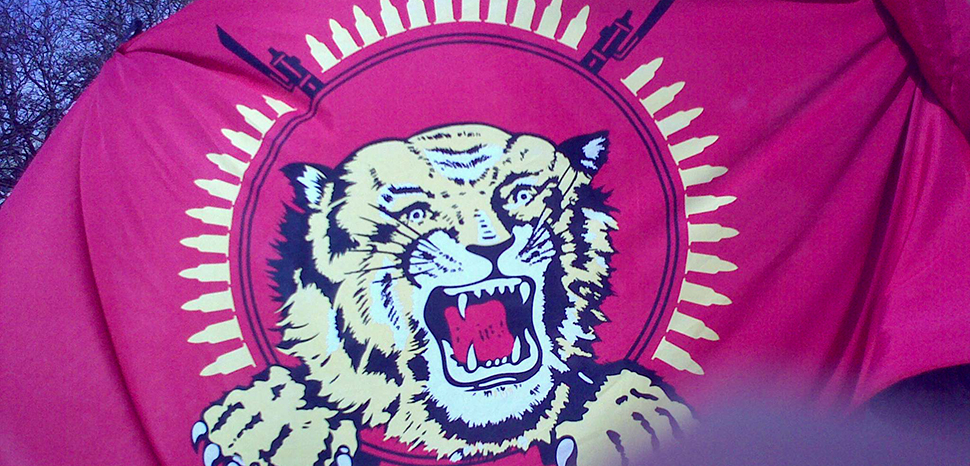
- The Liberation Tigers of Tamil Eelam (LTTE) emerged as the dominant armed separatist organisation demanding an independent Tamil Eelam.
- The conflict became especially sensitive for India because of:
- Geographical proximity
- Tamil Nadu’s cultural links with Sri Lankan Tamils
- Refugee inflows
- India’s regional security interests.
Indo–Sri Lanka Accord, 1987
- Prime Minister Rajiv Gandhi and President J.R. Jayewardene signed the Indo-Sri Lanka Accord on 29 July 1987.
- The agreement sought:
- Political devolution
- Provincial autonomy
- Protection of Tamil interests
- Disarmament of militant organisations.
- It contributed to the adoption of Sri Lanka’s 13th Constitutional Amendment.
- The amendment:
- Established Provincial Councils
- Provided for devolution of powers
- Recognised Tamil as an official language alongside Sinhala, with English as a link language.
- India deployed the Indian Peace Keeping Force (IPKF) in Sri Lanka.
- However, the IPKF became involved in armed conflict with the LTTE.
- The IPKF withdrew by March 1990.
- Former Prime Minister Rajiv Gandhi was assassinated by an LTTE suicide bomber in 1991.
Post-Cold War Phase
- India subsequently adopted a policy of non-intervention combined with diplomatic engagement.
- Economic relations expanded significantly.
- The India-Sri Lanka Free Trade Agreement (ISFTA) was signed in 1998 and came into force in 2000.
- India supported a negotiated political settlement but avoided direct military involvement in Sri Lanka’s civil war.
End of the Civil War
- Sri Lankan forces defeated the LTTE in May 2009, ending nearly three decades of armed conflict.
- India supported Sri Lanka’s fight against terrorism while simultaneously expressing concern over:
- Tamil civilian casualties
- Humanitarian conditions
- Rehabilitation
- Political reconciliation.
- Since then, India has consistently advocated reconciliation and meaningful devolution within a united Sri Lanka.
Strategic Importance of Sri Lanka
Strategic Location
- Sri Lanka lies immediately south of the Indian peninsula.
- Its location places it close to major east-west maritime routes connecting Europe, West Asia and Africa with East and Southeast Asia.
- Therefore, Sri Lanka has considerable importance for:
- Indian Ocean security
- Global shipping
- Energy transportation
- Naval strategy
- Maritime trade.
Importance for India’s Maritime Security
- Sri Lanka lies near India’s southern maritime approaches.
- Developments involving foreign naval or strategic presence in Sri Lanka can directly affect India’s security.
- Sri Lanka is therefore central to India’s vision of maintaining the Indian Ocean as a secure, stable and rules-based maritime space.
Trincomalee
- Trincomalee Harbour is one of the world’s notable natural deep-water harbours.
- Its strategic location on Sri Lanka’s eastern coast gives it:
- Commercial importance
- Energy significance
- Naval importance.
- India and Sri Lanka have increasingly explored energy and infrastructure cooperation around Trincomalee.
Colombo
- Colombo Port is one of South Asia’s major transshipment hubs.
- A substantial proportion of Colombo’s transshipment cargo is linked to Indian trade.
- Efficient functioning of Colombo therefore directly affects India’s maritime logistics.
Hambantota
- Hambantota lies close to major Indian Ocean shipping routes.
- Sri Lanka granted China Merchants Port Holdings a 99-year lease over Hambantota Port in 2017.
- Its strategic location has generated concerns in India regarding the potential dual-use implications of Chinese-funded infrastructure.
Political Relations
- Political relations are characterised by frequent high-level exchanges.
- India played a particularly important role during Sri Lanka’s 2022 economic crisis, providing assistance of nearly US$4 billion through:
- Credit facilities
- Currency support
- Fuel
- Food
- Medicines
- Fertiliser and other essential supplies.
- India’s response significantly strengthened its image as Sri Lanka’s first responder and reliable neighbour.
- President Anura Kumara Dissanayake’s State Visit to India in December 2024 produced the joint vision of “Fostering Partnerships for a Shared Future.”
- Prime Minister Narendra Modi’s April 2025 visit to Sri Lanka further expanded cooperation.
- The relationship is increasingly moving from traditional development cooperation towards a broader partnership involving:
- Defence
- Energy
- Digital infrastructure
- Connectivity
- Technology
- Capacity building.
Economic and Commercial Relations
Bilateral Trade
- Sri Lanka is an important trading partner of India in South Asia.
- The India-Sri Lanka Free Trade Agreement (ISFTA) has been operational since 2000.
- It was India’s first bilateral Free Trade Agreement.
- Major Indian exports include:
- Petroleum products
- Pharmaceuticals
- Machinery
- Vehicles
- Cotton and textiles
- Food products.
- Major Sri Lankan exports include:
- Apparel
- Agricultural products
- Spices
- Rubber products
- Animal feed
- Minerals.
- Bilateral merchandise trade stood at around US$5.5 billion in FY2023-24.
Indian Investment
- India is an important source of Foreign Direct Investment in Sri Lanka.
- Indian companies operate in:
- Petroleum
- Banking
- Hotels
- Tourism
- Telecommunications
- Manufacturing
- Infrastructure
- Renewable energy
- Retail.
- Investment is gradually shifting towards strategically important infrastructure and connectivity projects.
Economic and Technology Cooperation Agreement (ETCA)
- India and Sri Lanka have discussed expanding the existing FTA through an Economic and Technology Cooperation Agreement (ETCA).
- ETCA seeks deeper cooperation in:
- Trade in goods
- Services
- Investment
- Technology
- Professional cooperation.
- Negotiations have historically faced concerns within Sri Lanka regarding:
- Employment
- Professional competition
- Market asymmetry.
- A balanced agreement could help integrate Sri Lanka more closely with Indian and regional supply chains.
Development Cooperation
- Sri Lanka is one of India’s major development partners.
- Indian assistance covers:
- Housing
- Railways
- Healthcare
- Education
- Agriculture
- Fisheries
- Cultural infrastructure
- Renewable energy
- Community development.
Indian Housing Project
- The Indian Housing Project is one of India’s flagship development initiatives in Sri Lanka.
- It has supported construction of tens of thousands of houses, particularly for:
- War-affected families
- Plantation workers
- Economically vulnerable communities.
- The project represents India’s emphasis on people-centric development assistance.
Railway Reconstruction
- India has supported rehabilitation of railway infrastructure, particularly in northern Sri Lanka.
- This contributes to:
- Post-war reconstruction
- Regional connectivity
- Economic revival.
Educational Cooperation
- India provides:
- Scholarships
- ITEC training
- Professional training
- Capacity-building programmes.
- Educational cooperation strengthens India’s long-term soft-power presence.
India’s Role during Sri Lanka’s Economic Crisis
Economic Crisis of 2022
- Sri Lanka experienced one of its worst economic crises in 2022, characterised by:
- Foreign-exchange shortages
- Fuel shortages
- Food inflation
- Medicine shortages
- Sovereign debt default
- Political instability.
- India provided nearly US$4 billion in assistance.
- Support included:
- Credit lines for fuel and essentials
- Currency-related assistance
- Humanitarian supplies
- Fertilisers and medicines.
- India subsequently supported Sri Lanka’s debt restructuring and economic recovery.
Strategic Significance
The crisis demonstrated India’s: Neighbourhood First Policy + First Responder Role + Development Partnership
- It also strengthened India’s credibility compared with purely infrastructure-driven engagement.
Connectivity
Ferry Connectivity
- Passenger ferry links between India and Sri Lanka have been revived after decades.
- Maritime connectivity has the potential to strengthen:
- Tourism
- Pilgrimage
- Trade
- People-to-people contacts
- Coastal economies.
Air Connectivity
- Multiple Indian cities have direct air connections with Colombo.
- Connectivity with northern Sri Lanka, including Jaffna, has further strengthened Tamil Nadu-Sri Lanka interaction.
Proposed Land Connectivity
- India and Sri Lanka have discussed the possibility of land connectivity across the Palk Strait.
- Any future project would require careful assessment of:
- Economic viability
- Environmental implications
- Fisheries
- Local concerns
- Strategic consequences.
Energy Cooperation
Trincomalee Oil Tank Farm
- India and Sri Lanka cooperate in developing the strategically important Trincomalee Oil Tank Farm.
- The facility dates back to the Second World War.
- Its development can contribute to:
- Energy storage
- Regional fuel security
- Trincomalee’s emergence as an energy hub.
Electricity Grid Interconnection
- India and Sri Lanka are exploring cross-border electricity grid connectivity.
- Potential benefits include:
- Renewable-energy trade
- Grid stability
- Lower generation costs
- Regional energy integration.
Renewable Energy
- Sri Lanka has considerable potential in:
- Solar energy
- Wind energy, particularly in northern areas.
- Indian investment can help integrate Sri Lanka into a wider South Asian clean-energy network.
Digital Cooperation
- Digital cooperation has emerged as a new pillar of bilateral relations.
- India and Sri Lanka are working on:
- Digital Public Infrastructure
- Digital payments
- Fintech
- Digital identity and governance applications.
- India’s experience with platforms such as UPI and India Stack provides opportunities for technological cooperation.
- Digital connectivity can reduce transaction costs and deepen economic integration.
Defence and Security Cooperation
- India and Sri Lanka cooperate closely because of their shared maritime environment.
- Major areas include:
- Maritime Domain Awareness
- Counter-terrorism
- Anti-smuggling operations
- Intelligence sharing
- Training
- HADR
- Naval cooperation.
Major Exercises
- SLINEX — India-Sri Lanka Naval Exercise.
- Mitra Shakti — Joint Army Exercise.
- Sri Lanka also participates in India’s multilateral naval exercise MILAN.
Defence Cooperation MoU, 2025
- During Prime Minister Modi’s April 2025 visit, India and Sri Lanka signed a Defence Cooperation MoU.
- It provides a broader institutional framework for:
- Joint exercises
- Training
- Military exchanges
- Maritime cooperation
- HADR.
- Sri Lanka also reiterated that its territory should not be used in a manner prejudicial to India’s security interests.
Colombo Security Conclave
- The Colombo Security Conclave (CSC) has developed into an important Indian Ocean security platform.
- Cooperation focuses on areas such as:
- Maritime safety and security
- Counter-terrorism
- Cybersecurity
- Trafficking and organised crime
- HADR.
- It complements India’s broader maritime-security architecture in the Indian Ocean.
Cultural Relations
- India and Sri Lanka share exceptionally strong religious and civilisational ties.
- Important linkages include:
- Buddhism
- Ramayana traditions
- Hindu temples
- Tamil heritage
- Literature
- Dance
- Music.
Buddhist Connection
- Buddhism forms one of the strongest cultural bridges between the two countries.
- Important Indian Buddhist pilgrimage destinations for Sri Lankan visitors include:
- Bodh Gaya
- Sarnath
- Kushinagar
- Sanchi.
- Buddhist diplomacy constitutes an important component of India’s soft power.
Ramayana Circuit
- Sri Lanka contains several places traditionally associated with the Ramayana.
- Developing a Ramayana tourism circuit can strengthen:
- Religious tourism
- Cultural diplomacy
- People-to-people connectivity.
Jaffna Cultural Centre
- The India-supported Jaffna Cultural Centre was inaugurated in 2023.
- It represents:
- Cultural cooperation
- India’s engagement with northern Sri Lanka
- Support for post-conflict reconciliation.
Tourism and People-to-People Relations
- Tourism is an important pillar of bilateral relations.
- India is consistently among the largest sources of tourists to Sri Lanka.
- Major areas of tourism cooperation include:
- Buddhist tourism
- Ramayana tourism
- Coastal tourism
- Medical tourism
- Cultural tourism.
- Ferry and air connectivity can further strengthen people-to-people interaction.
Significance of Sri Lanka for India
Maritime Security
- Sri Lanka’s proximity to India’s southern coast makes it extremely important for India’s national and maritime security.
Indian Ocean Strategy
- Sri Lanka lies near crucial Indian Ocean SLOCs.
- Cooperation with Sri Lanka strengthens India’s ability to promote a stable and secure Indian Ocean Region.
Security of Southern India
- Developments in Sri Lanka have direct implications for:
- Tamil Nadu
- Kerala
- India’s southern naval approaches.
Transshipment Trade
- Colombo plays an important role in handling Indian container transshipment traffic.
- Therefore, Sri Lankan port infrastructure has direct implications for India’s trade competitiveness.
Tamil Question
- The welfare of Sri Lankan Tamils has political and humanitarian significance for India, particularly because of close links with Tamil Nadu.
Countering External Strategic Pressure
- A stable and friendly Sri Lanka helps India prevent the emergence of strategic arrangements in its immediate maritime neighbourhood that could undermine Indian security.
Major Issues in India–Sri Lanka Relations
Fishermen Issue
- The fishermen dispute remains one of the most persistent bilateral problems.
- Indian fishermen, particularly from Tamil Nadu, sometimes cross the International Maritime Boundary Line (IMBL) into Sri Lankan waters.
- This results in:
- Arrests
- Boat seizures
- Detention
- Diplomatic tensions.
Why Does the Problem Persist?
- Major reasons include:
- Depletion of fish stocks in Indian waters
- Proximity of the maritime boundary
- Traditional fishing practices
- Dependence on bottom trawling
- Livelihood pressures.
- Sri Lankan Tamil fishermen oppose Indian bottom trawling because it:
- Damages the seabed
- Reduces fish stocks
- Threatens their livelihoods.
Way Forward on Fisheries
- India should encourage transition from bottom trawling to deep-sea fishing.
- Other measures include:
- Alternative livelihoods
- Buy-back of trawlers
- Joint Working Group meetings
- Fishermen-to-fishermen dialogue
- Humane treatment of detained fishermen
- Sustainable fisheries management.
Katchatheevu Issue
- Katchatheevu is a small island in the Palk Strait.
- Under the 1974 India-Sri Lanka maritime agreement, the island came under Sri Lankan sovereignty.
- Indian fishermen traditionally used the island for:
- Rest
- Drying nets
- Attending the annual St. Anthony’s Church festival.
- The issue periodically resurfaces in Indian domestic politics, particularly in Tamil Nadu.
- However, the broader fishermen dispute involves fishing rights, ecological sustainability and livelihood concerns, not merely ownership of Katchatheevu.
Tamil Reconciliation Issue
- India supports:
- Unity and territorial integrity of Sri Lanka
- Equality
- Justice
- Dignity
- Peace for Sri Lankan Tamils.
- India continues to support meaningful implementation of the 13th Amendment and political devolution.
- The challenge is to reconcile:
- Sri Lankan sovereignty
- Tamil aspirations
- India’s domestic sensitivities.
China Factor
- China’s growing presence in Sri Lanka is one of India’s major strategic concerns.
- Major Chinese-linked projects include:
- Hambantota Port
- Colombo Port City
- Colombo International Container Terminal
- Highways and other infrastructure.
Hambantota Port
- Hambantota Port was leased to a Chinese company for 99 years in 2017.
- India’s principal concern is not simply Chinese commercial investment but the possibility of dual-use infrastructure and Chinese naval access.
Chinese Research and Survey Vessels
- Visits by Chinese research/survey vessels to Sri Lankan ports have periodically generated security concerns in India.
- India is particularly sensitive to vessels capable of collecting:
- Hydrographic data
- Oceanographic data
- Signals or surveillance-related information.
India’s Approach
- India should avoid forcing Sri Lanka to choose between India and China.
- Instead, India should offer:
- Faster project delivery
- Transparent financing
- Market access
- Development assistance
- Technology
- Connectivity
- People-centric projects.
Economic Asymmetry
- India’s much larger economy can create concerns within Sri Lanka regarding:
- Market domination
- Employment
- Professional competition.
- These concerns have influenced negotiations over ETCA.
- India should therefore emphasise mutual benefit rather than asymmetric economic integration.
Way Forward
Adopt a Sri Lanka-First Partnership
- India’s projects should respond to Sri Lanka’s own developmental priorities.
- This reduces perceptions of strategic competition and builds long-term trust.
Resolve the Fishermen Issue
- Develop a time-bound transition away from bottom trawling.
- Promote:
- Deep-sea fishing
- Alternative livelihoods
- Sustainable fishing technology
- Regular fisher-level dialogue.
Advance Tamil Reconciliation
- India should continue supporting:
- Meaningful devolution
- Provincial empowerment
- Rehabilitation
- Housing
- Economic development
while respecting Sri Lanka’s sovereignty.
Deepen Economic Integration
- Modernise the existing FTA and pursue a mutually acceptable ETCA.
- Focus on:
- Services
- Investment
- Digital trade
- Tourism
- Supply chains.
Build an Energy Partnership
Develop an integrated:
India–Sri Lanka Energy Corridor
through:
- Electricity-grid connectivity
- Renewable energy
- Trincomalee energy hub
- Petroleum cooperation
- Green-energy investment.
Strengthen Physical Connectivity
- Expand:
- Ferry services
- Air routes
- Port connectivity
- Logistics networks.
- Future land connectivity can be considered after detailed economic and environmental assessment.
Expand Digital Connectivity
- Cooperation in:
- Digital Public Infrastructure
- Fintech
- Digital payments
- E-governance
can create a new generation of bilateral economic integration.
Strengthen Maritime Security
- Expand cooperation through:
- SLINEX
- Colombo Security Conclave
- Maritime Domain Awareness
- Information sharing
- Coast Guard cooperation
- HADR.
Promote Blue Economy Cooperation
- Joint initiatives can focus on:
- Sustainable fisheries
- Marine biotechnology
- Offshore renewable energy
- Marine pollution
- Coastal conservation
- Ocean research.
Strengthen Cultural Diplomacy
- Develop:
- Buddhist Circuit
- Ramayana Circuit
- Jaffna cultural exchanges
- University partnerships
- Youth exchanges
- Film and literary cooperation.
Maintain Strategic Sensitivity
- Sri Lanka should remain sensitive to India’s legitimate security concerns.
- India, in turn, should respect Sri Lanka’s strategic autonomy.
- The principle should be:
“Sri Lankan territory should not become a source of security threat to India, while India should remain a dependable development and security partner for Sri Lanka.”
Conclusion
- India-Sri Lanka relations combine civilisational intimacy with contemporary strategic necessity.
- Geography makes the two countries permanent maritime neighbours, while history, Buddhism, Tamil connections and trade create deep societal links.
- Sri Lanka is crucial for India’s:
- Indian Ocean strategy
- Maritime security
- Neighbourhood First Policy
- Regional connectivity.
- India is important to Sri Lanka as:
- A major market
- Development partner
- Security partner
- Tourist source
- First responder during crises.
- The future relationship should move beyond the traditional issues of Tamils, fishermen and China towards newer pillars such as:
Connectivity + Energy + Digital Public Infrastructure + Blue Economy + Maritime Security + Development Partnership
- A relationship based on mutual sensitivity, sovereign equality, economic interdependence and respect for each other’s security concerns can make India-Sri Lanka cooperation a cornerstone of peace and prosperity in the Indian Ocean Region.