
Satras of Assam
- Introduction
- Origin and Historical Background
- Philosophical Foundation: Ekasarana Dharma
- Meaning and Structure of a Satra
- Administrative Hierarchy
- Classification of Satras
- Role of Satras in Assamese Society
- Arts associated with Satras
- Major Satras of Assam
- Satras of Majuli
Introduction
- Satras are religious monasteries of the Vaishnavite tradition that are found only in Assam. They were established to spread a simple and devotional form of Hinduism centered on Lord Krishna.
- Over time, Satras became much more than places of worship. They developed into centres of culture, education, social life, and moral guidance. Through their teachings and activities, Satras played a major role in reforming society, bringing different communities together, and shaping a distinct Assamese cultural identity.
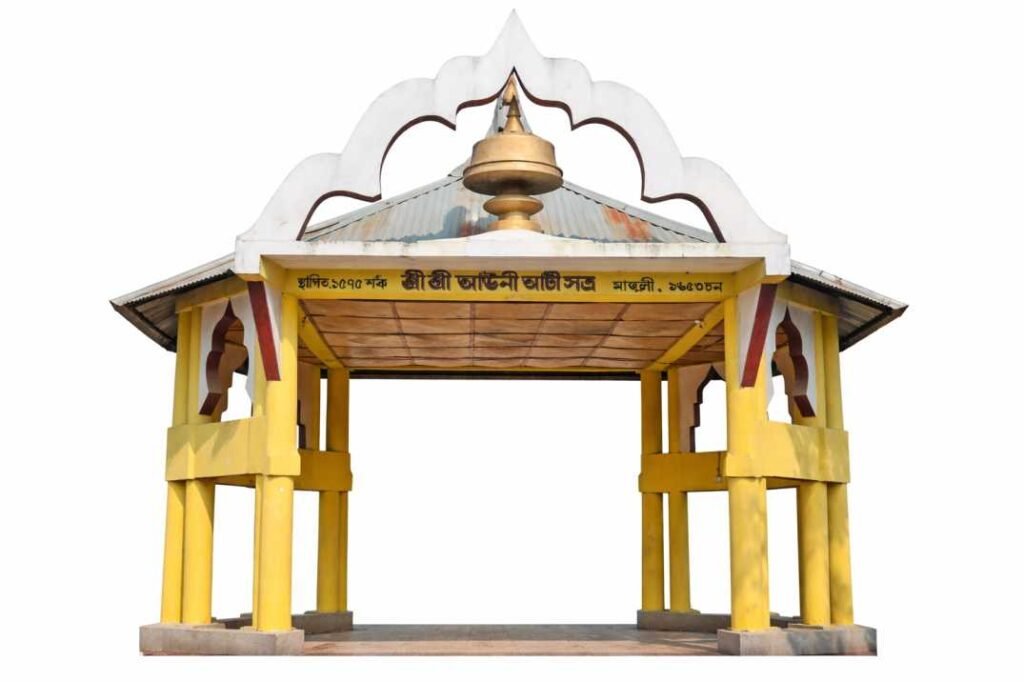
Origin and Historical Background of Satras
Satras were founded between the 15th and 16th centuries, during a period of religious and social change in Assam.
The movement was started by Srimanta Sankardeva, a great saint, reformer, poet, and artist.
His disciple, Sri Sri Madhavadeva, helped organise and spread the Satra system across Assam.
Many Satras flourished during the rule of the Ahom kings, who provided land and royal support. Satras offered a simpler and more inclusive alternative to rigid religious practices, opposing excessive rituals and caste-based discrimination.
Philosophical Foundation of Satras: Ekasarana Dharma
The Satras are based on Ekasarana Dharma, which means taking refuge in one God, Lord Krishna.
Key Ideas of Ekasarana Dharma:
Devotion (Bhakti) is more important than rituals.
All people are considered equal, regardless of caste or background.
Idol worship is generally avoided, with focus placed on prayer and chanting.
Worship is done together through Naam-Prasanga (group chanting of God’s name).
Important Sacred Texts:
Kirtan Ghoxa – devotional songs by Sankardeva
Naam Ghoxa – devotional verses by Madhavadeva
Bhagavata Purana – main religious scripture
Meaning and Structure of a Satra
Meaning
The word “Satra” comes from the Sanskrit word Sattra, meaning a gathering or religious assembly. It reflects the idea of people coming together to pray and live a spiritual life.
Physical Structure
A typical Satra consists of:
Namghar or Kirtanghar – the main prayer hall where devotees gather
Manikut – the inner sanctum where sacred texts are kept
Hati – rows of living quarters for monks (bhakats)
Satra land – agricultural land used to support the Satra’s daily needs
Administrative Hierarchy of Satras
Satras follow a well-defined system of management:
Satradhikar – the head of the Satra, responsible for religious and administrative matters
Deka Satradhikar – assistant to the Satradhikar
Bhakats – monks or disciples, who may be celibate or married
Life in a Satra is guided by discipline, collective living, and spiritual duties.
Classification of Satras
Based on Religious Practice
Satras are divided into four main groups (Sanghatis):
Brahma Sanghati
Follows stricter priestly traditions
Allows idol worship
Accepts caste distinctions
Purusha Sanghati
Conservative in nature
Leadership often hereditary
Closely follows Sankardeva’s teachings
Kala Sanghati
More liberal and inclusive
Open to tribal and lower-caste communities
Played a major role in social integration
Nika Sanghati
Most strict and disciplined
Rejects idol worship completely
Focuses on pure devotion and simplicity
Based on Lifestyle
Udasin Satras – monks remain unmarried and lead a celibate life
Grihasthi Satras – monks are allowed to marry and live family lives
Role of Satras in Assamese Society
Religious Role
Satras helped spread Vaishnavism throughout Assam and encouraged people to live ethical and moral lives based on devotion and compassion.
Social Role
They strongly opposed caste discrimination and brought together people from different communities, including tribal groups. Satras also acted as centres for resolving social disputes.
Cultural Role
Satras preserved and promoted Assam’s rich cultural heritage, including:
Sattriya dance
Bhaona (religious theatre)
Borgeet (devotional songs)
They also contributed significantly to the development of the Assamese language and literature.
Educational Role
Satras functioned as traditional learning centres where people were taught:
Religious scriptures
Music, dance, and drama
Moral values and discipline
Arts associated with Satras
Sattriya Dance
Originated inside Satras as a spiritual dance performed by monks
Based on stories of Lord Krishna
Recognised as a Classical Dance of India in 2000
Bhaona
A religious theatre form performed during festivals
Based on Ankiya Naat, written by Sankardeva
Uses music, dance, dialogue, and colourful masks to convey moral stories
Major Satras of Assam
Some important Satras include:
Barpeta Satra
Batadrava Than – birthplace of Sankardeva
Bordowa Satra
Kamalabari Satra – known for art and culture
Majuli Satras – Auniati, Dakhinpat, Garamur
Satras of Majuli
Majuli, the world’s largest river island, is considered the heart of Satra culture.
Once had over 65 Satras, many of which were lost due to river erosion.
The remaining Satras continue to protect and promote Assamese traditions.
Majuli has been proposed as a UNESCO World Heritage Site for its cultural significance.
Let us know any further suggestions ,we at sudurbhai.com will be happy to hear from you in our comment section below !
