Pressure Belts Of The Earth
The Earth is surrounded by a layer of air called the atmosphere, and this air has weight. This weight is what we feel as atmospheric pressure. In very simple terms, it means the air above us is constantly pressing down on the Earth’s surface.
- Every place on Earth has air pressure
- This pressure is not the same everywhere
- It keeps changing from place to place and time to time
- These changes create large zones of pressure called high-pressure and low-pressure areas, known as pressure belts
Atmospheric pressure
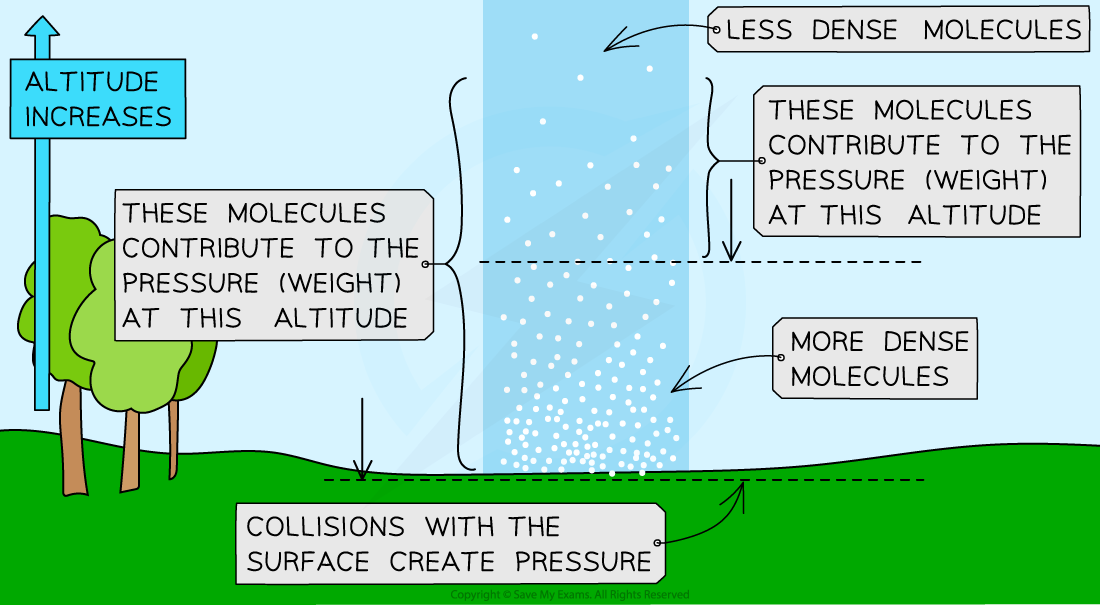
- Air may look invisible, but it has weight and mass.
- Imagine a tall “column” of air stretching from the ground up to the sky
- This entire column presses down on the Earth’s surface
- The force created by this pressing air is called atmospheric pressure
How is atmospheric pressure measured?
- Atmospheric pressure is measured using tools and units:
- Instrument used: Barometer (a device that measures air pressure)
- Unit: Millibar (mb)
Simple meaning of unit
- 1 millibar is roughly the pressure created by 1 gram of force over 1 square centimeter area
Factors Controlling Pressure Systems
Air pressure is mainly controlled by two simple but powerful factors:
1. Thermal Factors (Temperature-based changes)
2. Dynamic Factors (Movement-based changes)
1. Thermal Factors (Temperature-based changes)
- Temperature changes the behavior of air.
When air becomes hot:
- It expands (spreads out)
- Becomes lighter (less dense)
- Rises upward
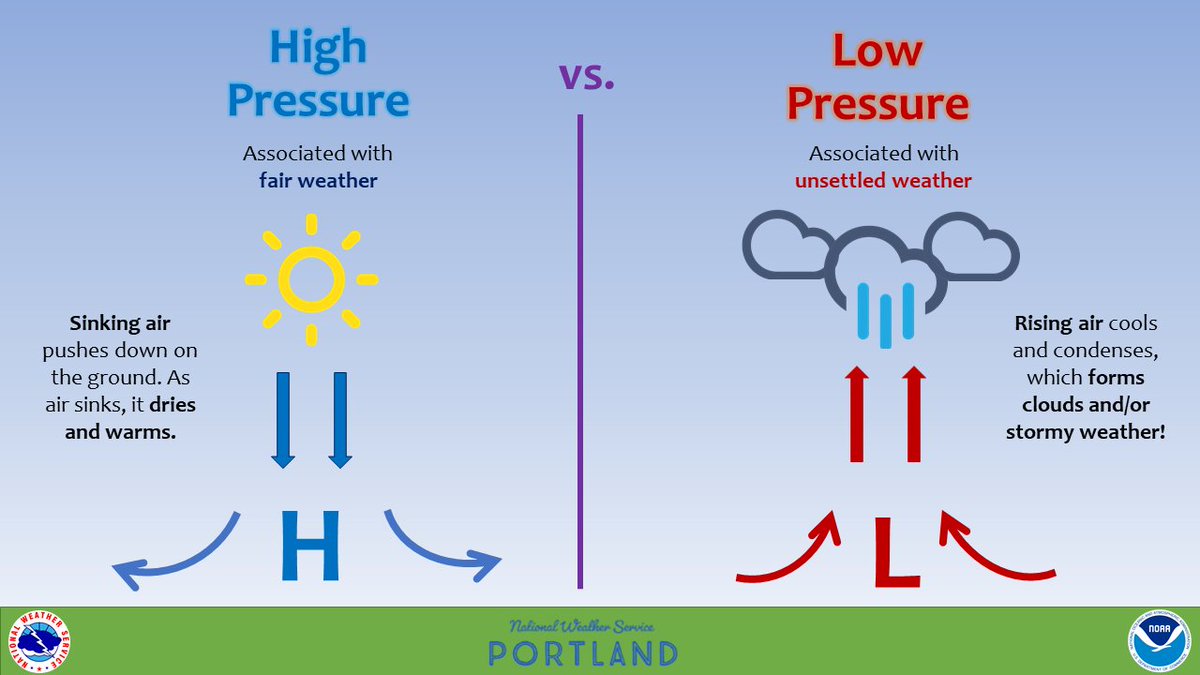
- This creates a low-pressure area
When air becomes cold:
- It contracts (shrinks)
- Becomes heavier (more dense)
- Sinks downward
- This creates a high-pressure area
Easy examples:
- Equator (hot region) → air rises → low pressure
- Poles (cold region) → air sinks → high pressure

2. Dynamic Factors (Movement-based changes)
- Apart from temperature, air pressure is also affected by how air moves.
- Earth’s rotation changes wind direction and air movement
- This leads to uneven distribution of air pressure
- These effects help create large global pressure systems.
What is Pressure Gradient?
- The pressure gradient tells us how quickly air pressure changes from one place to another.
- If pressure changes very quickly over a small distance
- → Strong pressure gradient
- → Wind speed is usually high
- If pressure changes slowly over a large distance
- → Weak pressure gradient
- → Wind speed is low
How Pressure gradient is shown on weather maps:
- Lines called isobars connect places with equal air pressure
What isobar spacing tells us:
- Lines close together → strong winds
- Lines far apart → weak winds

Vertical Distribution of Pressure
This explains how air pressure changes with height.
Near the ground:
- Air pressure is high
- Because air from above pushes and compresses it
At higher altitudes:
- Air pressure is low
- Because there is less air above pushing down
Factors affecting vertical pressure:
- Temperature
- Water vapor (moisture)
- Gravity
Weather clues from pressure:
- Rising pressure → clear and calm weather
- Falling pressure → cloudy and unstable weather
Horizontal Distribution of Pressure
- This explains how pressure changes across the Earth’s surface.
- Main causes:
- Temperature differences
- Earth’s rotation
- Moisture in air
1. Air Temperature effect
- Temperature is the most important factor.
- Equator
- Strong sunlight heats air
- Warm air rises
→ Low pressure
- Polar regions
- Very cold air sinks
→ High pressure
- Very cold air sinks
- Equator
2. Earth’s Rotation
- Earth’s rotation creates an effect called the Coriolis force.
- It changes the direction of moving air (winds)
- It helps form major pressure zones like:
- Subtropical high-pressure belts
- Subpolar low-pressure belts
3. Water Vapour
- Moisture in air also affects pressure.
- Air with more water vapor
- is lighter in behavior
→ tends to have lower pressure
- is lighter in behavior
- Air with less water vapor
- is denser and more stable
→ tends to have higher pressure
- is denser and more stable
- Air with more water vapor
World Pressure Belts
- The Earth has seven major pressure belts:
- Equatorial Low Pressure Belt
- Two Subtropical High Pressure Belts
- Two Subpolar Low Pressure Belts
- Two Polar High Pressure Belts
- Except the equatorial belt, all others exist in both Northern and Southern Hemispheres
Equatorial Low Pressure Belts
Location:
- Between 0° to 5° North and South of the Equator
Why is it low pressure?
- Sunlight is very strong here
- Air becomes very hot
- Hot air rises continuously
- This creates a permanent low-pressure zone
Key features:
- Known as the Doldrums
- A region with very weak winds
- Air is mostly calm and still
- Frequent clouds and heavy rainfall
- Known as the Doldrums
Sub-tropical High Pressure Belts
Location:
- Around 30° North and South latitudes
How they form:
- Air from the equator rises upward
- It moves and cools at higher levels
- Then it sinks back down around 30° latitude
- Sinking air creates high pressure
Key features:
- Called Horse Latitudes
- Dry air conditions
- Many deserts are found here
Wind movement:
- Air moves from high pressure to low pressure:
- Towards Equator → Trade Winds
- Towards subpolar regions → Westerlies
- Air moves from high pressure to low pressure:
Circum-polar Low Pressure Belts
Location:
- Between 60° and 70° latitude
How it forms:
- Warm air from lower latitudes meets cold polar air
- This collision forces air to rise
- Rising air creates low pressure
Key features:
- Frequent storms and unstable weather
- Especially strong in winter
- Weather changes quickly in this zone
Polar High Pressure Areas
Location:
- Between 70° to 90° latitude (North and South Poles)
Why high pressure?
- Extremely cold air is very heavy
- Heavy air sinks downward continuously
- This creates high pressure
Key features:
- Known as Polar Highs
- Covered with permanent ice sheets
- Very dry conditions (like cold deserts)
The Coriolis Effect
The Coriolis effect is the bending or deflection of winds due to Earth’s rotation.
Key points:
- Faster Earth rotation → stronger Coriolis force
- It affects:
- Wind direction
- Formation of global circulation systems
Simple Earth example:
- Earth has 3 atmospheric circulation cells in each hemisphere
- Planets that rotate faster (like Jupiter) have more complex wind systems due to stronger Coriolis force