
Jorhat Theatre

Jorhat Theatre

  1. Introduction
  2. Historical Background
  3. Development of Theatre in Jorhat
  4. Theatre Groups and Institutions
  5. Themes of Jorhat Theatre
  6. Contribution to Assamese Culture
  7. Role in Social Awareness
  8. Jorhat as a Cultural Centre

Introduction

    • Jorhat Theatre refers to the tradition of stage plays and drama performed in Jorhat town of Assam.

    • Jorhat is widely known as the “Cultural Capital of Assam”, and theatre is one of the main reasons for this reputation.

    • Theatre in Jorhat is not limited to entertainment; it is also used to educate people and spread social messages.

    • Plays are mostly performed in the Assamese language, making them easily understandable for common people.
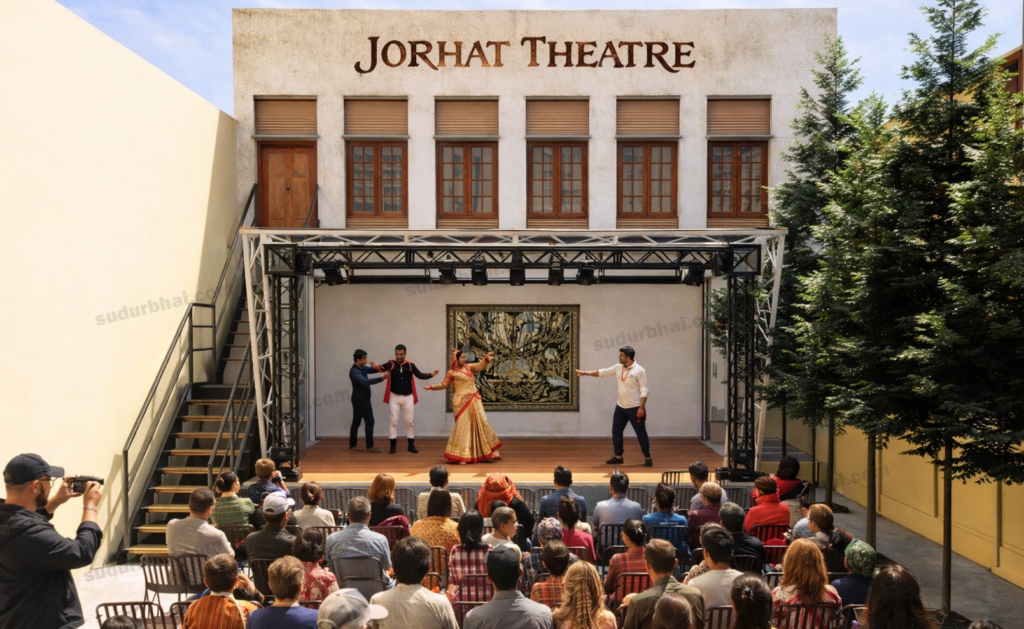
Jorhat Theatre

Historical Background of Jorhat Theatre

    • Theatre activities in Jorhat started during the late 19th century and early 20th century.

    • During this period, many educated Assamese people felt the need to:

      • Protect Assamese culture

      • Spread awareness about social issues

    • Drama became a powerful tool because it could reach even illiterate people.

    • Jorhat emerged as a theatre centre due to:

      • Growth of education

      • Presence of writers, thinkers, and artists

      • Active participation of youth

Development of Theatre in Jorhat

a. Early Stage

    • In the beginning, plays were based on:

      • Stories from mythology

      • Historical events

      • Moral lessons

    • These plays were usually performed during:

      • Festivals

      • Community gatherings

    • Theatre served as a source of both entertainment and learning.

b. Modern Stage

    • With time, theatre in Jorhat became more realistic and modern.

    • Playwrights started focusing on:

      • Problems of common people

      • Social evils like corruption and inequality

    • Stage techniques, acting style, and storytelling became more advanced.

    • Experimental theatre also developed, where artists tried new ideas and formats.

Theatre Groups and Institutions of Jorhat

    • Jorhat has many amateur theatre groups (non-professional but highly dedicated).

    • These groups help by:

      • Training young actors

      • Encouraging new playwrights

      • Organizing drama festivals and competitions

    • Schools and colleges also support theatre activities, making it popular among students.

Themes of Jorhat Theatre

Theatre in Jorhat deals with a wide range of topics:

a. Social Issues

    • Poverty

    • Gender discrimination

    • Unemployment

    • Moral decline in society

b. Cultural Identity

    • Assamese traditions and customs

    • Local history and values

c. Literature-Based Plays

    • Many plays are adapted from Assamese novels and short stories.

d. Experimental Theatre

    • Use of simple stage settings

    • Symbolic acting

    • Focus on ideas rather than grand decoration

Contribution of Jorhat Theatre to Assamese Culture

    • Jorhat theatre has helped in:

      • Preserving the Assamese language

      • Developing modern Assamese drama

    • It has produced many talented:

      • Actors

      • Directors

      • Playwrights

    • Theatre has strengthened the cultural pride of the people of Assam.

Role of Jorhat Theatre in Social Awareness

    • Theatre in Jorhat is often used as a medium to spread awareness.

    • Plays highlight real-life problems faced by ordinary people.

    • Through drama, people are encouraged to:

      • Think critically

      • Question social injustice

      • Improve social behaviour

    • Hence, theatre acts as a mirror of society.

Jorhat as a Cultural Centre

    • Jorhat is also known for:

      • Literature

      • Education

      • Intellectual discussions

    • Theatre works together with these activities to create a strong cultural environment.

    • This makes Jorhat an important centre for arts and culture in Assam.

Let us know any further suggestions ,we at sudurbhai.com will be happy to hear from you in our comment section below ! 

Leave a Comment

Your email address will not be published. Required fields are marked *

Scroll to Top