Tribes in Assam

A tribe is a group of people who live together as a close-knit community and share a common way of life. The members of a tribe usually believe that they come from the same ancestors, which gives them a feeling of belonging and unity.

People of a tribe often speak a common language or dialect that may be different from the languages spoken by people around them. This language helps preserve their identity and traditions.

Each tribe has its own unique culture, which includes their customs, traditions, festivals, dress, food habits, and ways of celebrating important events in life. These cultural practices are passed down from one generation to another.

Tribal communities have a strong sense of community identity, meaning they value cooperation, mutual help, and collective living rather than individual interests.

Most tribes are closely connected with nature and land. Their lives depend on forests, rivers, hills, and fields for food, shelter, and livelihood, which is why they usually show great respect for nature and the environment.

Tribe in Indian Context

  • Defined constitutionally as Scheduled Tribes (STs) under:

    • Article 342 of the Indian Constitution

  • Identified based on:

    • Primitive traits

    • Distinct culture

    • Geographical isolation

    • Shyness of contact with outside world

    • Backwardness (socio-economic)

Tribe in Assam Context

  • Tribes are:

    • Indigenous inhabitants of Assam

    • Closely linked with hills, forests, rivers, and plains

  • Assam tribes show:

    • High ethnic and cultural diversity

    • Mix of hill tribes and plain tribes

  • Constitute about 12–13% of Assam’s total population.

Facts about Assam’s Tribal Population

  • Population Share : Constitute about 12–13% of Assam’s total population.
  • The tribal in Assam constitute 3.72% of total tribal population of the country.
  • The tribal population in Assam is predominantly rural with 94.4% residing in rural areas.
  • Assam has 35+ Scheduled Tribes ( Plains and Hill Tribes)
  • Major Tribal Groups
    • ST (Plains): Bodo, Mishing, Rabha, Tiwa (Lalung), Deori, Sonowal Kachari etc.

    • ST (Hill): Karbi, Dimasa 

    • Mainly Concentrated in:
          • Bodoland Territorial Region
          • Karbi Anglong
          • Dima Hasao
          • Riverine areas of Brahmaputra
  • Major tribes of Assam (constitutinge >90% of ST population of Assam) ;
    1. Bodo (35.1%)
    2. Mishing(17.52%)
    3. Karbi (11.1%)
    4. Rabha (7.6%)
    5. Sonowal Kachari (6.5%)
    6. Lalung (5.2%)
    7. Garo (4.2%) and
    8. Dimasa tribes (3.2%)
  • The other tribal people in Assam are : Deori, Hajong, Thengal Kachari, Khasi, Jaintia, Mech,
    Chakma, Mizo, Hmar, Kuki tribes, Naga tribes, Barmans (in Cachar), Man (Tai speaking),
    Khampti and Singhpho tribes.
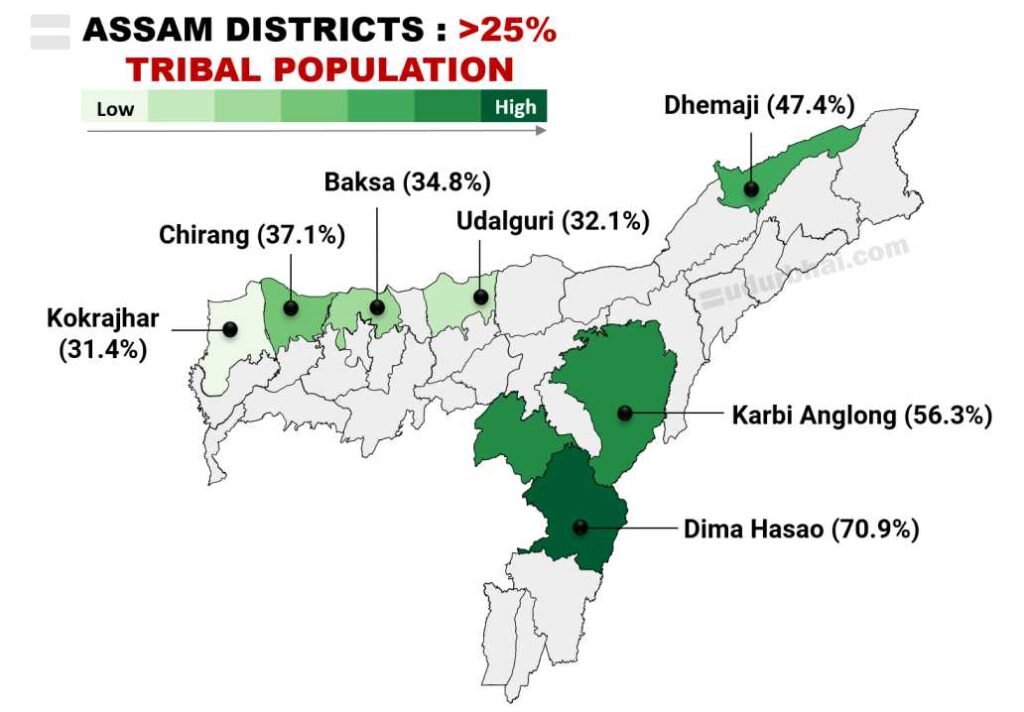
  • List of Assam districts having more than 25% ST population:
DistrictPercentage of ST Population
Dima Hasao70.9%
Karbi Anglong56.3%
Dhemaji47.4%
Chirang37.1%
Baksa34.8%
Udalguri32.1%
Kokrajhar31.4%

Assam Tribals data

  • These above seven districts together account for 53.3% of the tribal population of the State.
  • Interdistrict variation of ST population ; Halakandi district has 0.1% ST population.
  • Most of the plain tribes are inhabitants of Brahmaputra valley and only a small proportion lives in Barak Valley.
  • The literacy rate among tribal in Assam is 72.1% , the male and female literacy rate (79% & 65% respectively).
  • Districts – declared as the Scheduled Areas under the Sixth Schedule of the Constitution :
    • Dima Hasao Autonomous council : Dima Hasao
    • Karbi Anglong Autonomous council : Karbi Anglong and West Karbi Anglong
    • Bodoland Territorial Council : Kokrajhar, Chirang , Baksa , Tamulpur , Udalguri
  • These Autonomous Councils under sixth schedule have power to make laws related to land administration and inheritance of property, management of forest and water-resources, regulation of Jhum cultivation practice, establishing village or town committees and matter relating to tribal administration, marriage and social customs

Classification of Tribes of Assam

On the basis of their habitat, tribal community can be divided into :

        1. Hill tribes
        2. Plain tribes
        3. Riverine tribes
        4. Forest based tribe

Hill Tribes of Assam

Meaning
    • Tribes mainly inhabiting the hill and plateau regions of Assam

    • Live in rugged terrain with forests and slopes

    • Settlements are scattered due to uneven land

Major hill tribes:
    • Karbi tribe (in Karbi Anglong Hills)

    • Dimasa tribe (in Dima Hasao Hills) 

Lifestyle & Occupation
    • Practice jhum (shifting) cultivation

    • Depend on forests for food, fuel, and materials

    • Strong clan and community system

Plain Tribes of Assam

Meaning
    • Tribes living in the plains and river valleys of Assam

    • Mainly found in the Brahmaputra and Barak valleys

Major Plain Tribes
    • Bodo

    • Rabha

    • Tiwa (Lalung)

    • Sonowal Kachari

    • Deori

Lifestyle & Occupation
    • Practice wet rice cultivation

    • Permanent village settlements

    • Increasing participation in education and modern occupations

    • Bodo/Rabha in Dooars (Bhutan foothills) involved in tea estates
Population Pattern
    • Higher population density compared to hill tribes

    • Well-integrated with non-tribal Assamese society

Riverine Tribes of Assam

Meaning
    • Tribes living along river banks, floodplains, and river islands (chars)

    • Highly dependent on rivers for livelihood

Major Riverine Tribes
    • Mishing

    • Deori

Lifestyle & Occupation
    • Fishing, farming, and animal rearing

    • Seasonal movement due to floods and erosion

    • Houses built on stilts (chang ghar) to avoid flood damage

Environmental Challenges
    • Frequent floods

    • Riverbank erosion

    • Loss of agricultural land

Forest-based Tribes

Meaning
    • Tribes whose livelihood is directly dependent on forests

    • Found in forested foothills and interior areas

Important Forest-based Tribes
    • Rabha

    • Karbi

    • Dimasa

Lifestyle & Occupation
    • Collection of forest produce (bamboo, firewood, herbs)

    • Hunting, fishing, and shifting cultivation

    • Deep knowledge of forest ecology

Cultural Features
    • Nature worship

    • Strong conservation-oriented traditional practices

District-wise Distribution of Major Tribes

Bodo Tribe

  • Assam’s largest plains tribe.
  • Total population : 1.45 million (2011 Census).
  • Forms 4.53% of state population.
  • Approxiately ~69% Bodos are concentrate in Bodoland Territorial Region (BTR).
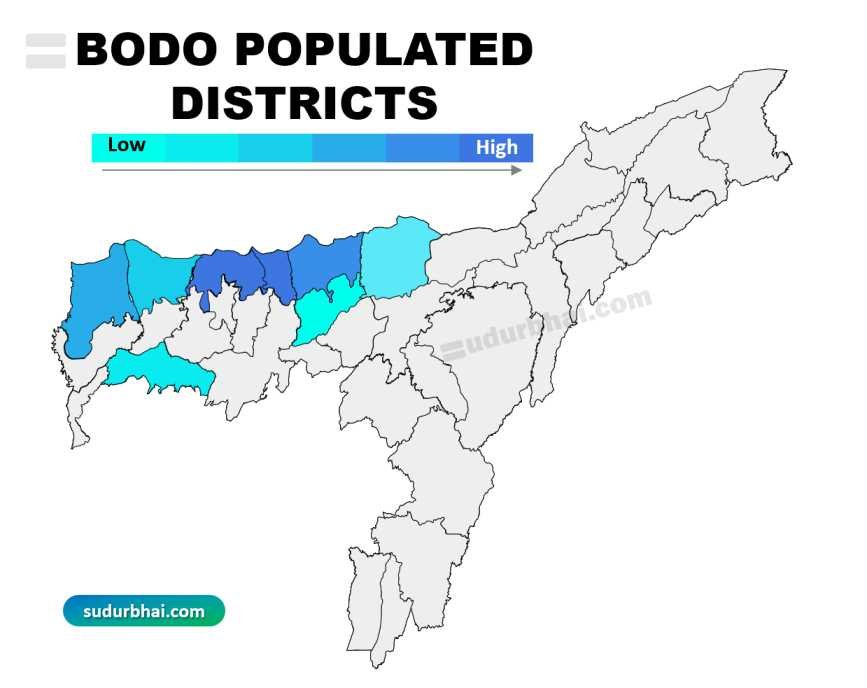
Bodo Tribe

District %age of Assam Bodo
Kokrajhar
18.5%
Baksa
22%
Udalguri
19%
Chirang
12%
Goalpara
10%
Darrang
7%
Sonitpur
6%

Mishing Tribe

  • 2nd largest plains tribe in Assam.
  • Total population  ; 680,424 (2011 Census),
  • Forming 17.5% of state STs.
  • They are concentrated along Brahmaputra’s north bank floodplains
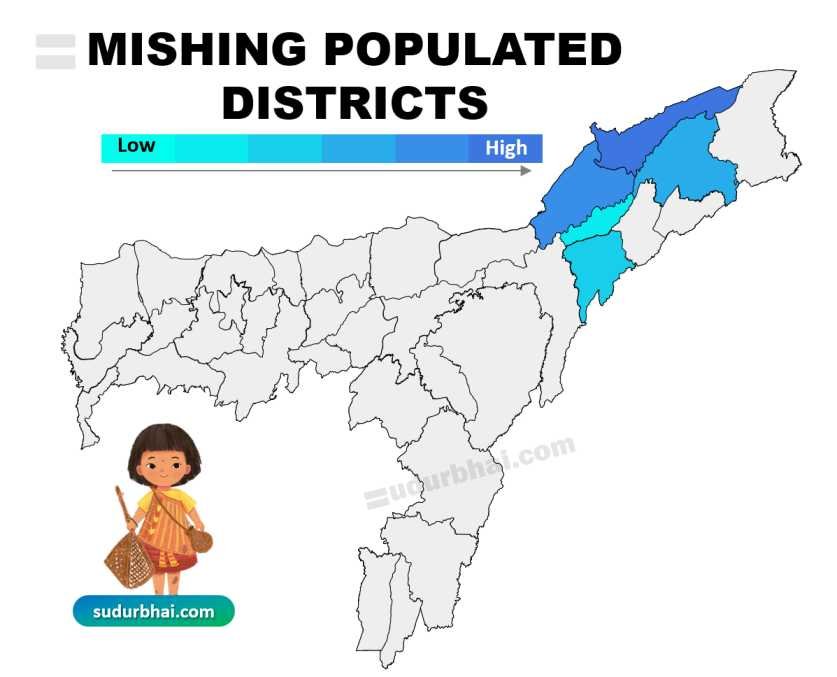
Mishing Tribe
Mishing Tribe Population
District %age of Assam Mishing
Dhemaji
27%
Lakhimpur
24%
Dibrugarh
16%
Jorhat
8%
Majuli
4%

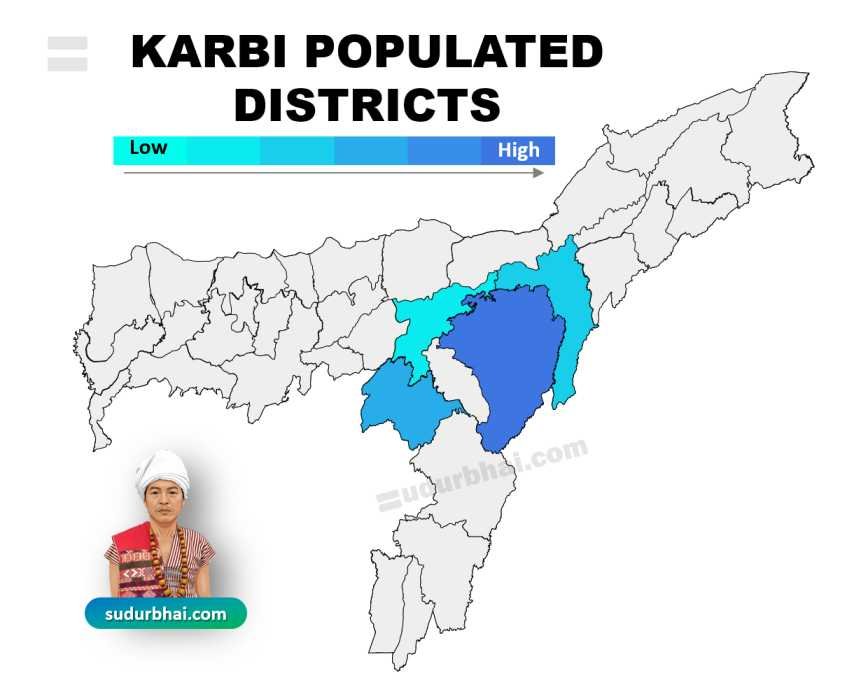
Karbi Tribe

  • Karbi tribes dominate Assam’s Karbi Anglong Autonomous Council.
  • They primarily inhabit the district’s hilly terrain.
  • Total population :  ~4.2 lakh (2011 Census).
  • Forms ~10% of state ST population.
Karbi Tribe
Karbi Tribe Population
District %age of Assam Karbis
Karbi Anglong
52.5%
West Karbi Anglong
37.5%
Golaghat
5%
Nagaon
4.6%

Dimasa Tribe

  • Total population ~2.62 lakh (2011 Census)
  • Mainly concentrated in Dima Hasao autonomous district.
  • Forms 6.5% of Assam ST population
  • Dimasas form traditional kingdom heartland in Dima Hasao hills and Barak plains.
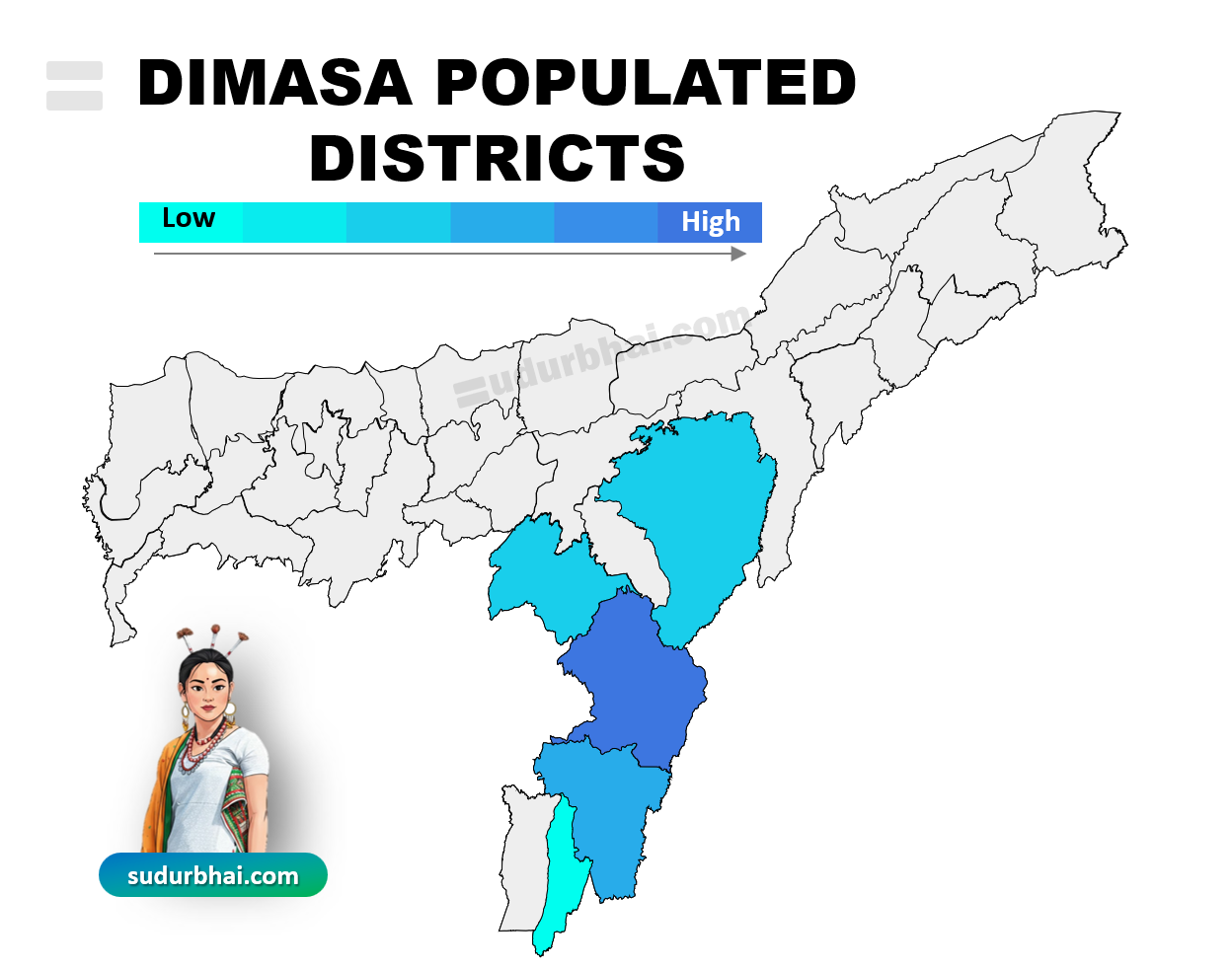
Dimasa Tribe
Dimasa Tribe Population
District %age of Assam Dimasa
Dima Hasao
53%
Cachar
24%
Karbi Anglong
20%
Hailakandi
2%

Rabha Tribe

  • 3rd largest plains tribe of Assam.
  • Total population : 296,189 (2011 Census).
  • Forms 7.63% of Assam’s ST population.
  • Mainly concentrated in western Assam’s Dooars foothills.
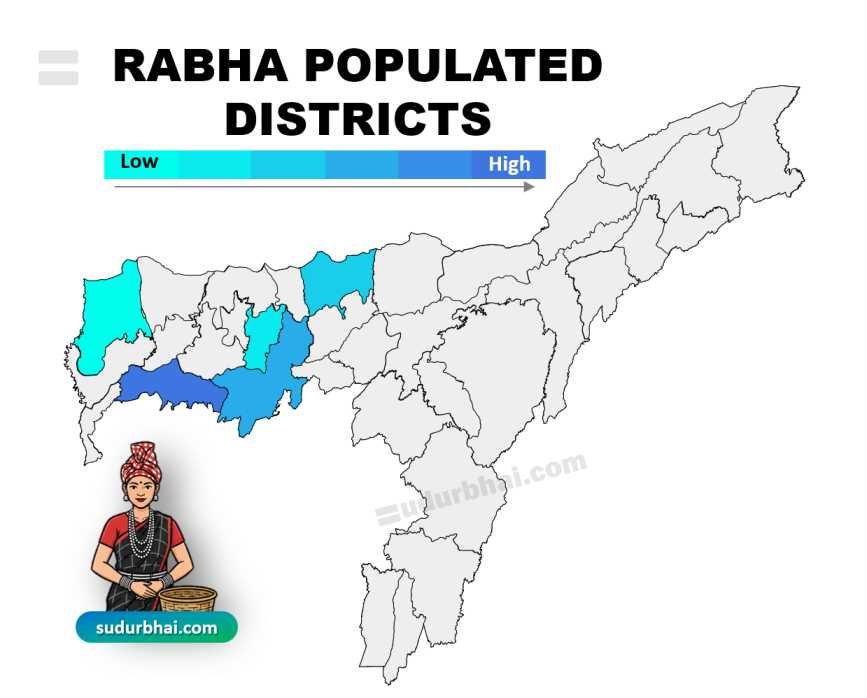
Rabha Tribe
Rabha Tribe population
District %age of Assam Rabha
Goalpara
35%
Kamrup Rural
31%
Udalguri
10%
Nalbari
8%
Kokrajhar
7%

Tiwa Tribe (Lalungs)

  • Total population : 200,915 (2011 Census).
  • Forms 5.2% of Assam’s ST population.
  • Plains Tiwas (95%) : Morigaon , Nagaon 
  • Hill Tiwas (5%): Hills in Karbi Anglong.
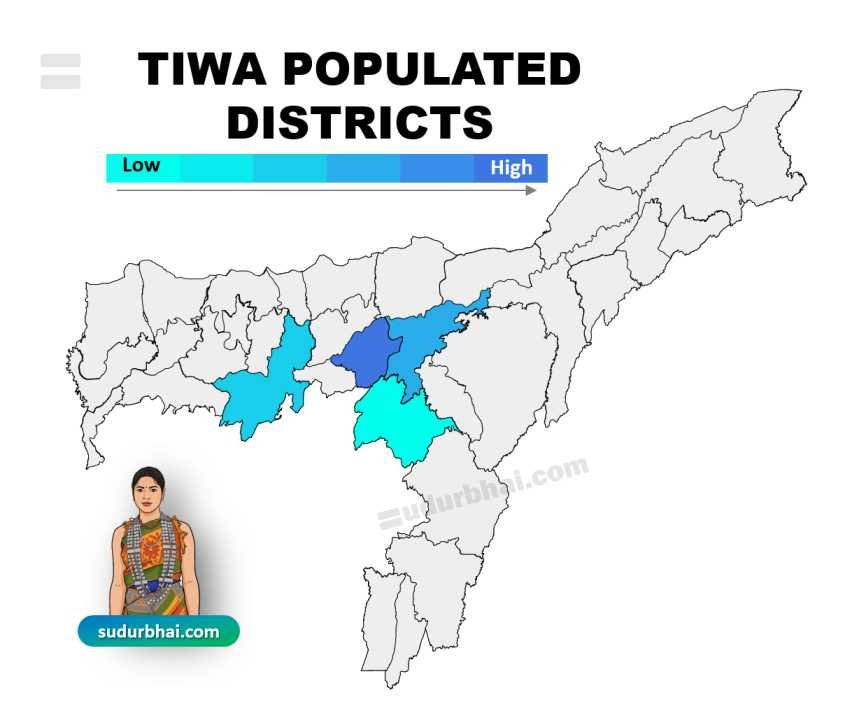
Tiwa Tribe
Tiwa Tribe population
District %age of Assam Tiwas
Morigaon
53%
Nagaon
39%
West Karbi Anglong
3%
Kamrup
5%

Sonowal Kacharis

  • Total population : 235,881 (2001 Census).
  • Forms ~6% of Assam ST population.
  • Mainly concentrated in tea garden fringes.
  • A prominent Kachari subgroup known for historical gold-washing.
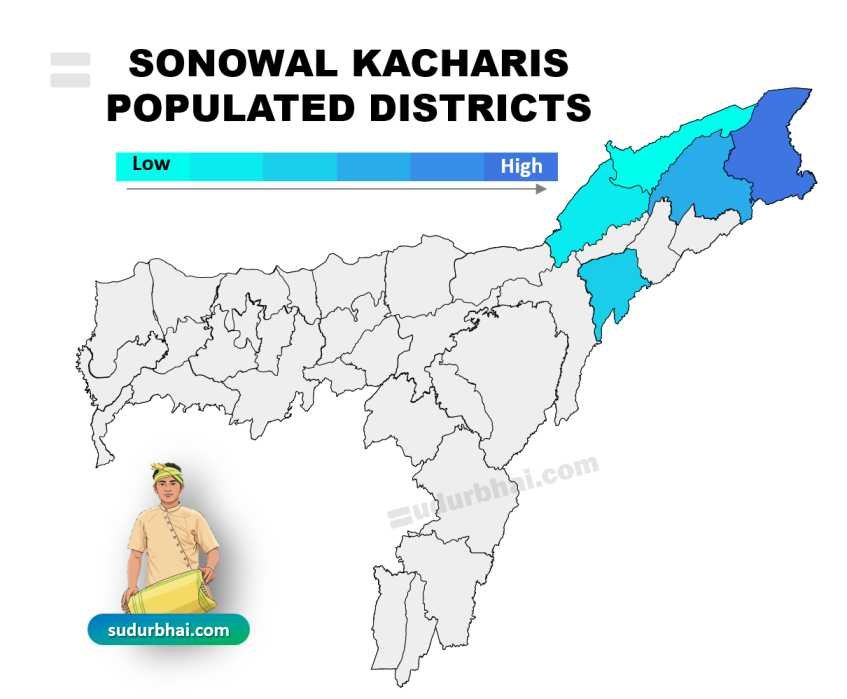
Sonowal Kacharis Tribe
Sonowal Kacharis Tribe Population
District %age of Assam Sonowal Kacharis
Tinsukia
17%
Dibrugarh
16%
Jorhat
15%
Lakhimpur
11%
Dhemaji
8%

Deori Tribe

  • Assam’s smallest plains STs (Chutiya subgroup).
  • Total population : 43,750 (2011 Census).
  • Forms 1.13% of Assam’s ST population.
  • Scattered across Upper Assam’s Brahmaputra riverine villages.
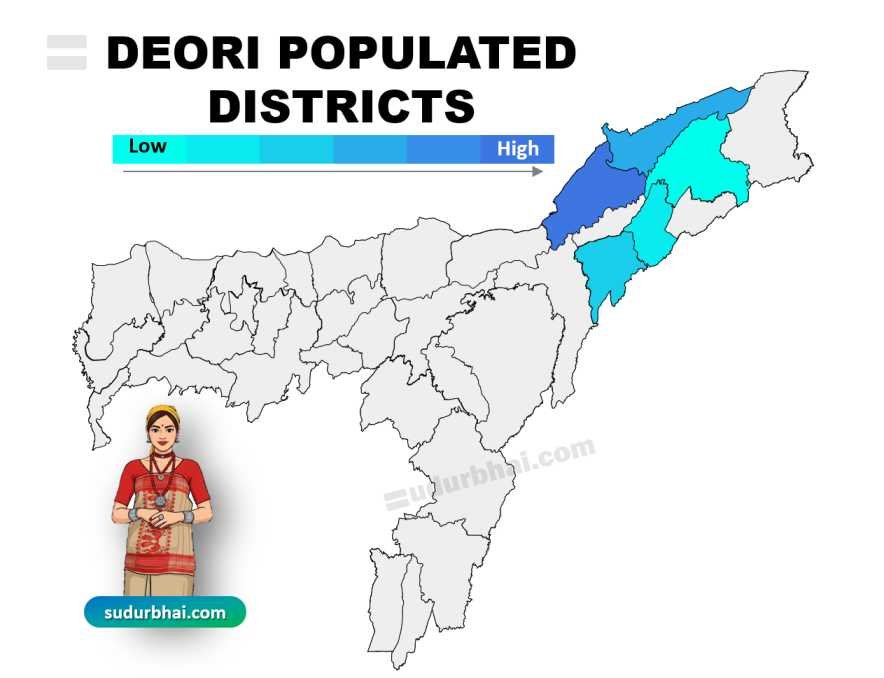
Deori Tribe
Deori Tribe Population
District %age of Assam Deori
Lakhimpur
27%
Dhemaji
21%
Jorhat
19%
Sivasagar
16%
Dibrugarh
12%

Tea Tribes / Adivasis

  • Total population :~70 lakh (2023 estimate).
  • Forms 18-20% of Assam’s population.
  • They concentrate in 801 tea estates across Upper Assam.
  • Mainly descendants of 19th-century Jharkhand migrants.
  • Communities: Munda (35%), Santhal (20%), Oraon (15%)
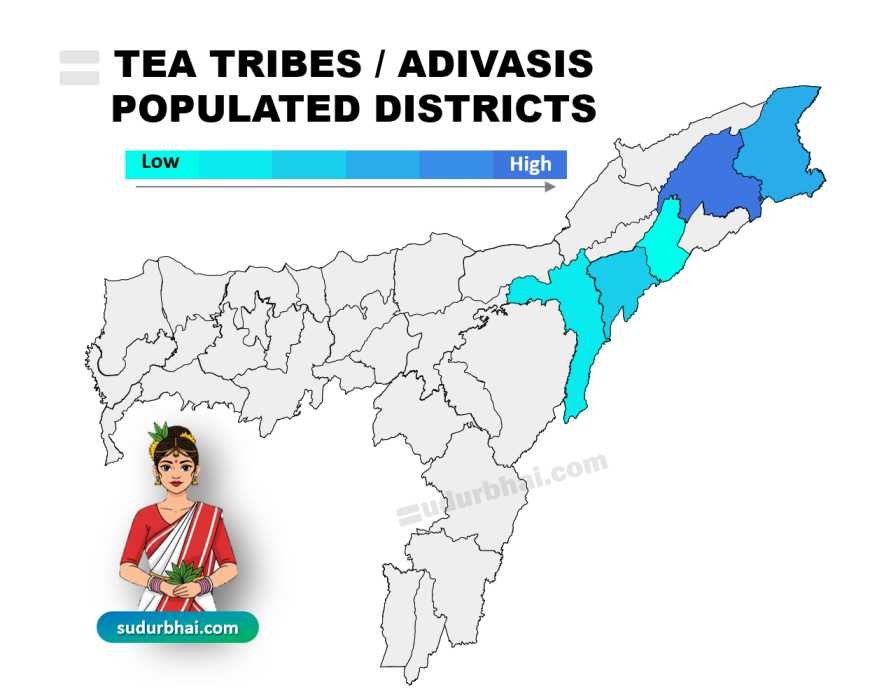
Tea tribe
Tea tribe / Adivasis Population
District %age of Assam Tea tribes / Adivasis
Dibrugarh
21%
Tinsukia
19%
Jorhat
13%
Golaghat
11%
Sivasagar
6%

Singhpo Tribe

  • Singhpo  tribes : A.k.a. Singpho Tribes.
  • A Tai-Kadai hill tribe from Myanmar border areas.
  • Total population : ~7,958 (2011 Census).
  • Forms <0.2% of Assams ST Population.
  • Mainly concentrated near Arunachal-Assam trijunction.
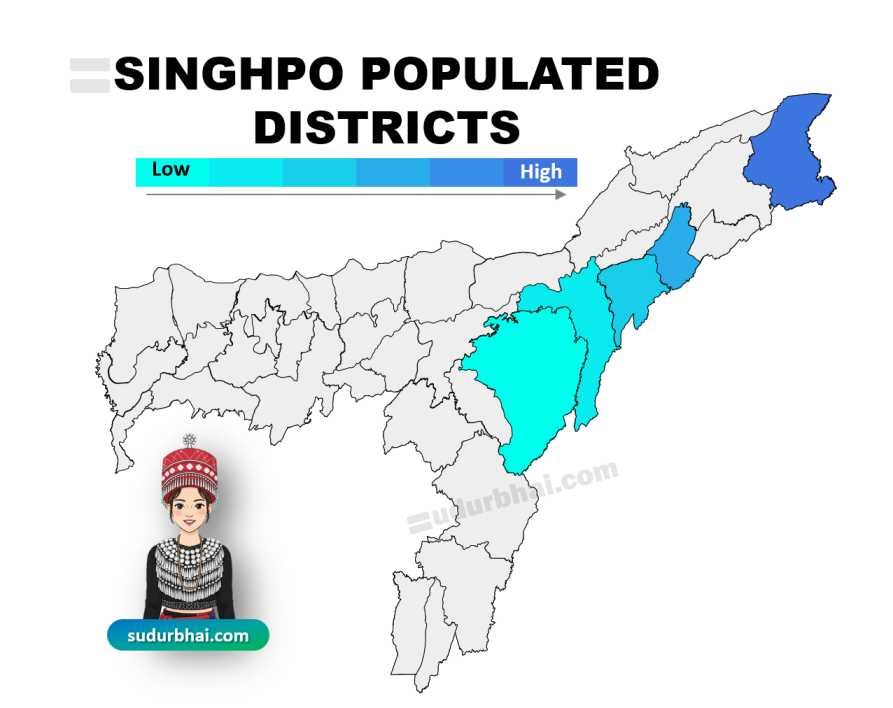
Singhpo tribe
Singhpo tribe Population
District %age of Assam Singhpo
Tinsukia
50%
Sivasagar
19%
Jorhat
13%
Golaghat
10%
Karbi Anglong
8%

Man Tribe

  • Total population  ~15,000 (2011 Census) in Assam.
  • These 18th-century Shan migrants from Myanmar.
  • Subgroups: Phake (largest), Aiton (oldest), Khamyang (most villages)
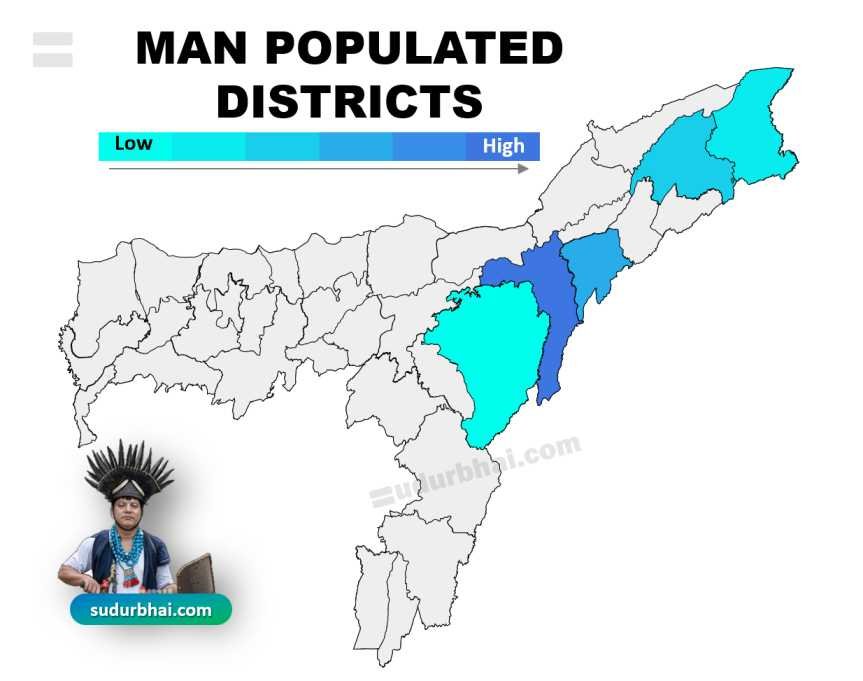
Man tribe
Man tribe Population
District %age of Assam Man
Golaghat
30%
Jorhat
23%
Dibrugarh
20%
Tinsukia
17%
Karbi Anglong
10%

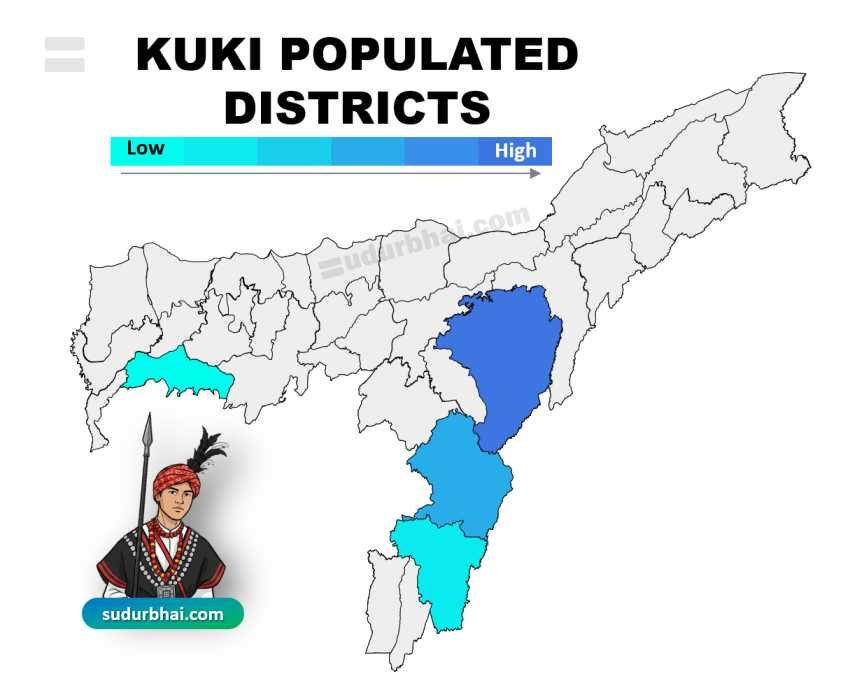
Kuki Tribe

  • Total population : 33,399 (2011 Census)
  • Forms ~0.9% of state ST population
  • They concentrate in hill districts under 6th Schedule areas.  (no plains presence)
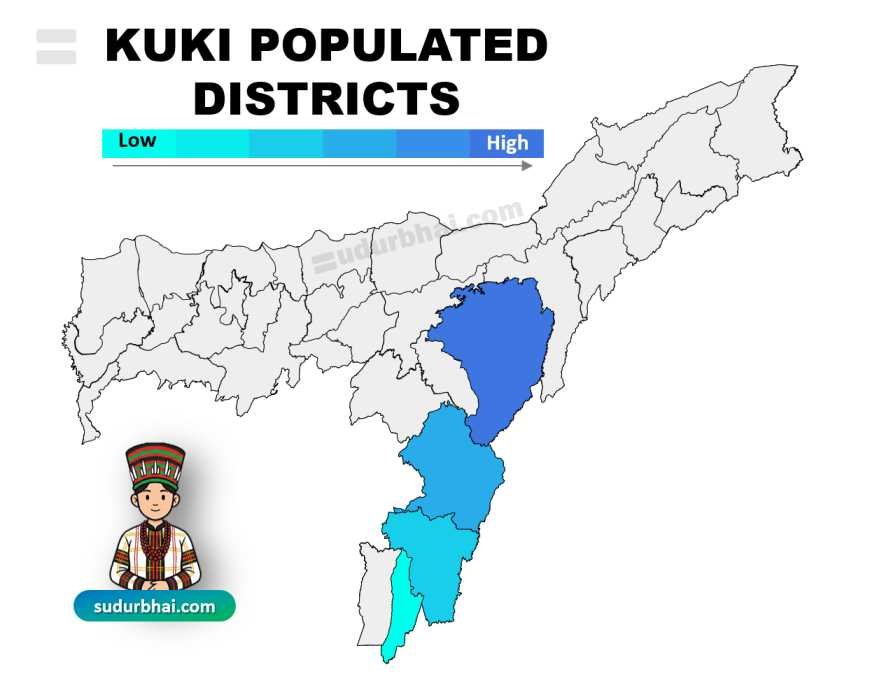
Kuki tribe
Kuki tribe Population
District %age of Assam Kuki
Karbi Anglong
47%
Dima Hasao
30%
Cachar
12%
Hailakandi
5%

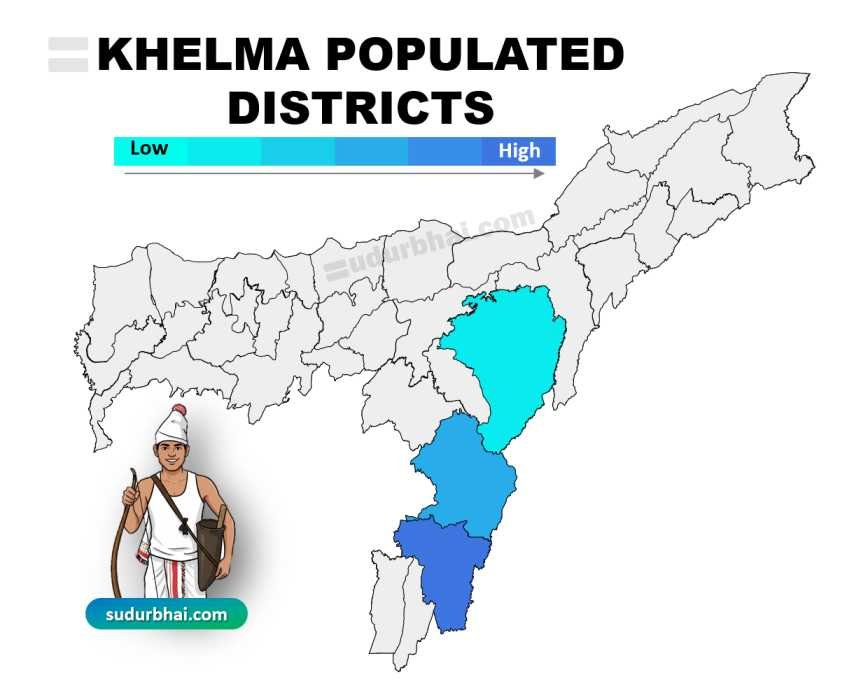
Khelma Tribe

  • They are a small Kuki-Chin subgrou.
  • Total population ~5,000-7,000 (2011 Census estimates)
  • Forms <0.2% of state ST population.
Khelma tribe
Khelma tribe Population
District %age of Assam Khelma
Cachar
50%
Dima Hasao
42%
Karbi Anglong
8%

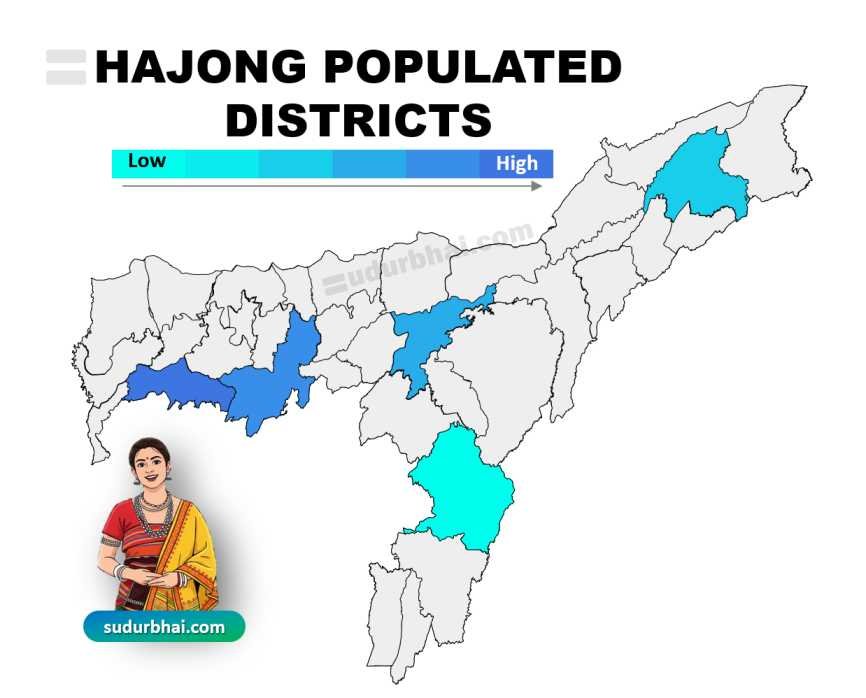
Hajong Tribe

  • Indo-Aryan rice cultivators displaced from Bangladesh floods (1960s).
  • Total population : 27,521 in Assam (2011 Census).
  • They form ~0.7% of state ST population.
  • Settled in Assam-Meghalaya foothills.
Hajong tribe
Hajong tribe Population
District %age of Assam Hajong
Goalpara
44%
Kamrup
15%
Nagaon
13%
Dibrugarh
11%
Dima Hasao
5%

Khasi Tribe

  • Across Assam’s southern districts bordering Khasi Hills.
  • Total population ~35,000 (2011 Census).
  • Forms <1% of state ST population.
Kuki tribals
Kuki tribals population
District %age of Assam Khasi
Karbi Anglong
51%
Dima Hasao
23%
Cachar
14%
Goalpara
6%

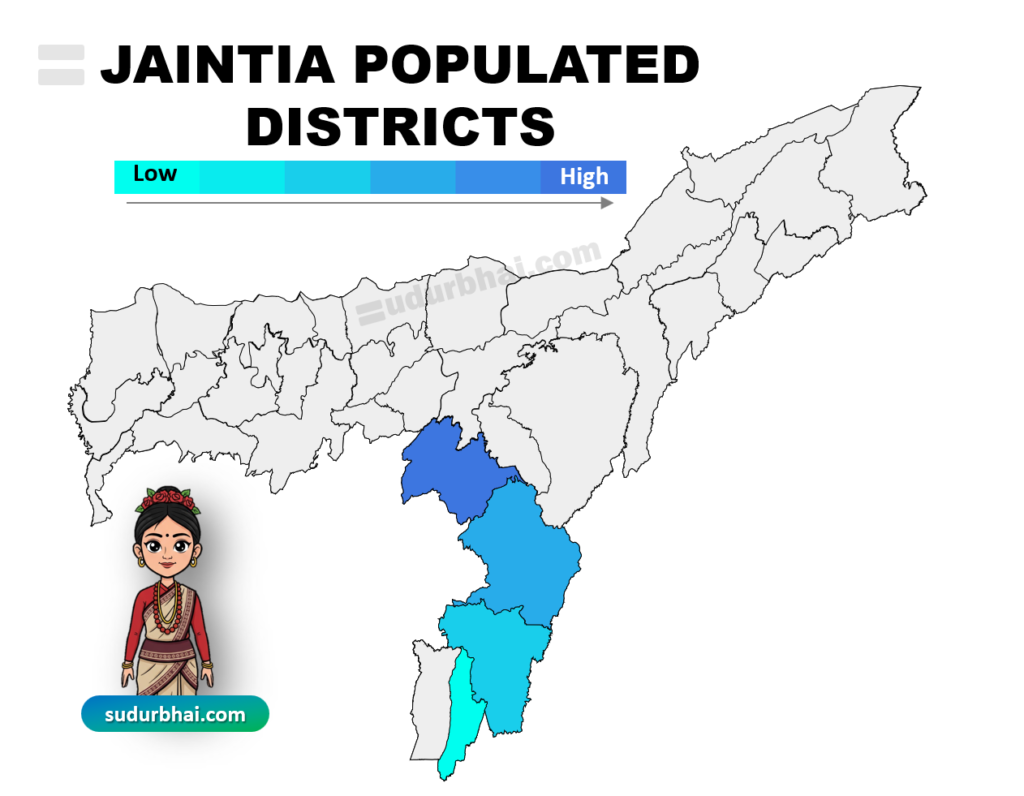
Jaintia Tribe

  • Minimal presence in Assam near the border areas.
  • Total population ~3,000-5,000 (2011 Census)
  • Forms <0.1% of state ST population.
Jaintia tribe
Jaintia tribe Population
District %age of Assam Jaintia
West Karbi Anglong
50%
Dima Hasao
30%
Cachar
12%
Hailakandi
8%

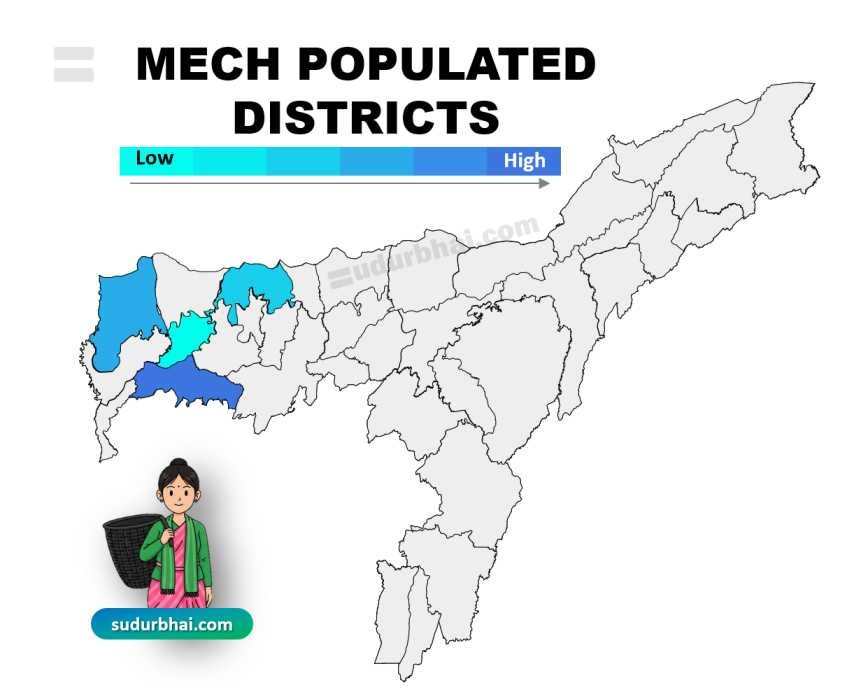
Mech Tribe

  • Mech tribes (Boro subgroup)
  • Traditional Dooars dwellers.
  • Total population : 55,992 (2011 Census)
  • Forms ~1.4% of state ST population.
Mech tribe
Mech tribe Population
District %age of Assam Mech
Goalpara
45%
Kokrajhar
21%
Baksa
18%
Bongaigaon
9%

Chakma Tribe

  • Indo-Burman Buddhist refugees from Bangladesh (1960s-70s).
  • Total population : ~15,000-20,000 (2011 Census estimates)
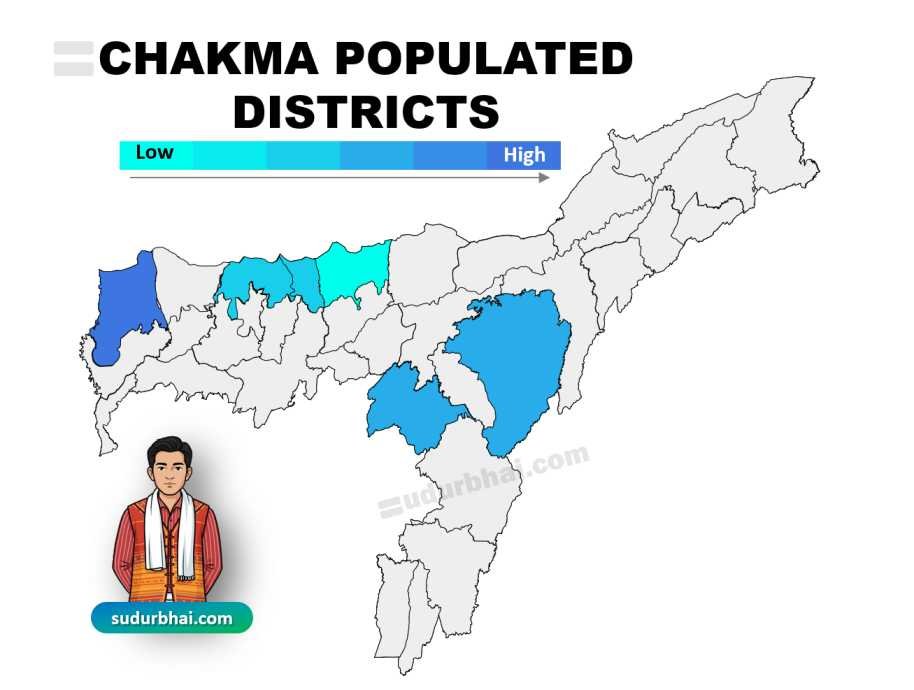
Chakma tribe
Chakma tribe Population
District %age of Assam Chakma
Kokrajhar
39%
Karbi Anglong
28%
Baksa
17%
Udalguri
11%

Mizo Tribe

  • Mizo tribes are Lushai subgroup in Assam.
  • Total population ~5,000-8,000 (2011 Census).
  • Forms <0.2% of state ST population.
  • Concentrated in southern hill districts bordering Mizoram.
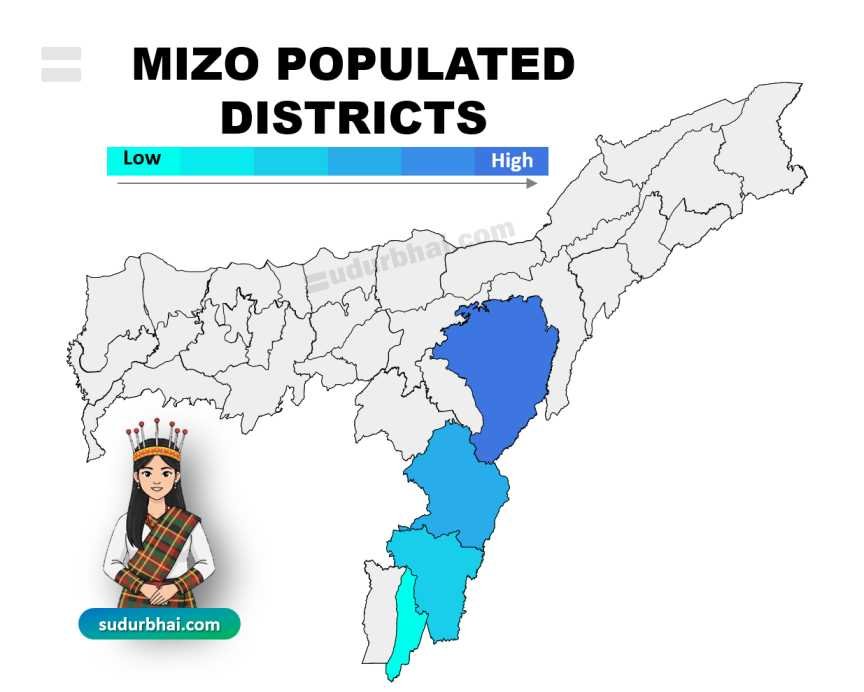
Mizo tribe
Mizo tribe Population
District %age of Assam Mizo
Karbi Anglong
53%
Dima Hasao
23%
Cachar
15%
Hailakandi
8%

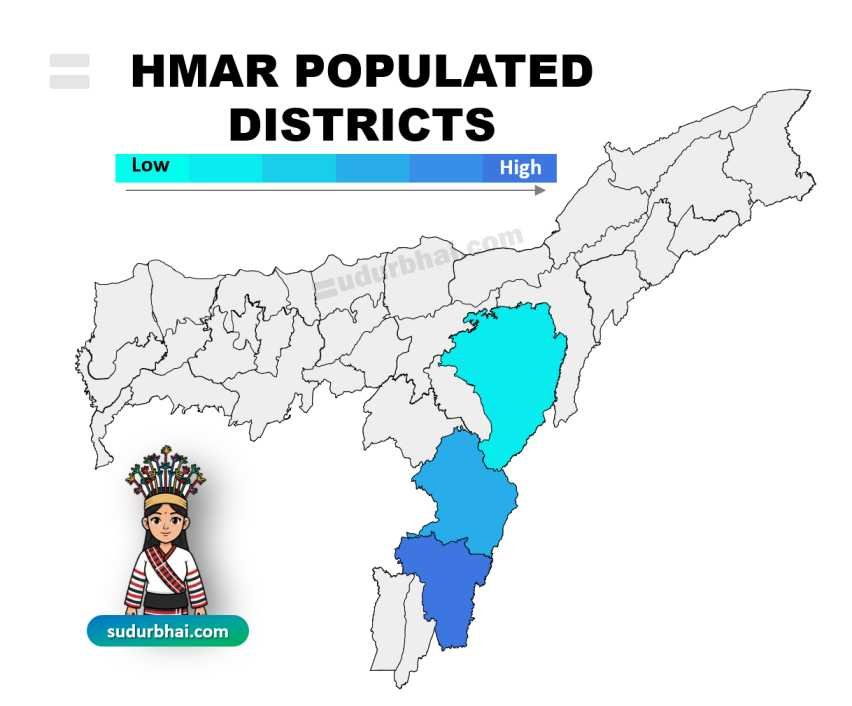
Hmar Tribe

  • It is a Kuki-Chin hill community.
  • Total population : ~65,121 in Assam (2011 Census).
  • Form ~1.7% of state ST population.
Hmar tribe
Hmar tribe population
District %age of Assam Hmar
Cachar
68%
Dima Hasao
32%
Karbi Anglong
<1%

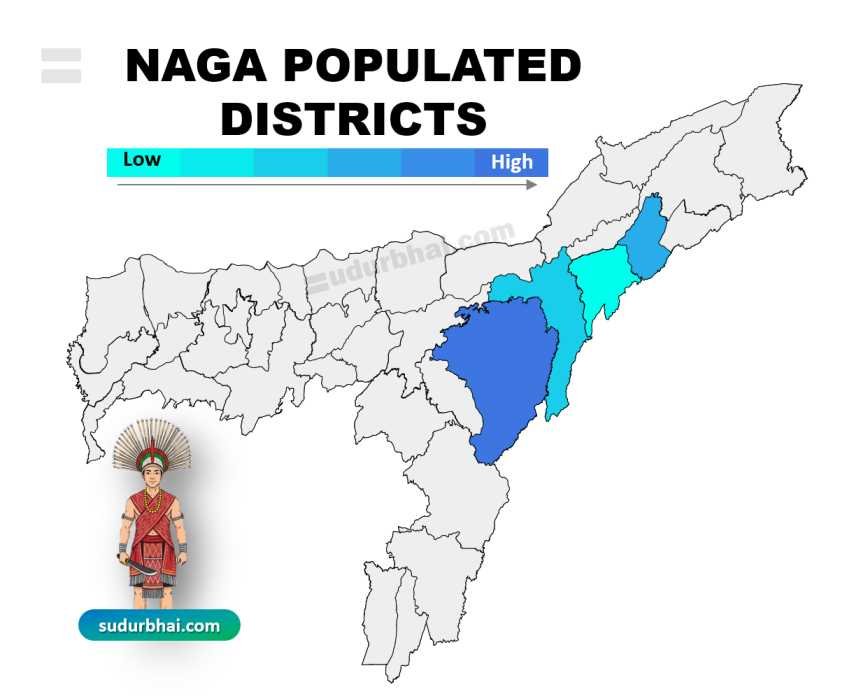
Naga Tribe

  • Mainly inhabits along Arunachal-Nagaland border areas.
  • Total population : ~45,000-50,000 (2011 Census).
  • Form ~1.3% of state ST population.
Naga tribe
Naga tribe population
District %age of Assam Naga
Karbi Anglong
52%
Sivasagar
17%
Golaghat
15%
Jorhat
10%

Barmans Tribe

  • Plains-dwelling Dimasa subgroup outside 6th Schedule areas.
  • Total population ~97,904 (2024 estimates) across Barak Valley.
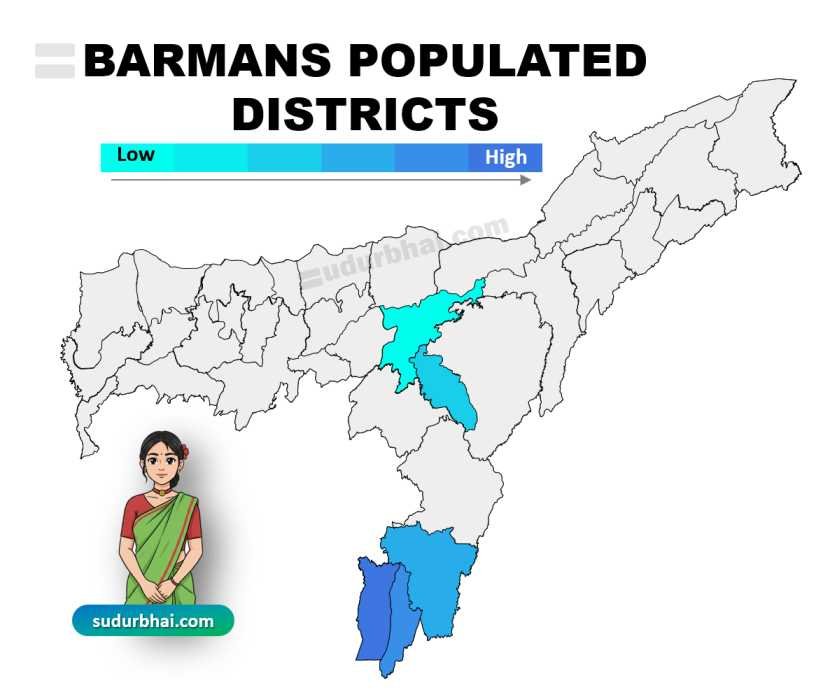
Barman tribe
Barman tribe population
District %age of Assam Barmans
Sribhumi
31%
Hailakandi
26%
Cachar
22%
Hojai
12%
Nagaon
9%

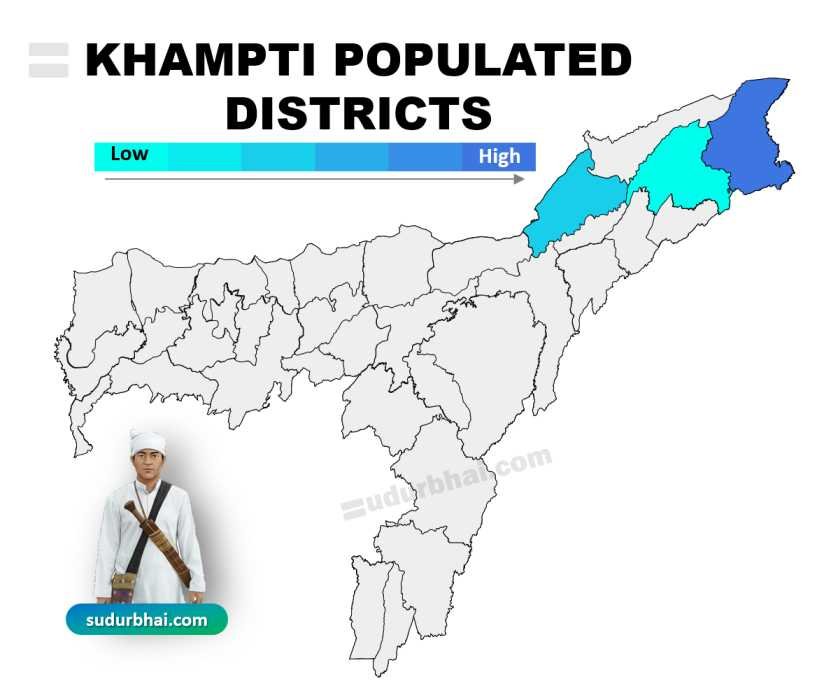
Khampti Tribe

  • Khamptis are Tai Shan tribes from Myanmar
  • Total population : ~1,400 in Assam.
  • Forms <0.01% of state ST population.
Khampti tribe
Khampti tribe population
District %age of Assam Khampti
Tinsukia
50%
Lakhimpur
36%
Dibrugarh
14%

Let us know any further suggestions ,we at sudurbhai.com will be happy to hear from you in our comment section below ! 

Leave a Comment

Your email address will not be published. Required fields are marked *

Scroll to Top