West Karbi Anglong District

West Karbi Anglong District

    • Location: In Assam, India, formed on February 9, 2016, from Karbi Anglong district.
    • Headquarters: Hamren.
    • Significance: Part of the Karbi Anglong Autonomous Council, governed by the Sixth Schedule of the Indian Constitution.
Nagaon District

  History of West Karbi Anglong District

Early History & Formation

    • The Karbi people, a Tibeto-Burman group, migrated from western China and settled near the Kalang and Kopili rivers before moving into the hills due to Dimasa Kachari rule.
    • They later lived under Jaintia suzerainty in the Jaintia Hills.
    • Hill tribes of the region, including present-day Karbi Anglong, West Karbi Anglong, and Dima Hasao, remained independent until British colonization.
    • As per the Government of India Act, 1935, the region was classified as a “Partially Excluded Area,” administered directly under the Governor’s special powers.
    • Semsonsing Ingti and others demanded a separate administrative unit for Karbis, leading to the formation of Karbi-A-Dorbar in 1946.

Semsonsing Ingti — Important Contributions

  • Karbi leader: Played an important role in the political mobilisation of the Karbi people.

  • Karbi-A-Dorbar: Associated with the movement that led to the formation of the Karbi-A-Dorbar in 1946.

  • Bordoloi Sub-Committee: Served as a co-opted member of the committee dealing with the administration of the tribal and excluded areas of Assam.

  • Separate administrative unit: Advocated a separate administrative district/unit for the Karbi-inhabited hill areas,rather than complete separation from Assam.

  • Sixth Schedule: His participation in the constitutional process concerning tribal areas is associated with the development of the autonomous-administration framework that eventually came under the Sixth Schedule.

  • Karbi autonomy: Remembered as an important pioneer/architect of the Karbi movement for political and administrative autonomy.Semsonsing Ingti is widely revered as the architect and “Father of the Karbi Anglong Autonomous Council” (formerly Mikir Hills Autonomous Council)

Post-Independence & District Formation

    • November 17, 1951: United Mikir & North Cachar Hills district was created under the Sixth Schedule of the Indian Constitution.
    • February 2, 1970: The district was split into Karbi Anglong and North Cachar Hills districts.
    • October 14, 1976: Mikir Hills district was renamed Karbi Anglong.
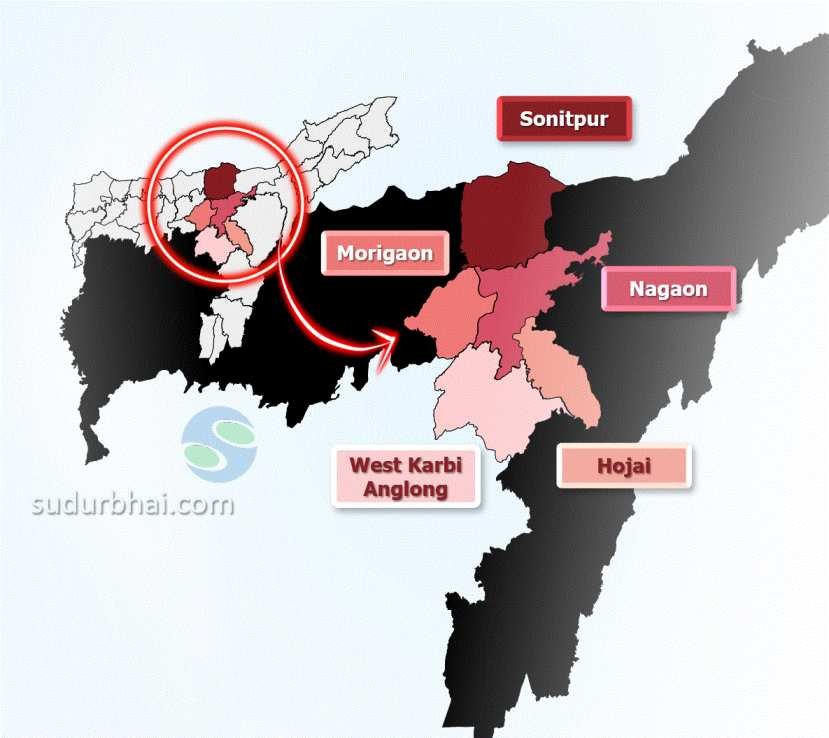
    • 2016: Karbi Anglong was further divided, creating West Karbi Anglong, with Hamren as its headquarters.

  Geography of West Karbi Anglong District

    • Area: 3,035 square kilometers (1,171 square miles).
    • Coordinates: Between 25°33′ N and 26°09′ N latitude and 92°08′ E and 93°04′ E longitude.
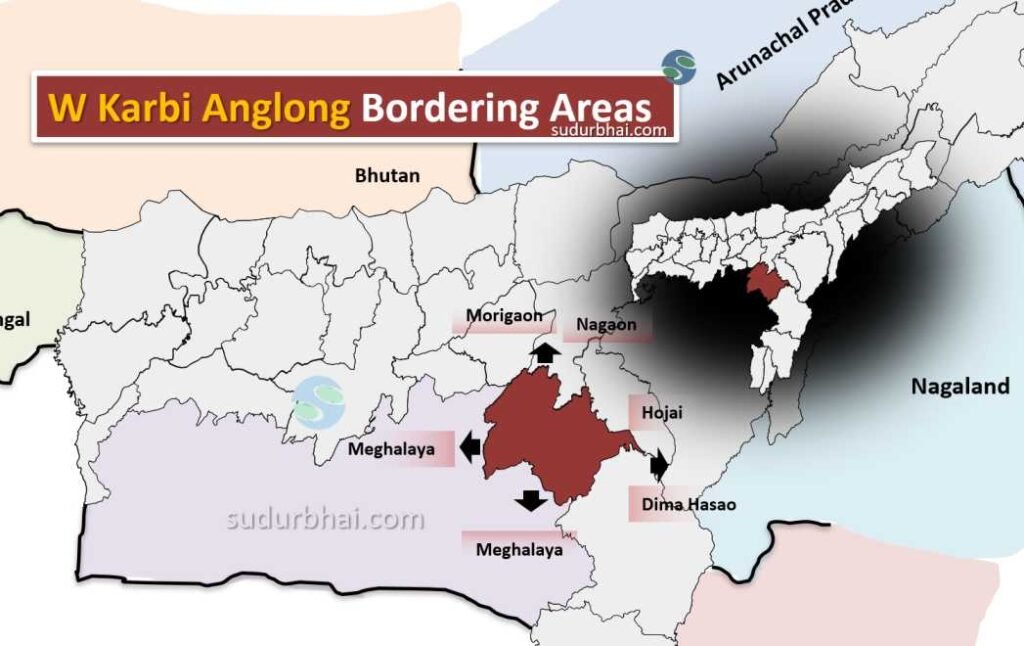
    • Boundaries:
      • North: Morigaon , Nagaon
      • South: Meghalaya
      • East: Hojai , Dima Hasao
      • West: Meghalaya
  • West Karbi Anglong Nearby districts
    West Karbi Anglong Neighbouring districts
    • Topography: The district is hilly, with valleys, plateaus, dense forests, and rivers.
    • Climate: Subtropical climate with mild winters and warm summers. Average annual rainfall: 2,416 mm (mostly from June to September).
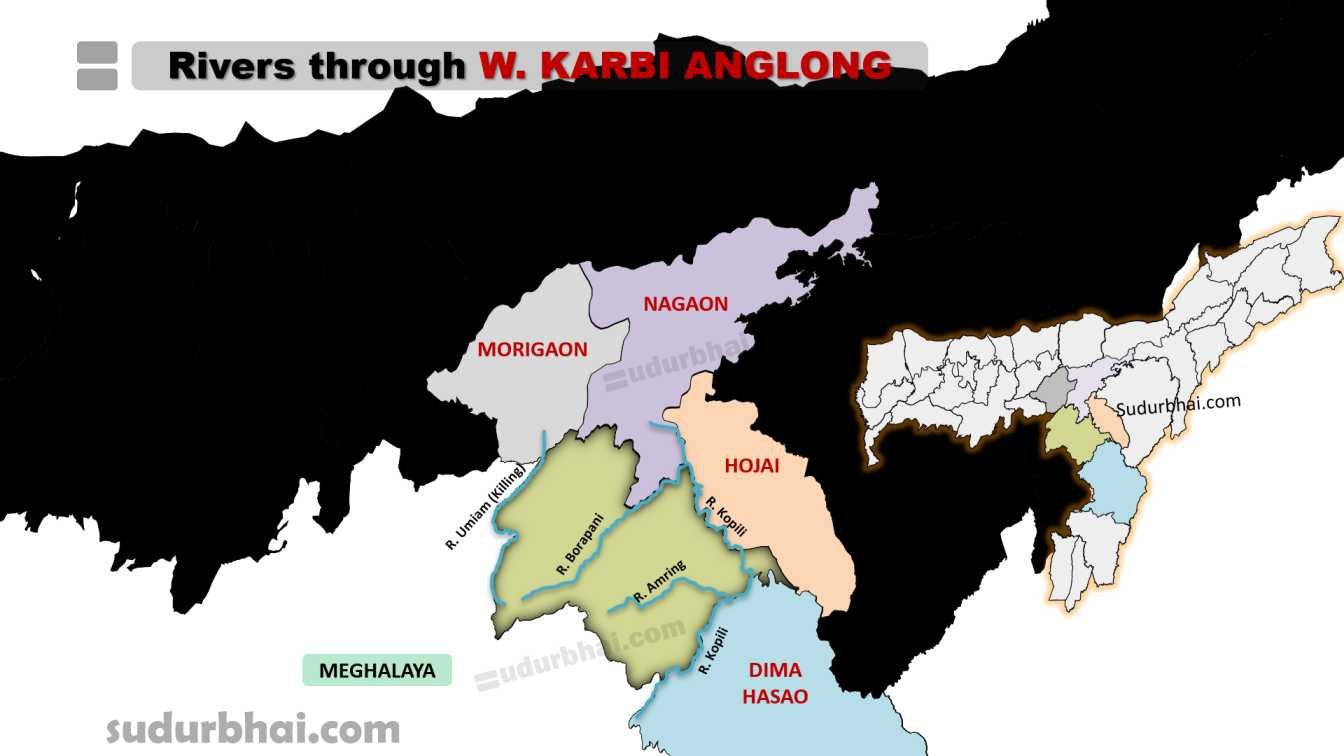
    • Rivers: Umiam, Borapani, Kopili and Amreng.
West Karbi Anglong River
Rivers in West Karbi Anglong

  Socio-Economy of West Karbi Anglong District

    • Agriculture: The district has ginger, sugarcane, maize, cotton, coconut, chilies, and black pepper as main crops. It is also known for its horticultural products.
    • Livestock: Pig farming, poultry, and dairy farming are common.
    • Small-scale Industries: Includes food processing, bamboo crafts, and potential for handicrafts and tourism.
    • Challenges: Despite good agricultural productivity, the district faces limited infrastructure and market access.

  Transport in West Karbi Anglong District

    • Roadways: Well-connected by roads to major towns and cities in Assam, including state highways for easier travel.
    • Railways: The nearest railway station is Hamren, around 10 km away.
    • Airways: The nearest airport is in Dimapur, 90 km from Hamren.

 Demographics of West Karbi Anglong District

    • Population (2011 Census): Approximately 295,358.
    • Sex Ratio: 954 females for every 1,000 males, indicating a slightly imbalanced gender ratio.
    • Literacy Rate: 63.35%, with challenges in educational access in rural areas.
    • Ethnic Composition: Mainly Karbis, Bodos, and other tribal groups.

 Administrative Setup of West Karbi Anglong District

    • District Headquarters: Hamren.
    • Sub-Division: One sub-division – Hamren.
    • Revenue Circles: Multiple revenue circles within the district.
    • Development Blocks: The district has four development blocks:
      • Amri
      • Chinthong
      • Rongkhang
      • Socheng

 Attractive Tourist Places in West Karbi Anglong District

    • Karbi Anglong Hills: Known for scenic beauty and opportunities for trekking and eco-tourism.
    • Kheroni Jiri Waterfall: A beautiful waterfall popular with nature lovers.
    • Traditional Villages: Showcasing indigenous culture and crafts.
    • Umswai Valley:

      • Part of the ancient Karbi-Meghalaya plateau, known for eco-tourism.
      • Home to Hill Tiwa tribes, preserving their unique culture.
      • Notable villages: Bormarjong, Amsai Pinung, Shikdamakha.
    • Nothengpi:

      • Symbolic Karbi earring, culturally significant since pre-colonial times.
      • Karbi Heritage Museum in Taralangso is designed after Nothengpi.
      • Venue for the Karbi Youth Festival, showcasing Karbi culture.

 Languages Spoken in West Karbi Anglong District

    • Karbi : 49.68%
    • Bhojpuri : 10.37%
    • Nepali : 6.98%
    • Bengali : 5.89%
    • Garo : 5.73%
    • Tiwa : 5.43%
    • Assamese : 4.69%
    • Khasi : 3.27%
    • Hindi : 3.18%
    • Dimasa : 1.45%
    • Boro : 1.28%

Let us know any further suggestions ,we at sudurbhai.com will be happy to hear from you in our comment section below ! 

Leave a Comment

Your email address will not be published. Required fields are marked *

Scroll to Top