Dibrugarh District

Dibrugarh District

  • Location: Northeastern Assam, India.
  • Nickname: Often called the “Tea Capital of India” due to its famous tea gardens.
  • Key Features: Known for its extensive tea plantations, rich cultural heritage, and historical importance.

  History of Dibrugarh District

    • Chutia Kingdom (Pre-1523 AD): Originally part of the Chutia Kingdom before being annexed by the Ahoms in 1523.
    • Ahom Rule: Ahoms defeated the Chutias at Dibrumukh; King Suhungmung appointed officials to govern the region.
    • Moamoria Rebellion (1787-1805): Significant uprising against Ahom rule during King Gaurinath Singha’s reign, shifting power dynamics in the region.

British Colonial Era

    • British Arrival (1826): Following the Treaty of Yandaboo, the British recognized Dibrugarh’s administrative and commercial potential.
    • Administrative Center (1842): Became headquarters of Lakhimpur District under British rule.
    • World War II Role: Functioned as a key military base and transit camp for evacuees from Burma.

  Geography of Dibrugarh District

    • Area: 3,381 square kilometers.
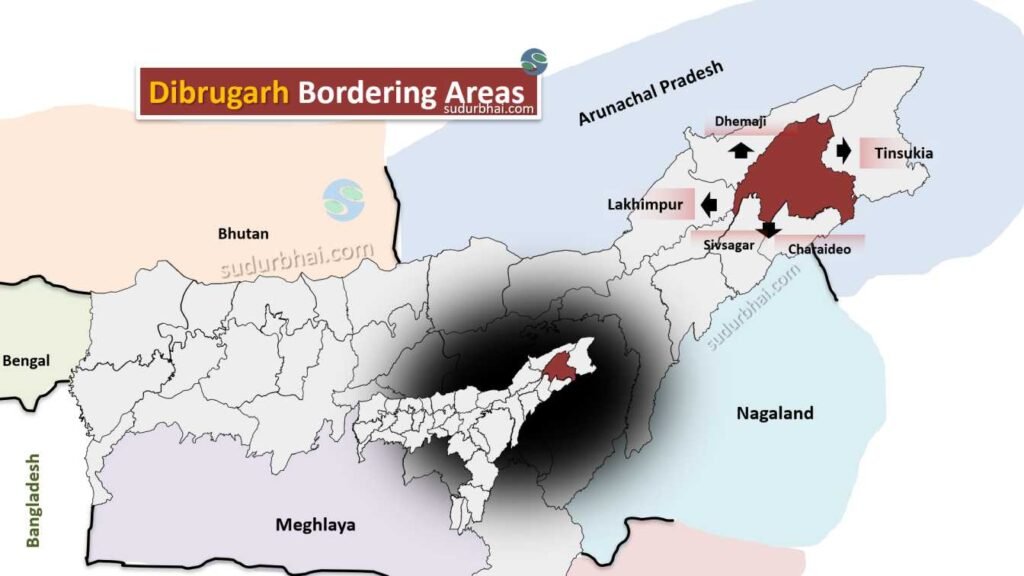
    • Boundaries:
      • North: Dhemaji District.
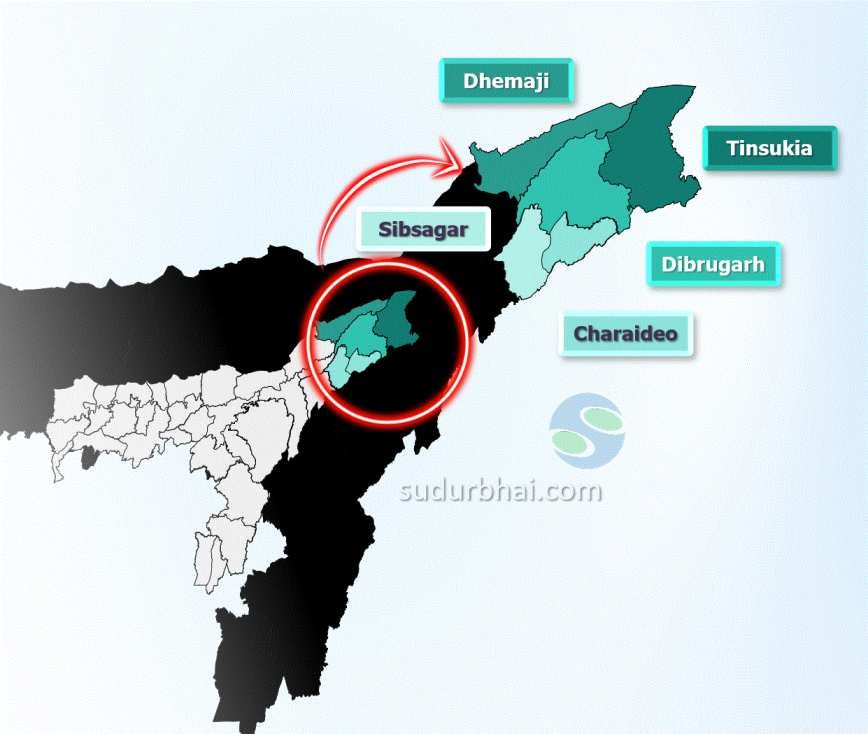
      • South: Charaideo and Sibsagar district.
      • East: Tinsukia district.
      • West: Lakhimpur district.
        Dibrugarh District
        Dibrugarh neighbouring Districts
    • Topography: A mix of flat plains and gentle hills, with the Brahmaputra River flowing along the southern boundary.
    • Climate: Humid subtropical with heavy monsoon rainfall. Temperatures range from 10°C in winter to 39°C in summer. Average annual rainfall is 2,518 mm.
    • Avg. annual rainfall decreases from Dibrugarh(North) to Naharkatia (south)
    • Rivers: The Brahmaputra (forming northern boundary)and its tributaries like Dibru, Tingrai , Buri Dihing , Disam.
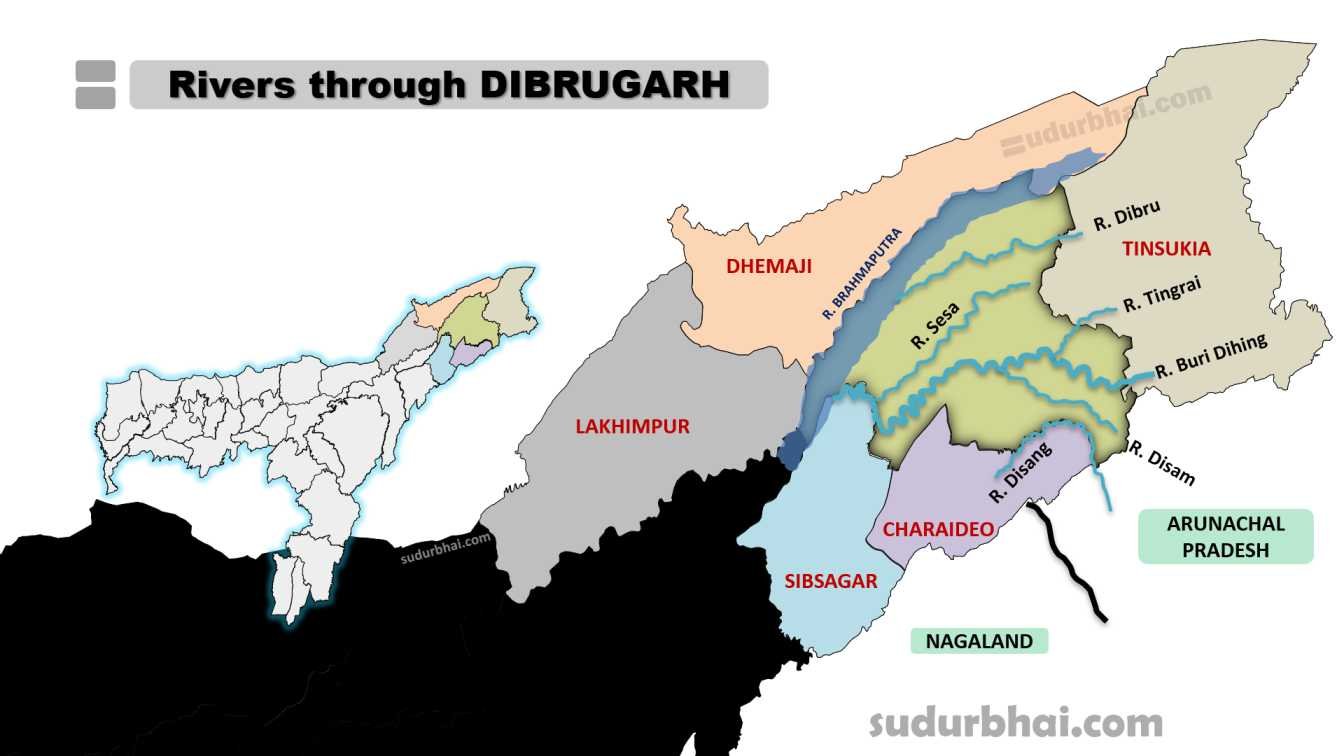
Rivers through Dibrugarh
Rivers through Dibrugarh District

  Socio Economy of Dibrugarh District

    • Economy: Primarily agrarian, with a major focus on tea. Also known for Oil.
    • The Assam gas cracker project (a.k.a. Brahmaputra Cracker and Polymer Limited (BCPL)).

    • Dhuliajan, and important oil town – known for crude oil as well as Natural Gas reserve.

    • Namrup has countries first fertilizer factory and recently established thermal power plant.

    • Tea Industry: Dibrugarh is home to 178 tea gardens, contributing significantly to the economy.
    • Other Agriculture: Rice, jute, mustard, and various fruits are also cultivated.
    • Small-Scale Industries: Food processing, handicrafts, and bamboo products.
    • Tourism: The district’s natural beauty, tea estates, and cultural sites attract many tourists.

  Transport in Dibrugarh District

  • Roadways: National Highway 15 connects Dibrugarh to other parts of Assam. It also has many state highways and rural roads.
  • The Bogibeel  rail cum road bridge which is the longest Railway Bridge in the country and 5th Bridge across the river Brahmaputra – connect Dibrugarh and dhemaji (through NH 15)
  • Railways: The Dibrugarh Railway Station connects the district to major cities like Guwahati and Kolkata.
  • Airways: Dibrugarh Airport (Mohanbari Airport) only.

  Demographics of Dibrugarh District

Population Statistics (2011 Census)

    • Total Population: 1,326,335

      • Male Population: 676,434 (51.0%)

      • Female Population: 649,901 (49.0%)

    • Rural Population: 1,082,605 (81.62%)

    • Urban Population: 243,730 (18.38%)

Sex Ratio

    • Overall Sex Ratio: 961 females per 1000 males

    • Child Sex Ratio (0-6 years): 962 females per 1000 males

Literacy Rate

    • Average Literacy Rate: 76.05%

      • Male Literacy Rate: 82.82%

      • Female Literacy Rate: 68.99%

Languages Spoken

The linguistic demographics of Dibrugarh District are as follows:

    • Assamese: 76.01%

    • Bengali: 5.93%

    • Hindi: 5.80%

    • Sadri: 4.83%

    • Nepali: 1.72%

Child Population

      • Total Child Population (0-6 years): 163,210

        • Male Children: 83,168

        • Female Children: 80,042

      • Child Proportion (0-6 years): Approximately 12.31% of the total population

  Administrative Setup Dibrugarh District

  • Established: October 2, 1971 (carved out from Lakhimpur district).
  • Sub-Divisions: Two sub-divisions – Dibrugarh (Sadar) and Tinsukia.
  • Development Blocks: Seven blocks – Khowang, Borboruah, Lahowal, Tengakhat, Joypur, Tinkhong, and Panitola.
  • Towns: Major towns include Dibrugarh, Chabua, Naharkatia, and Namrup.

  Tourist Places in Dibrugarh District

  • Dehing Patkai Wildlife Sanctuary This sanctuary is the only rainforest in Assam, with a diverse array of flora and fauna. It is home to over 293 bird species, 47 mammal species, and various reptiles and butterflies. 
  • Tea Gardens: Explore expansive tea estates with guided tours and tastings.
  • Brahmaputra Riverfront: Enjoy beautiful views and leisure activities like boating and picnicking.
  • Jeypore Rainforest: A biodiversity hotspot with rich flora and fauna.
  • Assam Medical College & Hospital: One of Asia’s oldest medical colleges, located in Dibrugarh town.
  • Jokai Botanical Garden cum Germplasm Center This garden features endangered plant species
  • Barbarua Maidam This site is a graveyard featuring the graves of high-ranking officials from the Ahom Dynasty.
  • Dinjoy Satra This Satra provides insights into Assamese history and culture. It has been relocated several times and is now a significant cultural site in Dibrugarh.
  • Shri Jagannath Temple A replica of the Jagannath Temple in Puri, Odisha, this temple is known for its spiritual environment and distinctive architecture.
  • Namphake Village: Visit this village to see a gold-plated statue of Lord Buddha in the main temple

  Languages Spoken in Dibrugarh District

    • Assamese: 76.01%
    • Bengali: 5.93%
    • Hindi: 4.79%
    • Bhojpuri: 0.42%
    • Nepali: 0.12%
    • Other languages: 13.73%

Let us know any further suggestions ,we at sudurbhai.com will be happy to hear from you in our comment section below ! 

Leave a Comment

Your email address will not be published. Required fields are marked *

Scroll to Top