
Service Sector Growth in Assam
The Service Sector (Tertiary Sector) is the largest and fastest-growing sector of Assam’s economy. It plays a crucial role in driving economic growth, employment, and structural transformation.
Contribution to Economy
- Contributes around 46% to 55% of GSDP (varies by year).
- Became the dominant sector, surpassing agriculture and industry.
- Recorded high growth (around 24.3% in 2023–24).
- Average growth rate over the last decade: ~5–6%.
Key Components of Service Sectors in Assam
- Trade, Hotels & Restaurants
- Transport & Communication
- Banking & Financial Services
- Public Administration
- Education & Health Services
- Tourism and Hospitality
- IT and Digital Services
Growth Drivers of Service Sectors in Assam
- Expansion of urban centres like Guwahati
- Growth in tourism sector
- Improved connectivity (road, rail, air, waterways)
- Rising government expenditure and welfare schemes
- Increasing digitalisation and internet penetration
- Growth of startups and MSMEs
Significance of Service Sectors in Assam
- Indicates a shift from agriculture-based to service-led economy
- Generates better quality jobs (though mostly urban)
- Supports consumption-led growth
- Helps integrate Assam with the national and global economy
Challenges of Service Sectors in Assam
- Overdependence on services due to weak industrial base
- Lack of high-end services (IT hubs, finance centres)
- Regional imbalance (urban vs rural areas)
- Risk of jobless growth
Tourism in Assam
Tourism is a high-potential (“sunrise”) sector in Assam due to its rich biodiversity, culture, and natural beauty. It contributes to employment generation and income diversification.
Types of Tourism
- Wildlife Tourism → Kaziranga, Manas, Orang, Dibru-Saikhowa
- Religious Tourism → Kamakhya Temple, Majuli Satras
- Eco-Tourism → Tea gardens, forests, river ecosystems
- Cultural Tourism → Bihu festivals, tribal traditions
- River & Adventure Tourism → Brahmaputra cruises, rafting
- Rural Tourism → Homestays, village experiences
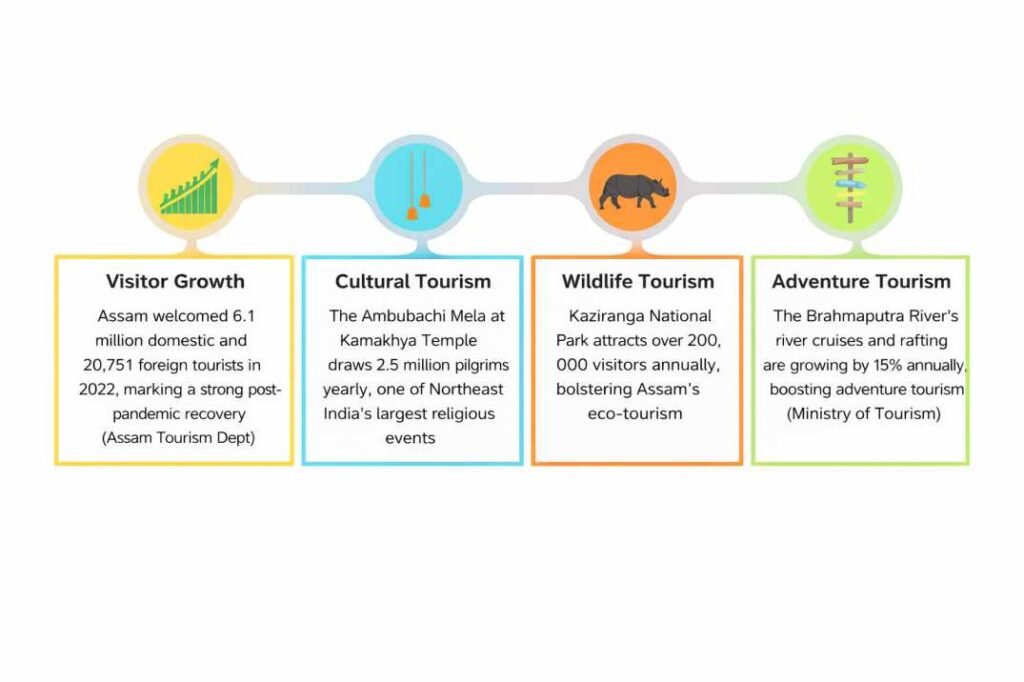
Performance Trends of Tourism in Assam
- Strong growth in domestic and foreign tourist arrivals
- Example: Kaziranga recorded over 4 lakh visitors (2024–25)
- Assam attracted ~2.44 crore tourists in recent years
- Tourism contributes around 5–6% of GSDP, but has high multiplier effects
Government Initiatives
- Assam Tourism Policy
- Promotion through “Awesome Assam” campaign
- Development of tourist circuits
- Focus on eco-tourism and homestays
- Infrastructure development (roads, airports, jetties)
- Linkage with Act East Policy
Importance of Tourism in Assam
- Boosts local economy (hotels, transport, handicrafts)
- Promotes cultural heritage and biodiversity conservation
- Supports sustainable development goals (SDGs)
Challenges of Tourism in Assam
- Seasonal tourism (floods and monsoon)
- Poor infrastructure and connectivity
- Limited global marketing
- Environmental concerns and human-wildlife conflict
Banking and Financial Inclusion in Assam
The banking sector in Assam has expanded significantly, improving financial inclusion, especially among rural and vulnerable populations.
Banking Structure
- Commercial Banks
- Regional Rural Banks (RRBs)
- Cooperative Banks
- Microfinance Institutions
Financial Inclusion Initiatives
- Pradhan Mantri Jan Dhan Yojana (PMJDY) → mass bank account opening
- Direct Benefit Transfer (DBT) → subsidies directly to accounts
- Orunodoi Scheme → financial assistance to ~38–40 lakh women
- Expansion of bank branches, ATMs, and Business Correspondents
Role of SHGs & Microfinance
- Strong network of Self Help Groups (SHGs) under NRLM
- Promotes women empowerment and micro-credit access
Key Achievements
- Increased bank account penetration
- Growth in digital payments (UPI, mobile banking)
- Improvement in Credit-Deposit Ratio
- Better priority sector lending
Challenges
- Low financial literacy
- Limited banking access in remote and flood-prone areas
- Continued dependence on informal credit sources
- Low insurance penetration
IT and Digital Economy in Assam
The IT and Digital Economy is an emerging growth driver with high potential for youth employment and innovation.
Current Status
- Developing IT ecosystem in Guwahati
- Establishment of IT parks and incubation centres
- Growth in startups and entrepreneurship

Key Developments
- Investment by companies like Infosys (development centre)
- Expansion of internet and broadband connectivity
- Rise in tech-enabled MSMEs and Udyam registrations
- Hosting of digital innovation events
Focus Areas
- E-Governance services (online land records, public services)
- Fintech, Edtech, Agritech
- AI and software development
- BPO/KPO industries
Government Initiatives
- Digital India Programme
- Assam Startup Policy
- Incentives for electronics manufacturing
- Promotion of innovation hubs
Opportunities
- Employment for educated youth
- Integration with national digital economy
- Export potential in IT-enabled services
Challenges
- Skill gap and brain drain
- Limited private investment
- Infrastructure gaps compared to major IT cities
Trade and Commerce in Assam
Trade is a key component of the service sector, with Assam acting as the commercial hub of Northeast India.
Nature of Trade
- Trade in:
- Agricultural products (tea, rice, oilseeds)
- Petroleum and natural gas
- Handloom and handicrafts
- Consumer goods
Types of Trade
Internal Trade
- Dominated by wholesale and retail markets
- Key centres: Guwahati, Silchar, Dibrugarh, Tinsukia
- Presence of rural haats (weekly markets) and growing organised retail
External Trade
- Trade with neighbouring countries via border routes
- Export of tea, petroleum products, and agri-goods
Transport Infrastructure
- Roadways (National Highways)
- Railways
- Inland Water Transport (Brahmaputra – National Waterway-2)
Positive Trends
- Growth of e-commerce
- Improved connectivity and logistics networks
Challenges
- High transportation costs
- Poor logistics and storage facilities
- Flood disruptions
- Dependence on external markets
- Limited industrial diversification
Act East Policy and External Trade in Assam
The Act East Policy (AEP) positions Assam as a strategic gateway between India and Southeast Asia.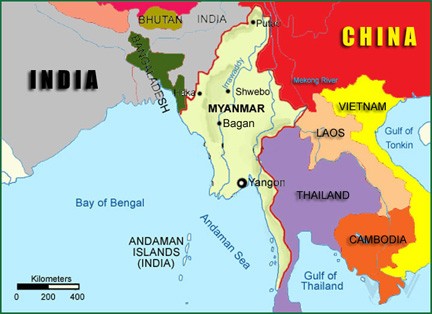
Strategic Importance
- Connects India with:
- Myanmar
- Bangladesh
- ASEAN countries
- Transforms Assam from a peripheral region to a trade bridge
Key Projects
- India–Myanmar–Thailand Trilateral Highway
- Kaladan Multi-Modal Transit Transport Project
- Development of border infrastructure and waterways
Benefits for Assam
- Boost in exports and trade
- Growth of infrastructure and connectivity
- Increase in foreign investment
- Promotion of tourism and cultural exchange
Opportunities
- Expansion of border trade
- Integration with BIMSTEC and ASEAN economies
- Growth in energy and logistics sectors
Challenges
- Infrastructure gaps and delays
- Trade imbalance
- Non-tariff barriers
- Border security concerns
Border Haats in Assam
Border Haats are traditional local markets along the India–Bangladesh border, aimed at promoting local trade and livelihoods.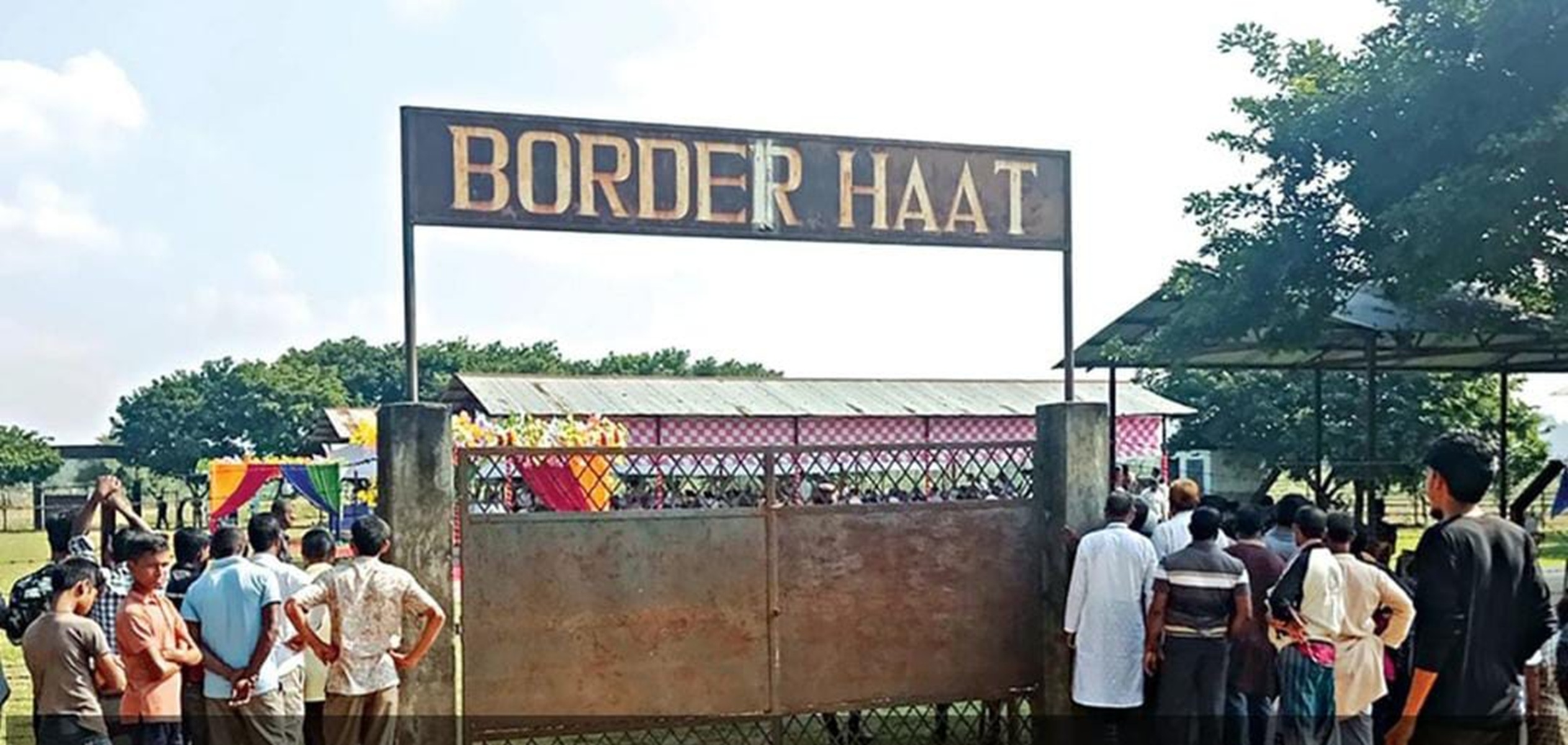
Features
- Operate as weekly markets
- Trade allowed within a limited geographical radius (≈5 km)
- Exchange of:
- Agricultural produce
- Handicrafts
- Fish and livestock
- Daily necessities
Objectives
- Promote local trade
- Strengthen people-to-people connections
- Reduce illegal trade
Status in Assam
- Several haats operational along the border
- New haats proposed (e.g., Dhubri and Karimganj regions)
Benefits
- Boosts rural economy
- Generates employment
- Enhances border area development
- Can evolve into tourism hubs
Challenges
- Limited number and scale of haats
- Infrastructure and management issues
- Restricted items and trading days
- Dependence on bilateral relations
The Service Sector and Trade in Assam are central to the state’s economic transformation. While the service sector drives growth and modernization, trade and policies like the Act East Policy position Assam as a regional economic hub. However, to achieve sustainable and inclusive development, Assam must address challenges like infrastructure gaps, regional imbalance, and low industrialization, while leveraging opportunities in tourism, digital economy, and cross-border trade.